
50 Stoic Quotes for Everyday Resilience
 Add to Chrome
TABLE OF CONTENTS
Two thousand years ago, a Roman emperor, a playwright-turned-advisor, and a former slave all arrived at the same conclusion: you can’t control what happens to you, but you can control how you respond. Here are 50 of their most enduring insights.
Marcus Aurelius
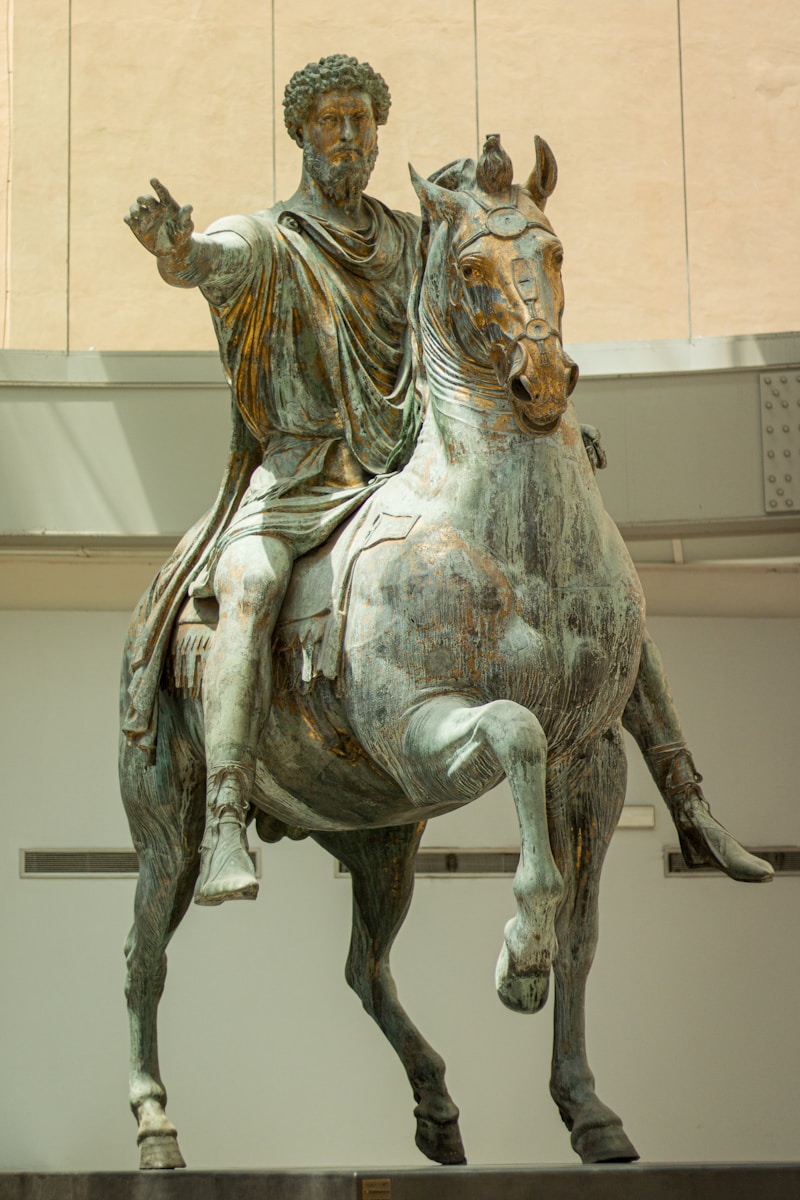
Marcus Aurelius ruled the Roman Empire at its height while fighting wars on the frontier — and somehow found time to write private notes to himself that became one of the most-read philosophy books in history. His Meditations is not a polished treatise but a personal journal, never meant for publication. That rawness is why it still resonates.
-
“Waste no more time arguing what a good man should be. Be one.” — Meditations, Book 10, §16
-
“The best way of avenging yourself is not to become like the wrongdoer.” — Meditations, Book 6
-
“Such as are your habitual thoughts, such also will be the character of your mind; for the soul is dyed by the thoughts.” — Meditations, Book 5
-
“When you are distressed by an external thing, it’s not the thing itself that troubles you, but only your judgment of it. And you can wipe this out at a moment’s notice.” — Meditations, Book 8 (Gregory Hays translation)
-
“Take away your opinion, and then there is taken away the complaint, ‘I have been harmed.’ Take away the complaint, ‘I have been harmed,’ and the harm is taken away.” — Meditations, Book 4
-
“Nothing happens to any man which he is not formed by nature to bear.” — Meditations, Book 5, §18
-
“Nowhere can a man find a quieter or more untroubled retreat than in his own soul.” — Meditations, Book 4, §3
-
“Everything is only for a day, both that which remembers and that which is remembered.” — Meditations, Book 4
-
“Since it is possible that you may depart from life this very moment, regulate every act and thought accordingly.” — Meditations, Book 2, §11
-
“Do every act of your life as if it were the last.” — Meditations, Book 2, §5
-
“The mind adapts and converts any obstacle to its action into a means of achieving it. That which is an impediment to action is turned to advance action. The obstacle on the path becomes the way.” — Meditations, Book 5, §20 (Gregory Hays translation)
-
“Here is the rule to remember in the future: When anything tempts you to be bitter — not, ‘This is a misfortune,’ but ‘To bear this worthily is good fortune.’” — Meditations, Book 4 (Gregory Hays translation)
-
“The art of living is more like wrestling than dancing, for it requires that we should stand ready and firm to meet onsets which are sudden and unexpected.” — Meditations, Book 7, §61
-
“I have often wondered how it is that every man loves himself more than all the rest of men, but yet sets less value on his own opinion of himself than on the opinion of others.” — Meditations, Book 12
-
“To change your mind and to follow him who sets you right is to be nonetheless the free agent that you were before.” — Meditations, Book 8, §16
Seneca
Lucius Annaeus Seneca was a playwright, politician, and advisor to Emperor Nero — a life full of power, wealth, drama, and ultimately a forced suicide ordered by the emperor himself. His Letters to Lucilius are practical, witty, and surprisingly modern. Where Marcus Aurelius whispers to himself, Seneca speaks directly to you.

-
“It is not that we have a short time to live, but that we waste a lot of it.” — Letters from a Stoic, Letter 1
-
“The fool, with all his other faults, has this also: he is always getting ready to live.” — Letters from a Stoic, Letter 13
-
“It is not the man who has too little who is poor, but the one who hankers after more.” — Letters from a Stoic, Letter 2
-
“Until we have begun to go without them, we fail to realize how unnecessary many things are.” — Letters from a Stoic, Letter 123
-
“Be careful, though, about your reading in many authors and every type of book. One who is everywhere is nowhere.” — Letters from a Stoic, Letter 2
-
“Each day acquire something which will help you to face poverty, or death, and other ills as well.” — Letters from a Stoic, Letter 2
-
“If you wish to be loved, love.” — Letters from a Stoic, Letter 9 (quoting Hecato)
-
“What progress, you ask, have I made? I have begun to be a friend to myself.” — Letters from a Stoic, Letter 6
-
“There are more things, Lucilius, likely to frighten us than there are to crush us; we suffer more often in imagination than in reality.” — Letters from a Stoic, Letter 13
-
“If you really want to escape the things that harass you, what you’re needing is not to be in a different place but to be a different person.” — Letters from a Stoic, Letter 28
-
“How can you wonder your travels do you no good, when you carry yourself around with you?” — Letters from a Stoic, Letter 28
-
“Treat your inferiors the way you would like to be treated by your superiors.” — Letters from a Stoic, Letter 47
-
“Associate with those who will make a better man of you. Welcome those whom you yourself can improve. The process is mutual; for men learn while they teach.” — Letters from a Stoic, Letter 7
-
“Limiting one’s desire actually helps to cure one of fear.” — Letters from a Stoic, Letter 5
-
“Inwardly everything should be different but our outward face should conform with the crowd. Let our aim be a way of life not diametrically opposed to, but better than that of the mob.” — Letters from a Stoic, Letter 5
Epictetus
Born a slave with a lame leg, Epictetus was freed and founded a philosophy school that would influence emperors. He wrote nothing himself; his teachings were recorded by his student Arrian. His style is blunt, confrontational, and often darkly funny. He doesn’t comfort you — he challenges you to stop complaining and start living.

-
“Men are disturbed, not by things, but by the principles and notions which they form concerning things.” — Enchiridion, §5
-
“Some things are in our control and others not. Things in our control are opinion, pursuit, desire, aversion, and, in a word, whatever are our own actions. Things not in our control are body, property, reputation, command, and, in one word, whatever are not our own actions.” — Enchiridion, §1
-
“It is not possible that what is by nature free can be disturbed by anything else, or hindered by any other thing than by itself. It is a man’s own opinions which disturb him.” — Discourses, Book I, Chapter 19
-
“No man is free who is not master of himself.” — Paraphrase of Discourses
-
“Never say of anything, ‘I have lost it’; but, ‘I have returned it.’ Is your child dead? It is returned. Is your wife dead? She is returned.” — Enchiridion, §11
-
“Everything has two handles, the one by which it may be borne, the other by which it may not.” — Enchiridion, §43
-
“These reasonings are unconnected: ‘I am richer than you, therefore I am better.’ The connection is rather this: ‘I am richer than you, therefore my property is greater than yours.’ But you, after all, are neither property nor style.” — Enchiridion, §44
-
“Don’t explain your philosophy. Embody it.” — Attributed to Epictetus
-
“On no occasion call yourself a philosopher, and do not, for the most part, talk among laymen about your philosophic principles, but do what follows from your principles.” — Enchiridion, §46
-
“First say to yourself what you would be; and then do what you have to do.” — Attributed to Epictetus
-
“An uninstructed person will lay the fault of his own bad condition upon others. Someone just starting instruction will lay the fault on himself. Someone who is perfectly instructed will place blame neither on others nor on himself.” — Enchiridion, §5
-
“Remove aversion, then, from all things that are not in our control, and transfer it to things contrary to the nature of what is in our control.” — Enchiridion, §2
-
“It is the nature of the wise to resist pleasures, but of the foolish to be a slave to them.” — Attributed to Epictetus
-
“He is a wise man who does not grieve for the things which he has not, but rejoices for those which he has.” — Attributed to Epictetus
-
“If you want to improve, be content to be thought foolish and stupid.” — Enchiridion, §13
More Stoic Voices
The school Zeno founded in a painted porch in Athens around 300 BCE lasted five centuries. Here are a few more voices from the tradition.
Zeno of Citium (c. 334–262 BCE), the founder of Stoicism. None of his works survive, but his teachings were preserved by later writers. When a slave caught stealing said “It was fated that I should steal,” Zeno replied: “Yes, and that you should be beaten.” The core Stoic idea — take responsibility even in a determined universe — was there from day one.
Cleanthes (c. 330–230 BCE), Zeno’s successor, worked as a night water-carrier to fund his studies by day. His Hymn to Zeus contains the line that became the Stoic motto:
“Fate guides the willing, but drags the unwilling.”
Musonius Rufus (c. 30–100 CE), the teacher of Epictetus, was exiled multiple times for his principles. He taught that philosophy is something you practice, not something you read about:
“You will earn the respect of all men if you begin by earning the respect of yourself.”
“Philosophy is nothing else than to search out by reason what is right and proper and by deeds to put it into practice.”
How to Use These Quotes
Stoic quotes are not meant to be read and forgotten. The Stoics themselves practiced daily reflection — what Seneca called the evening review and Marcus Aurelius did every morning.
Pick one quote each morning. Write it down. Keep it in front of you. When something goes wrong during the day, return to it. See if it changes how you respond.
Start with the Dichotomy of Control. Epictetus opens his handbook with it for a reason. When you feel stressed, ask: is this in my control? If yes, act. If no, let it go. It sounds simple, but it takes a lifetime to master.
Use the “Two Handles” trick. Epictetus said everything has two handles. When someone frustrates you, grab the handle that reminds you they are human, fallible, and dealing with their own struggles — not the handle that says they wronged you. The facts are the same. Your experience of them changes completely.
If you’re interested in reading Stoic texts in their original languages, OpenL supports translation of Latin and Ancient Greek, alongside 100+ modern languages. For more on language learning, see our guide to 30 AI Prompts to Learn Any Language Faster.
Sources
- Meditations by Marcus Aurelius — MIT Classics Archive — Full text of the George Long translation
- Marcus Aurelius: Quotes — Britannica — Verified quotes with historical context
- Letters from a Stoic — Daily Stoic — Summary and key quotes from Seneca’s letters
- Letters from a Stoic by Seneca — Bookmate — Collection of notable quotes
- Discourses of Epictetus — Wikisource — Full text of Epictetus’ Discourses and Enchiridion
- The Internet Classics Archive — Epictetus — Elizabeth Carter translation of the Enchiridion
- Zeno and Cleanthes Fragments — The Spectator Archive — Historical compilation of early Stoic fragments
- Diogenes Laertius, Lives of Eminent Philosophers, Book VII — Primary source for Zeno’s life and teachings
- Musonius Rufus: That One Should Disdain Hardships — Yale University Press — Modern edition of Musonius Rufus’ lectures
- Cleanthes’ Hymn to Zeus — Daily Stoic — Full text of the Hymn to Zeus