
Bastille Day: The Prison Raid That Became France's National Holiday
TABLE OF CONTENTS
On July 14, 1789, Parisians stormed a fortress that held only seven prisoners. The building mattered less as a prison than as a symbol, and that is why its fall became France’s national day.
Bastille Day at a Glance
| Date | July 14 every year |
| Where | France, its overseas territories, and French communities worldwide |
| Type | National holiday, civic celebration |
| French names | le 14 juillet, la Fête nationale |
| English name | Bastille Day |
| Origin in one line | It links the storming of the Bastille on July 14, 1789, with the national unity celebration of July 14, 1790. |
| Common traditions | Military parade, fireworks, concerts, public dances, tricolor flags, and La Marseillaise |
Why July 14 Matters
Bastille Day commemorates the storming of the Bastille on July 14, 1789, when Parisians attacked a medieval fortress and prison that had become a symbol of royal power. The event helped push the French Revolution past the point of no return.
The memory is more complicated than the English name suggests. In France, the day is usually called le 14 juillet or la Fête nationale, not “Bastille Day.” Official French memory also points to July 14, 1790, the Fête de la Fédération, a huge public ceremony on the Champ de Mars that tried to present the Revolution as national unity, not only street violence.
That double meaning is why July 14 works as a national day. The date can remember revolt against arbitrary power while also celebrating the idea of a shared republic. It is not France’s independence day. France was already a kingdom; the holiday marks a political transformation inside the country.
The Story Behind Bastille Day
The Bastille was not powerful in 1789 because it held many prisoners. It was powerful because people believed it stood for the old regime.
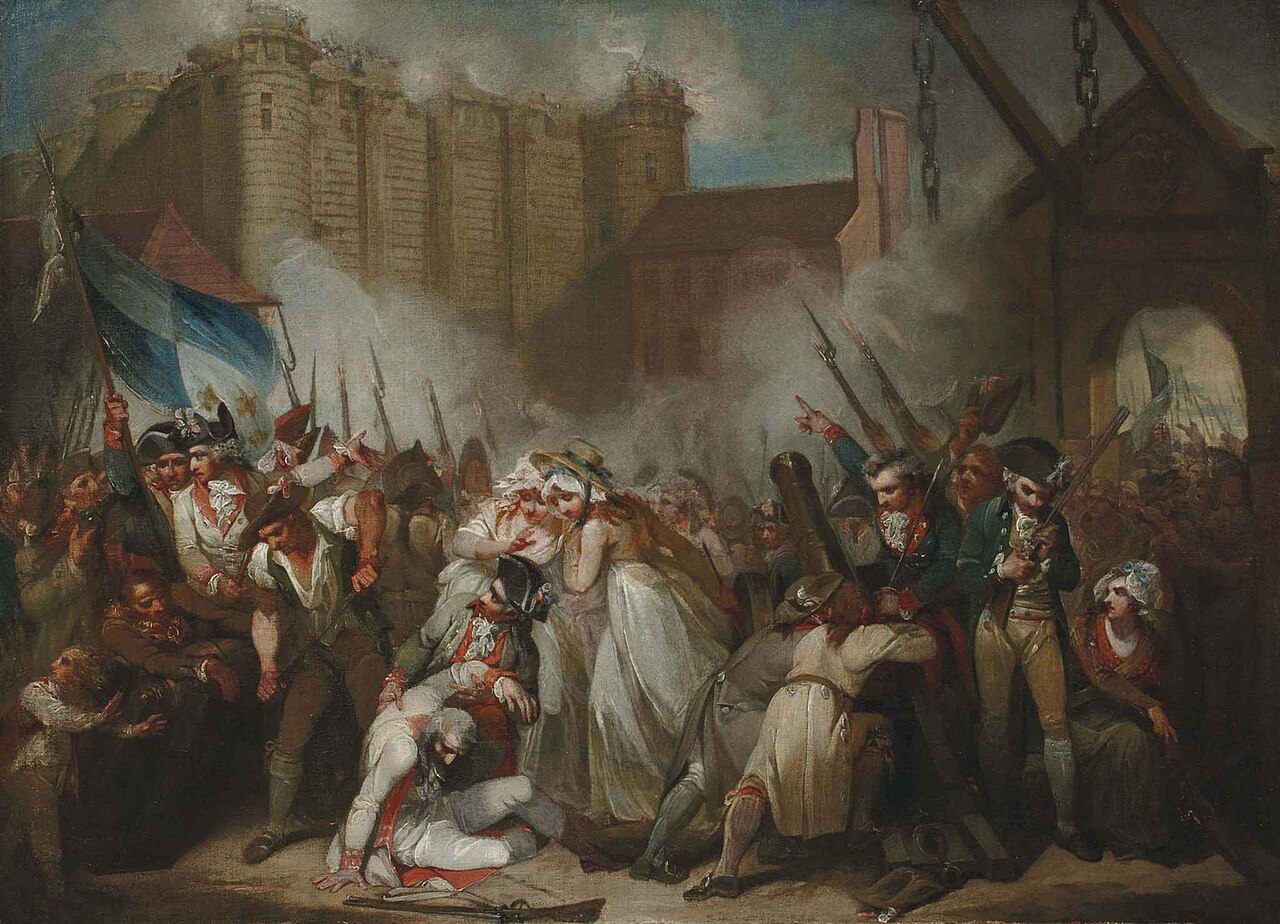
By July 1789, Paris was tense. Bread was expensive, rumors spread quickly, and royal troops were positioned around the capital. When King Louis XVI dismissed the popular finance minister Jacques Necker on July 11, many Parisians feared a crackdown against the newly formed National Assembly. Crowds searched for weapons. On July 14, they seized thousands of muskets from the Hôtel des Invalides, but they still needed gunpowder. The Bastille had it.
The fortress looked like a monster from another age: thick walls, towers, guards, and a reputation for imprisoning people under royal orders. But when the crowd finally entered, they found only seven prisoners. That fact is the key to understanding the holiday. The Bastille mattered less as a working prison than as a visible sign of a system where the king’s authority could reach through stone walls.
The fighting was real. About 100 attackers died, and Governor Bernard-René de Launay was killed after surrendering. The violence did not make the day simple or clean. It made it irreversible. Once the fortress fell, people across France could read the same message: royal power could be challenged in public, by citizens, in the capital itself.
A year later, France tried to give July 14 a second meaning. On July 14, 1790, the Fête de la Fédération gathered National Guards, deputies, clergy, the king, and a huge crowd in Paris. The ceremony presented the Revolution as a national compact: law, nation, and king under a new constitutional order. The unity did not last, but the image mattered.
When the Third Republic chose July 14 as the national holiday in 1880, it could draw from both memories. Radicals could see 1789, the people taking history into their own hands. Moderates could see 1790, a civic celebration of unity. That is why the holiday still carries both fire and ceremony.
How France Celebrates Bastille Day Today
Across France, July 14 is a public holiday marked by tricolor flags, concerts, fireworks, military ceremonies, and local gatherings. The most famous event is the Paris military parade, now associated with the Champs-Élysées. Spectators watch troops, vehicles, aircraft, and the Patrouille de France flyover, often with blue, white, and red smoke trailing above the avenue while the French president and invited guests attend from official stands.
The holiday does not belong only to Paris. Towns and cities hold evening fireworks, open-air dances, concerts, and community events. One distinctive tradition is the bal des pompiers, the firefighters’ ball, where fire stations open their doors for public dances, music, and fundraising. The mood shifts through the day: formal ceremony in the morning, then music in squares, open fire stations, and crowds waiting for fireworks after dark.
The symbols are familiar but not decorative. The blue, white, and red flag recalls revolutionary France. La Marseillaise, now the national anthem, comes from the revolutionary era. The motto Liberté, Égalité, Fraternité turns the holiday into a short civic lesson: liberty, equality, fraternity.
For broader context on French pronunciation, accents, and formal language, see our French language guide.
Bastille Day in Paris in 2026
Bastille Day itself falls on Tuesday, July 14, 2026. In most years, the best-known Paris evening event is the fireworks display around the Eiffel Tower and Champ de Mars on July 14.
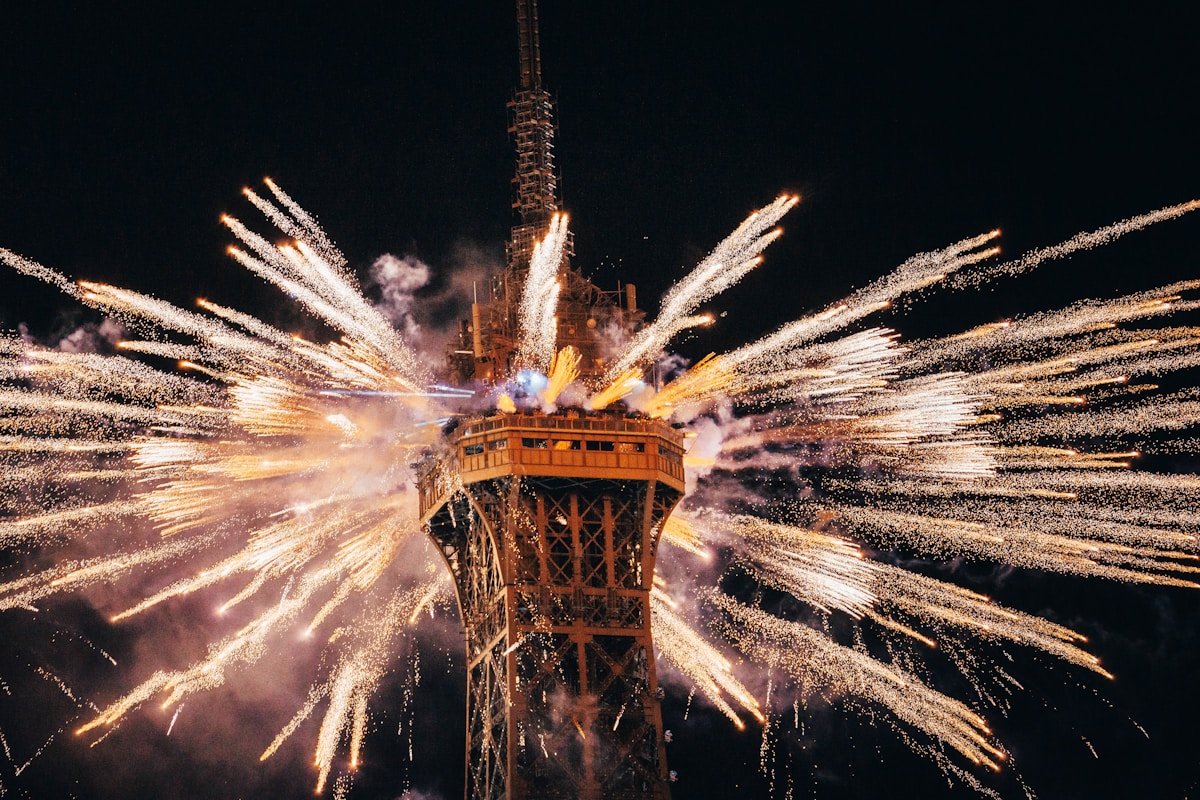
In 2026, the Eiffel Tower fireworks display is making an exception. The tower’s official website says the show will take place on Monday, July 13, 2026, instead of July 14. The change is tied to the 10th anniversary of the Nice attack on July 14, 2016, leaving July 14 for remembrance and tribute.
That distinction matters for travelers and readers: Bastille Day remains July 14, but the major Eiffel Tower fireworks display is scheduled one evening earlier in 2026. Morning ceremonies and other local events may follow their own schedules, so check current city and venue notices before making plans.
French Words and Phrases for Bastille Day
Bastille Day has useful French vocabulary, but it does not have one universal greeting like “Merry Christmas.” In official and public language, people usually name the day itself or use republican slogans rather than exchange a fixed holiday wish.
| French | Pronunciation guide | English meaning | When to use it |
|---|---|---|---|
| le 14 juillet | luh kah-torz zhwee-YAY | July 14 | The most natural everyday name for the holiday in France |
| la Fête nationale | lah fet nah-see-oh-NAHL | the national holiday | Formal or official contexts |
| Vive la République ! | veev lah ray-pu-BLEEK | Long live the Republic | Speeches, ceremonies, patriotic settings |
| Liberté, Égalité, Fraternité | lee-bair-TAY, ay-gah-lee-TAY, fra-tair-nee-TAY | Liberty, equality, fraternity | France’s national motto |
If you are comparing French event pages with English travel notices, OpenL can help preserve accents in names like Fête nationale, République, and Champs-Élysées.
Why Bastille Day Still Matters
Bastille Day survives because it gives France a national story with tension inside it. It remembers violence, but it also remembers unity. It starts with a fortress that held only seven prisoners, then turns that small fact into a large symbol: a state can look permanent until people stop treating it that way.
That is why July 14 still feels different from a simple anniversary. It is a ceremony of the Republic, a public performance of French identity, and a reminder that national holidays often preserve arguments, not just answers. If you want another holiday where a dramatic origin story became a living public ritual, read our guide to the Dragon Boat Festival.
Sources
- Encyclopaedia Britannica: Bastille Day - Used for the holiday definition, the seven prisoners, and the Bastille’s symbolic role in the French Revolution.
- Élysée: Bastille Day, 14 July - Used for the French presidency’s account of July 14, 1789, July 14, 1790, and the 1880 choice of the national holiday.
- History.com: Bastille Day - Used for background on the Bastille, the causes of the unrest, and modern celebrations.
- Eiffel Tower official website: In 2026, the fireworks display will take place on July 13 - Used for the 2026 Paris fireworks schedule and the reason for the date change.
- Wikimedia Commons: Henry Singleton, The Storming of the Bastille - Public-domain historical artwork used to illustrate the 1789 event.
- Unsplash: Eiffel Tower fireworks photo - Free-to-use photo used to illustrate modern Paris fireworks.