40 Russian Proverbs with Meanings and Transliteration
 Add to Chrome

TABLE OF CONTENTS
Without effort you can’t even pull a fish from the pond — and 39 more Russian proverbs that pack a whole worldview into a few words.
Russian proverbs are called пословицы (poslovitsy). Closely related short sayings are поговорки (pogovorki). Each entry below gives the Cyrillic, a consistent Latin transliteration, a literal rendering, and what people actually mean. Where English has a close match, it is noted. These are stable, well-known forms grounded in standard collections — not one-off inventions.

Work, Effort, and Patience
-
Без труда не вытащишь и рыбку из пруда (Bez truda ne vytashish’ i rybku iz pruda) — “Without effort you can’t even pull a fish out of the pond.” Nothing worthwhile comes without work. English: “No pain, no gain.”
-
Глаза боятся, а руки делают (Glaza boyatsya, a ruki delayut) — “The eyes are afraid, but the hands do [the work].” A job looks huge until you start; then you get through it step by step.
-
Терпение и труд всё перетрут (Terpeniye i trud vsyo peretrut) — “Patience and work will grind through everything.” Steady effort wears down any obstacle.
-
Тише едешь — дальше будешь (Tishe yedesh’ — dal’she budesh’) — “The quieter (slower) you go, the farther you’ll get.” Don’t rush; method beats haste. English: “Slow and steady wins the race.”
-
Куй железо, пока горячо (Kuy zhelezo, poka goryacho) — “Strike the iron while it is hot.” Act while the moment is right. English: “Strike while the iron is hot.”
-
Семь раз отмерь, один отрежь (Sem’ raz otmer’, odin otrezh’) — “Measure seven times, cut once.” Check carefully before you commit. English: “Measure twice, cut once.”
-
Первый блин комом (Pervyy blin komom) — “The first pancake [comes out] a lump.” First attempts often fail — and that is expected, not a disaster.
-
Повторенье — мать ученья (Povtoren’ye — mat’ uchen’ya) — “Repetition is the mother of learning.” Practice and review beat one-shot cramming. English: “Practice makes perfect.”
Wisdom and Caution
-
Не всё то золото, что блестит (Ne vsyo to zoloto, chto blestit) — “Not everything that shines is gold.” Appearances deceive. English: “All that glitters is not gold.”
-
За двумя зайцами погонишься — ни одного не поймаешь (Za dvumya zaytsami pogonish’sya — ni odnogo ne poymayesh’) — “If you chase two hares, you will catch neither.” Split your focus and you get nothing.
-
Цыплят по осени считают (Tsiplyat po oseni schitayut) — “Chickens are counted in autumn.” Don’t celebrate results before they are real. English: “Don’t count your chickens before they hatch.”
-
Не говори «гоп», пока не перепрыгнешь (Ne govori “gop”, poka ne pereprygnesh’) — “Don’t say ‘hop’ until you’ve jumped over.” Don’t claim success before you finish.
-
Бережёного Бог бережёт (Berezhonogo Bog berezhyot) — “God keeps those who keep themselves safe.” Caution and self-care invite good fortune. Close to: “God helps those who help themselves.”
-
Доверяй, но проверяй (Doveryay, no proveryay) — “Trust, but verify.” Faith is fine; evidence is better. (Widely known in English after Ronald Reagan popularized the Russian phrase.)
-
В тихом омуте черти водятся (V tikhom omute cherti vodyatsya) — “Devils dwell in a quiet whirlpool.” Quiet people — or quiet places — can hide trouble. Related idea: still waters run deep (with a darker edge).
-
Шила в мешке не утаишь (Shila v meshke ne utaish’) — “You can’t hide an awl in a sack.” The truth will show. English: “Truth will out.”

Friendship and People
-
Друг познаётся в беде (Drug poznayotsya v bede) — “A friend is known in trouble.” Hard times reveal who stands with you. English: “A friend in need is a friend indeed.”
-
Не имей сто рублей, а имей сто друзей (Ne imey sto rubley, a imey sto druzey) — “Don’t have a hundred rubles — have a hundred friends.” Loyal people matter more than cash.
-
Старый друг лучше новых двух (Staryy drug luchshe novykh dvukh) — “An old friend is better than two new ones.” Proven loyalty beats fresh acquaintances.
-
С кем поведёшься, от того и наберёшься (S kem povedyosh’sya, ot togo i naberyosh’sya) — “You pick up [habits] from those you hang around with.” Company shapes character. English: “You are the company you keep.”
-
Один в поле не воин (Odin v pole ne voin) — “One [person] in the field is not a warrior.” Big tasks need more than a lone effort.
-
У семи нянек дитя без глазу (U semi nyanek ditya bez glazu) — “With seven nannies, the child is left without an eye [unwatched].” Too many caretakers — nobody owns the job. English: “Too many cooks spoil the broth.”
-
В гостях хорошо, а дома лучше (V gostyakh khorosho, a doma luchshe) — “Being a guest is good, but home is better.” English: “There’s no place like home.”
-
Яблоко от яблони недалеко падает (Yabloko ot yabloni nedaleko padayet) — “The apple falls not far from the apple tree.” Children take after their parents. English: “The apple doesn’t fall far from the tree.”
Fate, Luck, and Life Lessons
-
Что посеешь, то и пожнёшь (Chto poseyesh’, to i pozhnyosh’) — “What you sow, you will reap.” Actions have consequences. English: “You reap what you sow.”
-
Нет худа без добра (Net khuda bez dobra) — “There is no bad without some good.” Even misfortune can bring a benefit. English: “Every cloud has a silver lining.”
-
Жизнь прожить — не поле перейти (Zhizn’ prozhit’ — ne pole pereyti) — “To live a life is not [as easy as] crossing a field.” Life is hard and long; it is not a casual stroll. (Also famous as a line associated with Boris Pasternak’s poem “Hamlet.”)
-
Век живи — век учись (Vek zhivi — vek uchis’) — “Live a century — learn a century.” Learning never ends. English: “Live and learn.”
-
Утро вечера мудренее (Utro vechera mudreneye) — “Morning is wiser than evening.” Sleep on a hard decision; clarity often comes after rest.
-
Всё хорошо, что хорошо кончается (Vsyo khorosho, chto khorosho konchayetsya) — “All is well that ends well.” English: “All’s well that ends well.”
-
Язык до Киева доведёт (Yazyk do Kieva dovedyot) — “The tongue will lead [you] as far as Kiev.” If you ask the way, you can get anywhere. (Asking beats guessing.)
-
Дарёному коню в зубы не смотрят (Daryonomu konyu v zuby ne smotryat) — “They don’t look a gift horse in the teeth.” Accept a gift without nitpicking its value. English: “Don’t look a gift horse in the mouth.”
Humor and Everyday Observations
-
Работа не волк — в лес не убежит (Rabota ne volk — v les ne ubezhit) — “Work is not a wolf — it won’t run off into the forest.” The job will still be there later (often said with a wink when delaying work).
-
Бабушка надвое сказала (Babushka nadvoye skazala) — “Grandmother said it two ways.” The outcome is still uncertain — don’t treat a prediction as a fact.
-
Аппетит приходит во время еды (Appetit prikhodit vo vremya edy) — “Appetite comes during eating.” Interest and energy often grow once you start. English: “Appetite comes with eating.”
-
Ложка дёгтя портит бочку мёда (Lozhka dyogtya portit bochku myoda) — “A spoonful of tar spoils a barrel of honey.” One flaw can ruin something otherwise good. English: “A fly in the ointment.”
-
В Тулу со своим самоваром не ездят (V Tulu so svoim samovarom ne yezdyat) — “People don’t go to Tula with their own samovar.” Don’t bring coals to Newcastle — Tula was famous for samovars.
-
Слово — серебро, молчание — золото (Slovo — serebro, molchaniye — zoloto) — “Speech is silver, silence is gold.” Knowing when not to talk is valuable. English: “Speech is silver, silence is golden.”
-
По одёжке встречают, по уму провожают (Po odyozhke vstrechayut, po umu provozhayut) — “They meet [you] by your clothes, and see [you] off by your mind.” First impressions are visual; lasting judgment is about character and wit.
-
Конь о четырёх ногах, да спотыкается (Kon’ o chetyryokh nogakh, da spotykaetsya) — “A horse has four legs, and still it stumbles.” Even the capable make mistakes. English: “Even Homer nods.”
Why Russian Proverbs Are Hard to Translate
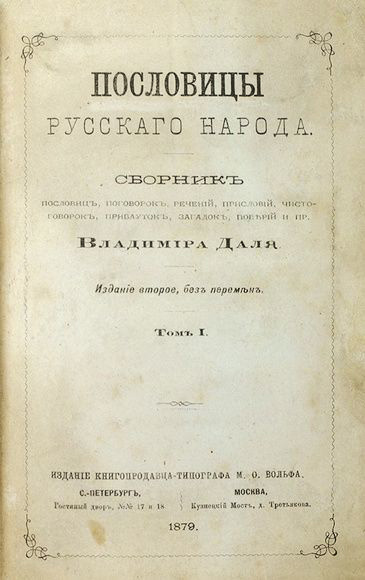
Russian пословицы lean on culture a literal gloss drops: the samovar and the city of Tula, the Orthodox calendar behind Maslenitsa sayings, animals that carry folk symbolism (wolves, hares, fish in a pond), and compact rhymes that vanish in English. Diminutives and rhythm do a lot of the work — rybku, blin, babushka — so a word-for-word line can sound flat even when the idea is sharp. Vladimir Dal’s nineteenth-century collection Proverbs of the Russian People gathered tens of thousands of such sayings from speech and manuscripts, which is one reason the stock of forms feels so deep.
If you run a proverb through a translator such as OpenL, compare the output with the meanings above so the idea lands, not just the words.
For more on the language itself, see our guide to Russian. For another proverb collection, try 40 Japanese proverbs, or browse ancient proverbs from around the world.
Sources
- Russian proverbs (Wikiquote) — Cyrillic, transliteration, literal translations, and English equivalents with book citations (including Mertvago and Dal)
- Category: Russian proverbs (Wiktionary) — dictionary entries for common Russian proverb forms
- Russian Proverbs and Sayings (MasterRussian) — alphabetical list with literal translations and English equivalents
- 20 Russian Proverbs with Meaning and Origin (Putnik School) — selected proverbs with literal sense and usage notes
- Russian proverbs (Wikipedia) — overview of пословицы / поговорки and Dal’s collection
- Пословицы русского народа (Wikisource / Dal) — Vladimir Dal’s classic compilation