Football Culture Around the World
 Add to Chrome
TABLE OF CONTENTS
Football is the same game everywhere — same rules, same pitch, same 90 minutes. But how people watch it, celebrate it, and talk about it changes completely from country to country.
A Brief History of Football
Before diving into the cultures, a quick timeline of how the game spread across the world:
| Period | What Happened |
|---|---|
| 3rd century BC | Cuju (蹴鞠) emerges in China — a game of kicking a leather ball through a silk net. FIFA recognizes it as the earliest form of football. |
| 12th–14th century | Folk football rages across England — entire villages compete in chaotic, violent matches with virtually no rules. Kings repeatedly try to ban it. |
| 1863 | The Football Association is born at the Freemasons’ Tavern in London. The first official “Laws of Football” are published, splitting association football from rugby. |
| 1904 | FIFA founded in Paris. |
| 1930 | The first World Cup in Uruguay — 13 teams, one champion. |
| 2026 | The World Cup expands to 48 teams, hosted by three countries for the first time: the US, Canada, and Mexico. |
The rules traveled with British sailors, merchants, and railway workers. But each country that adopted the game reshaped it in its own image — and built its own vocabulary around it.
If you’re watching the World Cup and need help with English commentary, our World Cup football vocabulary guide covers 50 essential terms from “hat-trick” to “squeaky bum time.”
Argentina: A Street Fight Disguised as Art
Argentine football is not entertainment. It is ritualized warfare.
The Superclásico between Boca Juniors and River Plate is ranked by The Observer as the #1 sporting event to attend before you die. The roots are class-based: Boca represents the working-class docklands of La Boca; River represents the affluent northern suburbs (their nickname is Los Millonarios).
Before derbies, Boca fans build cardboard coffins painted in River’s red-and-white stripes. In 2011, when River was relegated for the first time in its 110-year history, Boca supporters filled the streets with papier-mâché coffins in a mock funeral procession. Even in 2026, coffins still appear by highways before Superclásico weekends — the enemy must be symbolically buried.
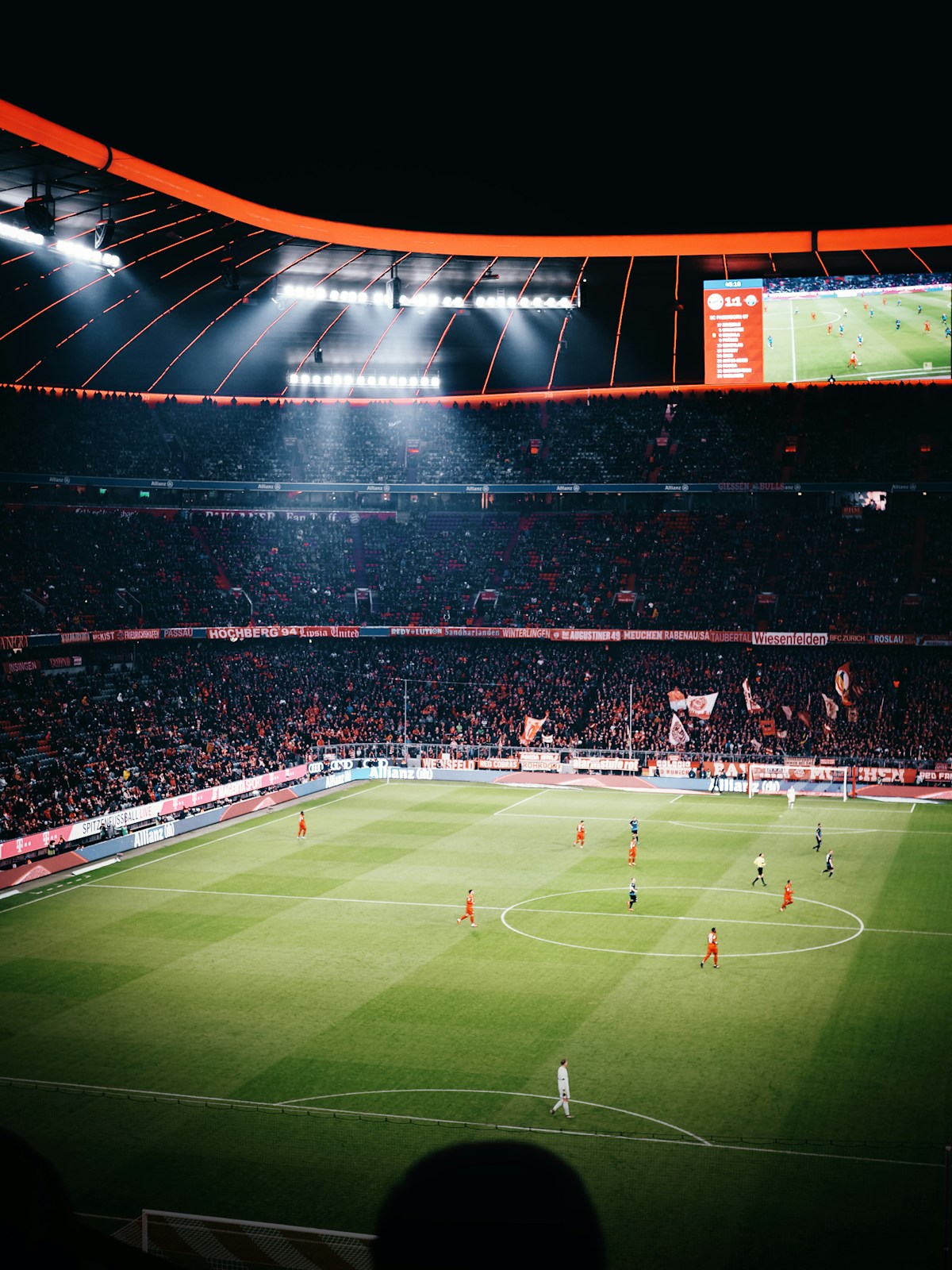
The atmosphere inside the stadium is chaos: flares turn the stands orange, the singing never stops for 90 minutes, and every tackle carries the weight of a century of history.
The language of the terraces is pure Argentine. After Argentina qualified for the 2010 World Cup, Diego Maradona famously shouted “¡La tenés adentro!” (“You’ve got it inside!”) live on television at his critics. The phrase entered the national lexicon. During the 2014 World Cup in Brazil, Argentine fans taunted their hosts by singing “Brasil, decime qué se siente tener en casa a tu papá” (“Brazil, tell me how it feels to have your daddy in your house”) — to the tune of Creedence Clearwater Revival. Argentine football slang even has a term for its own essence: viveza criolla — a rule-bending cunning that made Maradona’s “Hand of God” not a scandal, but a national treasure.
Brazil: Where Football Speaks Its Own Language
If any country can claim football as a first language, it’s Brazil. Not just because of the five World Cups — because Brazilian Portuguese has developed the richest football vocabulary on Earth.
The word for “nutmeg” alone has at least five variants: caneta (pen), ovinho (little egg), janelinha (little window), rolinho (little roll), and sainha (little skirt). A chip over the goalkeeper is a chute por cobertura (roof shot). A rainbow flick is a lambreta (scooter). The game is described with the same playful inventiveness Brazilians bring to playing it.
This linguistic creativity mirrors the fan culture. Brazilian supporters turn stadiums into samba festivals — drumming corps (baterias) from samba schools perform live before matches, and entire sections move in synchronized rhythm. When the national anthem plays, fans keep singing a cappella after the stadium PA cuts off, creating a wall of sound that has visibly shaken opposing teams.
Brazilian fans also have some of the most personal rituals in football. Many wear the same unwashed jersey throughout an entire tournament. Families keep intergenerational scrapbooks — grandparents share newspaper clippings from 1958 and 1970 with grandchildren too young to have seen Pelé. After losses, rather than rage, fans often sing melancholic samba de saudade together — a collective, musical grieving that turns disappointment into community.
There is a running debate about whether Brazilian football has lost some of its improvisational joy to European tactical systems. But in the stands, at least, the drums never stop.
England: Where It All Began (and Gets Weird)
England gave the world the rules of football. It also gave the world some of its strangest traditions.
At Sunderland’s Stadium of Light, fans scatter the ashes of deceased loved ones along the pitchside. The club has a dedicated “ashes garden” and receives dozens of requests each year from families wanting to ensure their relative’s bond with the club lasts forever.
Before the FA codified the rules in 1863, English football was folk football — a lawless, violent game played between entire villages with virtually no rules. King Edward III banned it in 1365 because it was distracting men from archery practice. A handful of towns, including Ashbourne in Derbyshire, still play these ancient versions today.
Modern English fan culture blends the old and new: terrace chants that have been sung for generations (“You’ll Never Walk Alone” at Liverpool, adopted from a 1945 Rodgers and Hammerstein musical), massive choreographed banner displays, and an away-fan culture that sends thousands of supporters across the country every weekend.
England’s football vocabulary has also gone global. The word “soccer” itself is English — a slang abbreviation of “Association Football” coined at Oxford University in the 1880s. “Hat-trick,” “own goal,” “penalty,” and “derby” all originated in British English before spreading worldwide.
Spain: More Than a Club
No football rivalry in the world carries as much political weight as El Clásico — Barcelona vs Real Madrid.
The match splits Spain along a fault line that goes far deeper than sport. FC Barcelona is the symbol of Catalan identity. Its motto — “Més que un club” (“More than a club”) — is a literal truth: under Franco’s dictatorship (1939–1975), the Camp Nou was one of the few places Catalans could openly speak their language and express political dissent. The club’s president, Josep Sunyol, was executed by Franco’s forces in 1936. Real Madrid, by contrast, was perceived as the regime’s favored club — Franco’s international ambassador.
This history plays out at every match. At exactly 17 minutes and 14 seconds into every Barcelona home game, the crowd chants “In, inde, independència!” — a reference to 1714, the year Catalonia fell to Spanish Bourbon troops and lost its political autonomy. The chant is a ritual, a clockwork reminder that the club and the cause are inseparable.
On the other side, the Spanish national team’s anthem has no lyrics — a linguistic compromise in a country where regional languages remain politically charged. Compare this to the Brazilian or Argentine anthems, and the contrast is striking: Spain’s football identity is literally wordless, because choosing words would mean choosing sides.
The linguistic dimension runs deep. Barcelona fans chant in Catalan (“Visca Barça!”), Real Madrid fans in Castilian Spanish (“¡Hala Madrid!”). The language you cheer in IS the political statement.
Germany: Fan Ownership as a Way of Life
German football culture is built on a single, fiercely defended principle: fans are members, not customers.
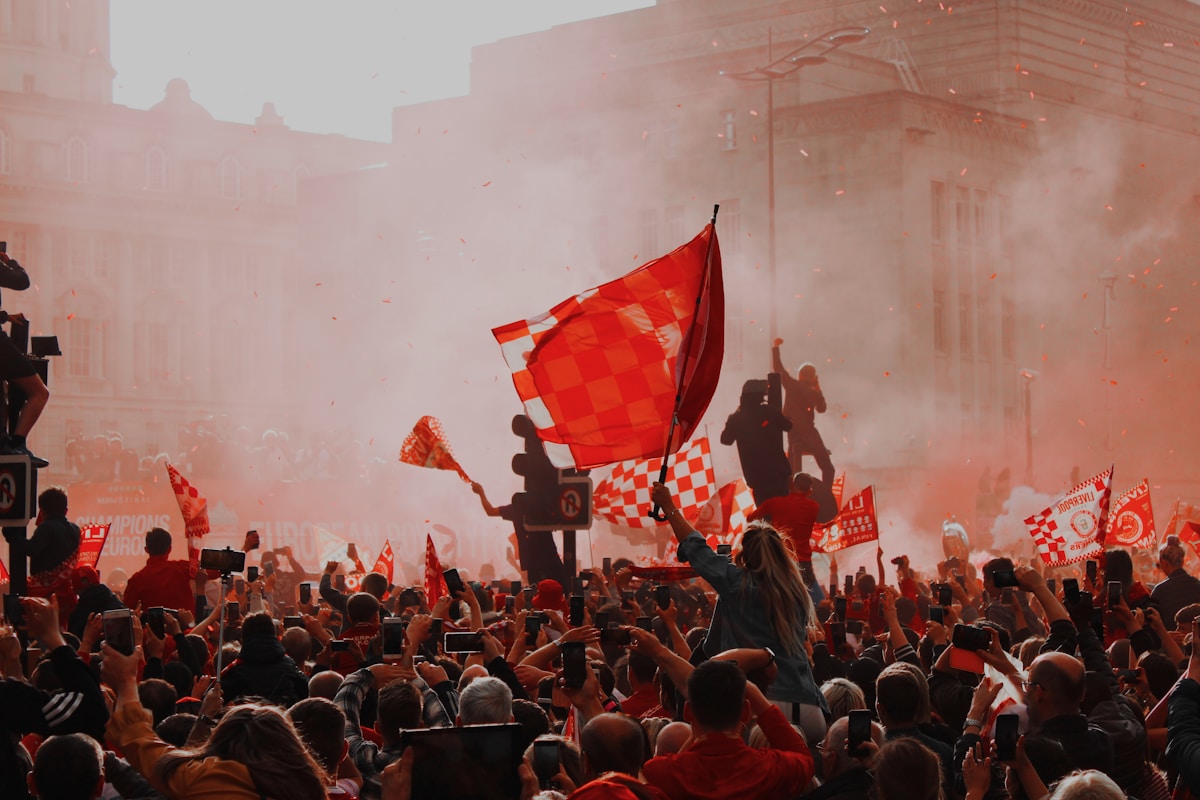
The 50+1 rule requires clubs to retain at least 50% plus one share of ownership, meaning supporters always hold majority voting rights. Bayern Munich is 82% supporter-owned. Season tickets can cost as little as €120 — roughly the price of a single match ticket at some Premier League clubs. When proposals arise to dismantle the rule, banner campaigns reading “50+1 muss bleiben!” (“50+1 must stay!”) blanket stadiums nationwide.
The physical manifestation of this culture is the standing terrace. Germany resisted UEFA’s all-seater mandate, and the result is the most intense stadium atmosphere in Europe. Borussia Dortmund’s Yellow Wall (Gelbe Wand) holds 25,000 standing fans — a single stand larger than many entire stadiums. The chant “You’ll Never Walk Alone” roars through it before every match, a tradition Dortmund shares with Liverpool but delivers with its own industrial, working-class weight.
German fan activism has real power. Supporters boycotted Monday night fixtures until the league scrapped them. They defeated proposed security measures through coordinated stadium walkouts. FC St. Pauli, in Hamburg’s Reeperbahn district, became a global icon of anti-fascist, anti-racist fan culture — run by punks, students, and activists who transformed a lower-league club into a worldwide symbol.
The term “Gegen den modernen Fußball” (“Against modern football”) is a unifying rallying cry — shorthand for resisting commercialization, rising ticket prices, and the transformation of the game into a sanitized entertainment product. In Germany, it’s not just a slogan. It’s a movement that wins.
France: Football and the Republic’s Unfinished Conversation
French football is inseparable from the country’s ongoing debate about identity, immigration, and what it means to be French.
The national team, Les Bleus, has long drawn its talent from the banlieues — the multi-ethnic, often marginalized suburbs surrounding French cities. Zinedine Zidane (son of Algerian immigrants), Kylian Mbappé (Cameroonian father, Algerian mother, raised in the Paris banlieue of Bondy), and Paul Pogba (Guinean parents) are products of a state-funded youth development system that is among the best in the world — and a society that frequently excludes the very communities that produce its football heroes.
After France won the 1998 World Cup on home soil, the team was celebrated as “black, blanc, beur” (black, white, Arab) — a play on the tricolor flag. It was hailed as proof of successful integration. But as anti-racism campaigner Mouloud Aounit noted: “The politicians thought they had solved all the problems through football. In fact, the effect lasted about as long as the fireworks.” The 2005 banlieue riots exposed the cracks. By the 2010 World Cup, the same squad was being vilified as “scum” by segments of the French media.
PSG’s Parc des Princes mirrors this divide: for decades, far-right and multi-ethnic ultra factions occupied separate ends of the same stadium. After a supporter’s death in 2010 and a six-year ban, the stands reunited under the Collectif Ultras Paris with an inclusive slogan: “La banlieue influence Paname et Paname influence le monde” — “The banlieues influence Paris and Paris influences the world.”
The rallying cry “Allez Les Bleus!” sounds simple. In France, nothing about national identity ever is.
Japan: Silence, Service, and Discipline
Japanese fans stunned the world at the 2022 World Cup — not with noise, but with cleaning. After every match, groups of Japanese supporters stayed behind to pick up litter from the stands. It wasn’t a PR stunt; it’s a cultural norm rooted in the Japanese value of leaving a place cleaner than you found it.
But Japan’s football culture has an even stranger side. Some J-League clubs have experimented with complete silence matches — entire games played in a quiet stadium as a form of protest or meditation. For visiting players, the eerie absence of crowd noise is more unsettling than any hostile roar. One Brazilian import described it as “like playing in a dream where something terrible is about to happen.”
When Japanese fans do make noise, they do it with precision. Organized supporter groups, influenced by both European ultra culture and J-League traditions, perform synchronized chants led by capos. The signature national team cheer — “Nippon Ole!” — fuses the Japanese word for Japan with the global football olé, a cross-cultural coinage that captures how Japan adopts and adapts outside influences.
On the pitch, Japan has become a tactical powerhouse. Their victories over Germany and Spain at the 2022 World Cup came from machine-like pressing traps and ruthless counter-attacks — not luck, but a system executed with near-perfect discipline.
Turkey: Welcome to Hell
Few stadium experiences on Earth compare to a night at Galatasaray or Fenerbahçe.
Galatasaray’s old Ali Sami Yen Stadium was famous for a banner that greeted visiting teams: “Welcome to Hell.” The ritual was simple: thousands of flares ignite simultaneously, the entire stadium glows red and yellow, and a wall of noise so loud it physically hurts hits the visiting players as they walk out of the tunnel. UEFA has repeatedly fined Turkish clubs for pyrotechnics. The fines are paid. The fires keep burning.
The Galatasaray-Fenerbahçe rivalry splits Istanbul along geographic lines — European side vs. Asian side — and the derby, known as the Kıtalararası Derbi (Intercontinental Derby), is one of the few in the world where the two clubs literally come from different continents.
The chants are relentless, tribal, and often improvised. Turkish ultras pride themselves on lyrical creativity — insulting the opponent is an art form, and a clever new chant can become legendary within a single match.
The Rest of the World (Quick Fire)
- 🇳🇱 Netherlands — The Oranje Legioen marches to stadiums in a sea of orange — shirts, hats, wigs, flags — flooding streets hours before kickoff. The color traces back to the House of Orange-Nassau. Dutch football also gave the sport totaalvoetbal (Total Football), the fluid tactical philosophy pioneered by Ajax and Johan Cruyff in the 1970s.
- 🇲🇽 Mexico — The birthplace of La Ola (the wave), popularized at the 1986 World Cup. Mexican matches are multi-generational: grandparents, parents, and children attend together. A ball-hog is called a chupón (pacifier) — part of a football slang vocabulary as colorful as any in the Spanish-speaking world.
- 🇮🇹 Italy — The word forza (“strength”) defines Italian football culture. “Forza Azzurri!” echoes through stadiums and piazzas during every national team match. Italy gave the sport the art of defensive suffering — four World Cups were built on it — and some of Europe’s most elaborate ultra tifos.
- 🇿🇦 South Africa — The vuvuzela, the plastic horn that soundtracked the 2010 World Cup, remains the symbol of African football culture. No tournament has ever sounded the same.
- 🇨🇦 Canada — Inspired by Borussia Dortmund, Canadian supporter groups organize street marches to the stadium with drums and flares. Soccer is already the most-played sport among Canadian children; some analysts predict it will overtake hockey within a generation.
- 🇨🇳 China — While the men’s national team struggles, the Cun Chao (Village Super League) in Guizhou has become a grassroots phenomenon. The name — 村超 — captures it: village football, taken as seriously as any professional league.
Is Globalization Erasing Football’s Cultural Diversity?
There is a genuine debate in football circles: are distinct football cultures disappearing?
The argument has merit. Whether you watch a match in Lisbon, Manchester, São Paulo, or Tokyo, the tactical geometry looks increasingly identical — the same pressing triggers, the same inverted fullbacks, the same academy coaching manuals. The improvisation and chaos that once gave each football culture its flavor are being smoothed out.
But culture doesn’t live on the pitch alone. It lives in the stands, in the streets before the match, in the songs passed down through generations — and in the words each country uses to describe the same game. A nutmeg in Brazil is a caneta (a pen). In Argentina, it’s a caño (a pipe). In England, it’s named after nutmeg — a spice once fraudulently mixed with wooden replicas. The same action, three completely different ways of seeing it. Football, like any language, resists direct translation.
The Dutch will still march in orange. Japanese fans will still clean the stadium. Barcelona fans will still chant for independence at 17:14. Argentine ultras will still build their coffins.
The game’s soul is under pressure. But it hasn’t surrendered yet.
Sources
- History of association football — Wikipedia — historical timeline and origins
- The Language of Soccer — The Athletic/NY Times — World Cup fan culture across 48 countries
- The Superclásico — These Football Times — Boca vs. River history and coffin imagery
- Soccer Devotion Runs Deep in Latin America — AP News — Latin American fan culture
- Do You Speak Football? — Tom Williams (Bloomsbury) — global football vocabulary and expressions
- Politically Divided Spain United by El Clásico — Arab News/Times of India — political context of Spanish football rivalry
- More Than Ever, Barça More Than a Club for Catalans — Fox News/AP — Catalan independence movement and FC Barcelona
- Liberté, Egalité, Mbappé: Les Bleus and the Banlieues — RTÉ — French national team and multicultural identity
- Exile to Ecstasy: How PSG’s Ultras Made Their City Seen and Heard — The Athletic/NY Times — PSG ultra culture and unification
- How the 50+1 Rule Ensures Germany Boasts Best Atmosphere — The Roar — German fan ownership model
- Philipp Lahm on the Bundesliga and Fan Culture — ESPN — German football as cultural asset
- Vorsprung durch Fans at Germany’s St Pauli — Channel 4 — St. Pauli’s anti-fascist fan culture
- How Cultural Differences Will Impact the FIFA World Cup 2026 — World Nomads — cultural overview across host nations
- Long Before FIFA, These Brutal Folk Games Gave Birth to Soccer — Big Think — medieval folk football origins
- Why This Might Be the Last World Cup of True Football Cultures — Breaking The Lines — globalization and homogenization of football culture
- The Strangest Football Stadium Rituals Around the World — Nogomania — global stadium traditions