

From coffin-burning in Buenos Aires to silent stadiums in Tokyo — how football fandom varies across the globe, each country with its own language and rituals.
A complete guide to the Hungarian language—its Uralic origins, 18 grammatical cases, vowel harmony, agglutinative structure, rich literary tradition, and practical tips for learners and translators.

A comprehensive guide to the Finnish language—its 15 grammatical cases, agglutinative morphology, vowel harmony, rich history from Mikael Agricola to modern usage, dialects, and practical learning strategies.
A comprehensive guide to the Persian language—its 2,500-year history from Old Persian cuneiform to modern Farsi, unique grammar without gender, the ezafe construction, rich poetic tradition from Rumi to Hafez, and practical learning strategies.

A practical guide to Basque—where it is spoken, why it has no known relatives, how its grammar works, key dialects, useful phrases, and tips for learning and translation.
A comprehensive guide to the Russian language—its Cyrillic alphabet, palatalization system, verb aspect, six grammatical cases, rich history from Old Church Slavonic to modern usage, dialects, and practical learning strategies.

Thai is a tonal language spoken by over 70 million people, featuring five tones, a unique Brahmic script, and a rich system of politeness registers reflecting Thai culture.

Turkish is an agglutinative language spoken by over 80 million people, featuring vowel harmony, no grammatical gender, and a Latin-based alphabet adopted in 1928.

A clear, practical guide to Nepali—history, writing and pronunciation, essential grammar, regional varieties, learning roadmap, mistakes to avoid, and real-world usage.
Shakespearean English refers to the rich, flexible Early Modern English used in Shakespeare's plays and poems. This guide explains what it is, how it sounds, how its grammar works, and how to read it with confidence.

An introductory guide to Polish—where it's spoken, how it works, what to learn first, and how to approach translation and localization.
A practical introduction to Italian—where it's spoken, how it sounds and works, why it matters today, and how to learn and translate it effectively.

A practical language guide covering Portuguese history, pronunciation, grammar essentials, dialects, learning milestones, and modern AI translation tactics for Brazil, Portugal, and Lusophone Africa.

A modern, practical guide to a 1,000-year literary language with 230M+ native speakers. Explore history, script, core grammar, dialects, media, AI translation, and a roadmap to start speaking with confidence.

Mexican Spanish is the most widely spoken variety of Spanish, rich in indigenous influences and regional diversity. This guide explores its unique linguistic features, historical background, and practical learning strategies for students and enthusiasts.

A practical, modern guide to German—where it's spoken, how it works, what to learn first, and how to translate/localize it well.
A clear, practical guide to Spanish—history, writing and pronunciation, grammar, dialects, learning roadmap, mistakes to avoid, and the best tools for study and localization.

Kiswahili (Swahili) is one of Africa's most widely used languages, linking tens of millions across Tanzania, Kenya, Uganda, the DRC, and beyond. This guide covers history, dialects, writing and pronunciation, core grammar, learning paths, and practical resources.

Exploring the beauty and simplicity of Toki Pona. A guide to its history, usage, and how to learn this unique conlang.
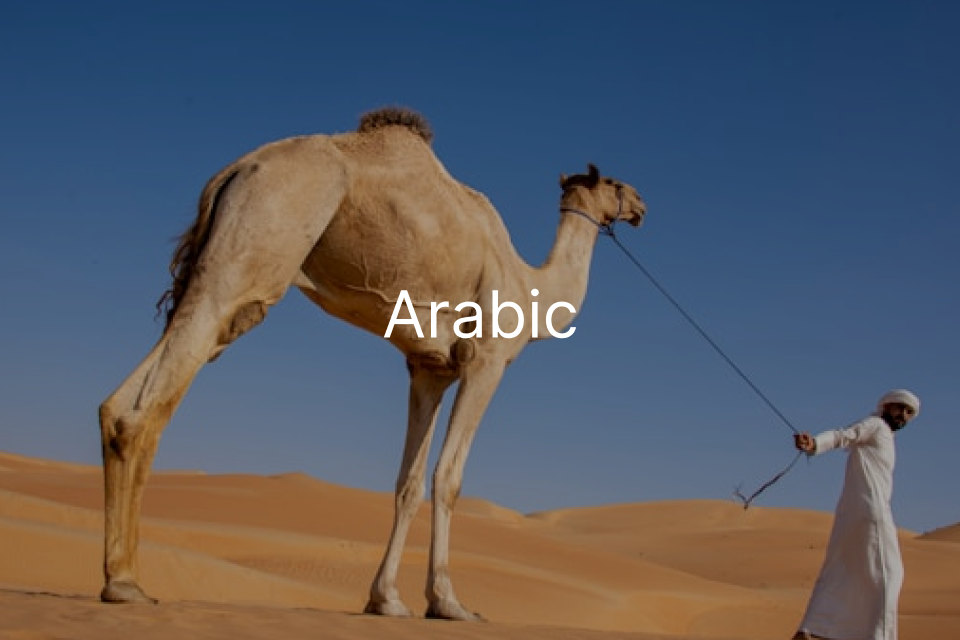
With over 400 million speakers, a rich history, and a unique structure, Arabic is one of the world's most influential languages. From its poetic origins to its modern-day dialects and the AI tools that bridge them, this guide offers a clear and engaging exploration for learners and the curious alike.

Quechua is a language spoken in Peru, Bolivia, Ecuador, and to a lesser extent in Colombia, Argentina, and Chile. It's a vibrant testament to the history and resilience of the indigenous cultures of the Andes.

Vietnamese is a tonal language spoken by over 86 million people, with a rich history and influences from Chinese and French.

Urdu, a vibrant language spoken in Pakistan and India, is a rich blend of Persian and Arabic influences. This guide explores its history, script, phonology, grammar, and cultural significance, providing a comprehensive introduction for learners and curious readers.
Welcome to the fascinating world of Middle English, the form of the English language spoken from approximately 1100 to 1500. This pivotal period, spanning the High and Late Middle Ages, witnessed English transform from the heavily inflected Old English of Beowulf into a language recognizably closer to what we speak today. In this comprehensive guide, we'll explore what Middle English is, its rich historical context, distinctive linguistic features, major literary achievements, and practical strategies for reading it. You'll also have the opportunity to test your understanding with an interactive quiz and discover resources to help navigate challenging passages.
The Navajo language, known as Diné Bizaad, is a cornerstone of Navajo culture and one of the most widely spoken Native American languages in the United States, with approximately 170,000 speakers as of 2025. Rooted in the Southwestern Navajo Nation, this Southern Athabaskan language is both a linguistic marvel and a cultural treasure. However, it faces endangerment due to declining use among younger generations. This comprehensive guide delves into the language's linguistic features, cultural significance, current challenges, and preservation efforts, offering readers an engaging journey enriched with interactive elements and authoritative resources, including tools like OpenL Translate to explore Navajo further.
Old English, also known as Anglo-Saxon, is the earliest form of English, spoken in England and southeastern Scotland from c. 450 to c. 1150 CE. Brought by Anglo-Saxon settlers, it's a Germanic language with Latin and Old Norse influences. Its complex grammar and unique vocabulary make it distinct from Modern English. Iconic works like Beowulf offer a window into Anglo-Saxon culture.