Basque: A Practical Guide to Europe’s Most Mysterious Language
TABLE OF CONTENTS
Basque, or Euskara, is one of the few European languages that still makes linguists stop and say, “Hold on, where did this come from?” It is spoken in the western Pyrenees, between northern Spain and southwestern France, yet it is not a Romance language like Spanish or French. It does not belong to the Indo-European family at all.
That fact alone explains a lot of the fascination around Basque. For travelers, it reshapes the map of Iberia. For language learners, it offers a structure that feels refreshingly unlike English. For translators, it is a reminder that geography does not always predict grammar. And for anyone interested in minority languages, it is a living example of how a language can survive pressure from larger neighbors and still build a modern public life.
This guide covers the questions most readers actually have: where Basque is spoken, why it is usually described as a language isolate, how its writing system and grammar work, what role dialects still play, and what to know before learning or translating it.
Key Points
- Basque is spoken on both sides of the western Pyrenees, mainly in the Basque Autonomous Community and parts of Navarre in Spain, and in the Northern Basque Country in France.
- It is usually described as a language isolate, meaning it has no accepted genetic relationship with any living language family.
- Basque is co-official with Spanish in Euskadi, has more limited legal recognition in Navarre, and has no national official status in France.
- Official figures depend on geography and age bracket, but a safe high-level summary is that Basque has close to one million speakers or strong users, depending on how the count is defined.
- Modern Basque uses the Latin alphabet and a standard written form called Euskara Batua, which is used in education, media, and much of public life.
- The grammar is famous for ergative alignment, heavy use of suffixes, and verb patterns that feel very different from English, Spanish, and French.
Where Basque Is Spoken
 San Sebastian shows how closely Basque identity is tied to place, coast, and city life at once.
Basque is the traditional language of Euskal Herria, the wider Basque cultural area. In practical terms, that means a cross-border region rather than a single sovereign state.
Today, the language is most visible in:
- the Basque Autonomous Community in Spain: Araba/Alava, Bizkaia, and Gipuzkoa
- the Chartered Community of Navarre in Spain
- the Northern Basque Country in France, within Pyrénées-Atlantiques
This matters because Basque is not distributed evenly. In some towns it is part of daily life in schools, local government, and community events. In others, especially urban or heavily mixed areas, Spanish or French dominates everyday speech.
Most Basque speakers today are bilingual. That shapes how the language is used in public life, in media, and in translation. A Basque speaker may also be fully comfortable in Spanish or French, but that does not make Basque secondary. In many settings, it is a strong marker of local identity, education, and community belonging.
If you have read our guides to Quechua or Navajo, the pattern may feel familiar: a language can be numerically smaller than its neighbors and still carry major cultural weight.
Status and Speakers
The legal position of Basque changes depending on which side of the border you are on.
In the Basque Autonomous Community, Article 6 of the Statute of Autonomy states that Euskera, like Spanish, has official status in Euskadi and that all inhabitants have the right to know and use both languages. That is a strong foundation for bilingual education, public services, and media.
Navarre is more complicated. Basque has institutional support there, but its legal position varies by zone rather than applying uniformly across the whole region. In France, Basque has cultural visibility and local support, but it does not have national official-language status.
Speaker counts also need careful wording. Different sources measure different things:
- full speakers versus partial speakers
- age 2+ versus age 16+
- the Basque Autonomous Community alone versus the wider Basque Country
That is why exact numbers can look inconsistent if you compare them too quickly.
Two current official reference points are especially useful:
- According to a 2021 Eustat release for the Basque Autonomous Community, 62.4% of the population aged 2 and over had some knowledge of Basque. That included 936,812 Basque speakers and 412,996 quasi-Basque speakers.
- According to the Basque Government’s language data portal, in 2021, 30.2% of the population aged 16 or over in the wider Basque Country were Basque speakers: 36.2% in the Basque Autonomous Community, 14.1% in Navarre, and 20.1% in the Northern Basque Country.
For a general-interest article, the cleanest summary is this: Basque has close to one million speakers or strong users, depending on the territory and on how competence is measured.
That nuance is worth keeping. It respects the data and avoids the lazy habit of repeating a single number without saying what it measures.
Why Basque Is Unique
Basque is usually described as a language isolate. In plain English, that means linguists have not demonstrated a convincing genetic relationship between Basque and any existing language family.
That does not mean Basque developed in a vacuum. Like every living language, it has borrowed words, changed over time, and been shaped by long contact with neighboring societies. But its deeper ancestry remains unresolved.
Older theories tried to connect Basque with Iberian, Afro-Asiatic languages, or languages of the Caucasus. Those ideas are historically interesting, but none has achieved scholarly consensus. The cautious modern position is the right one: Basque has no known living relatives.
This is also why Basque appears so often in introductions to historical linguistics. Britannica describes it as the only surviving remnant of the pre-Indo-European languages once spoken in southwestern Europe before Romanization. That is a strong statement, but it captures the broad historical significance well if you keep the wording careful.
In short, Basque is not “mysterious” because nobody knows anything about it. It is mysterious because we know a great deal about the modern language, yet its deepest family tree still resists classification.
History
Basque was already present in the western Pyrenees before Roman rule reshaped much of the Iberian Peninsula. Latin left a deep mark on the region, and over time Romance languages spread across surrounding territory, but Basque survived in pockets where local communities maintained it.
The language slowly lost ground in some areas over the centuries, especially where state administration, urbanization, and education favored Latin, then Spanish or French. Even so, Basque did not disappear. Records from the medieval period become more reliable, and the first printed Basque book appeared in 1545, marking the start of a written tradition.
The modern story is not just one of decline. It is also one of deliberate recovery.
From the 19th century onward, scholars, writers, and language activists worked to document dialects, expand publishing, and build a stronger standard. In the 20th century, especially after the political changes that followed the Franco era in Spain, Basque gained new space in schools, broadcasting, and public institutions.
One of the most important developments was the spread of Euskara Batua, or Unified Basque. It gave schools, publishers, and public institutions a shared written standard that could work across dialect boundaries, which made modern Basque education and media much more practical.
Writing and Sound
Basque does not use a special ancient script. Modern Basque is written with the Latin alphabet, which makes it less intimidating for many learners than the language’s reputation suggests.
One practical advantage is that Basque spelling is fairly regular. Once you learn the main sound-letter correspondences, words are usually easier to pronounce than they look at first glance.
Here are a few features beginners notice early:
| Spelling | Rough value | Example use |
|---|---|---|
tx | like English ch | common in many everyday words |
x | usually like English sh | appears in standard Basque words and names |
z / s | two different sibilant sounds | important in careful pronunciation |
rr | a trilled r | similar to the strong rolled r in Spanish |
Basque also has a relatively compact vowel system. In broad terms, the five main vowels feel familiar to learners who already know Spanish: a, e, i, o, u.
That does not mean pronunciation is trivial. Basque has sound distinctions that matter, especially among sibilants, and dialect pronunciation varies. Still, compared with languages that have deep spelling irregularities, Basque offers a welcome level of consistency.
For learners, the writing system is one of the easiest parts of the language. The bigger challenge comes later, when grammar becomes central.
Grammar
Basque grammar feels different because it organizes meaning differently from English.
Three features matter most at the beginner level.
1. It is agglutinative
Basque builds meaning by attaching endings to words. Instead of relying heavily on separate little words, it often packs grammatical information into suffixes.
That gives the language a very “modular” feel. A noun can take endings for case, number, definiteness, and location. In practical terms, Basque often adds meaning through endings where English would use separate little words such as “in,” “to,” or “from.” For learners, this can feel overwhelming at first, but it also means the system is more regular than it appears once the patterns begin to repeat.
A tiny example helps:
etxe= houseetxea= the houseetxean= in the houseetxera= to the houseetxetik= from the house
You do not need to memorize those forms immediately. The point is to notice how much meaning Basque can build by adding endings to a single base word.
2. It uses ergative alignment
This is one reason Basque feels difficult to beginners.
English treats the subject of “I sleep” and the subject of “I see the house” as the same kind of thing. Basque does not organize those roles in quite the same way. In Basque, the subject of a transitive verb is marked differently from the subject of an intransitive verb, a pattern also highlighted in Britannica’s grammar overview.
A simple illustration:
Gizona etorri da.= The man came.Gizonak etxea ikusi du.= The man saw the house.
In the first sentence, gizona is the subject of an intransitive verb. In the second, gizonak takes the -k ending because it is the agent of a transitive verb. That small change is exactly the kind of thing that makes Basque grammar feel unfamiliar at first.
If that sounds abstract, that is because it is. The good news is that learners do not need to master linguistic terminology on day one. What they do need to know is that Basque sentence structure will not line up neatly with word-for-word English or Spanish patterns.
3. Verbs carry a lot of information
Basque verbs, especially auxiliary verbs, can reflect relationships between subject, object, and indirect object. That is powerful, but it also means the verbal system is one of the biggest hurdles for learners.
Add rich case marking and a default word order that often leans toward Subject-Object-Verb, and you get a language that rewards patience and repeated exposure rather than quick phrasebook shortcuts.
At the same time, Basque lacks some things English speakers often expect to struggle with:
- there is no grammatical gender like Spanish or French noun classes
- spelling is relatively consistent
- once a pattern clicks, many forms behave predictably
So yes, Basque is challenging. But it is challenging in a systematic way, not in a chaotic way.
Dialects and Batua
Basque is not one flat, uniform speech variety.
The 19th-century scholar Louis-Lucien Bonaparte famously identified eight modern dialects, and dialect differences still matter. More practical modern overviews often group Basque into broader dialect areas such as Bizkaiera, Gipuzkera, Navarrese varieties, Lapurtera, and Zuberera. A speaker from one area may notice pronunciation, vocabulary, or forms that feel strongly local in another.
That said, dialect diversity should not be exaggerated into mutual incomprehensibility. The language has a shared core, and modern public life depends heavily on Euskara Batua, the standard form used in schools, publishing, journalism, and much administrative writing.
For most learners, Batua is the right starting point. It gives access to textbooks, news media, dictionaries, courses, and current online content. Later, if your interest is tied to a particular town, family background, or oral tradition, dialect study becomes much more rewarding.
For translators, this distinction is even more important:
- community or literary material may preserve dialect flavor on purpose
- legal, educational, and institutional texts usually expect standard Basque
- place names, public terminology, and bilingual signage may follow local conventions even when the main text is in Batua
Translation quality improves quickly when you ask one basic question first: “Is this text aiming for local voice or standard public readability?”
Basque Today
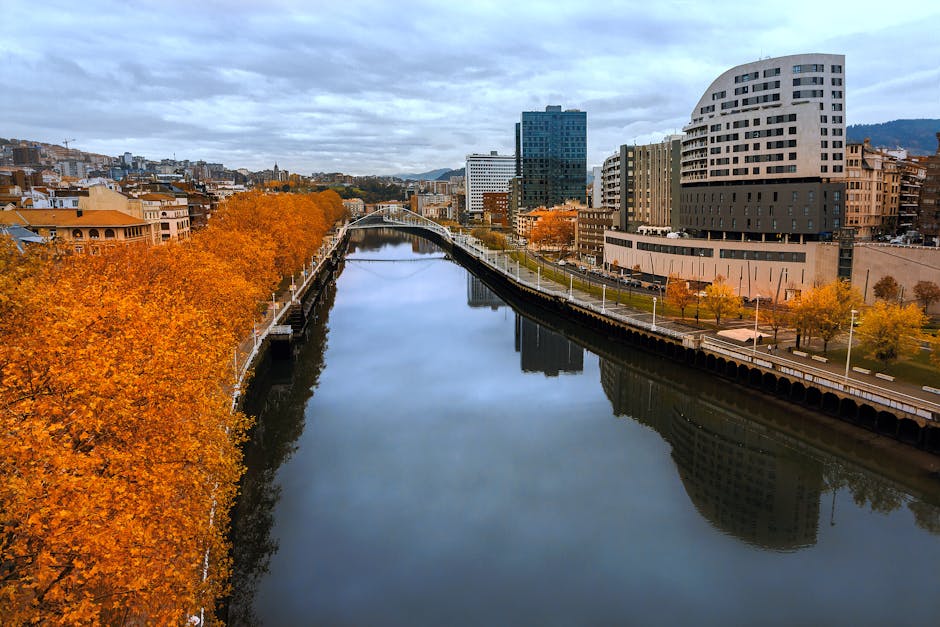 Modern Basque life is not only rural or historical; it also lives in cities, media, education, and everyday public space.
Basque is often described through its past, but current education and digital-use data show that it also has a modern institutional presence.
Basque is a historical language, yes, but it is also a modern language with institutions, schools, digital culture, and a public future people are actively shaping.
The Basque Government’s language portal offers a few useful signs of that modern vitality:
- In the 2023/2024 academic year, 71% of non-university students in the Basque Autonomous Community studied in Model D, the immersion model centered on Basque.
- In the same academic year, 41,080 adults attended Basque language courses across the wider Basque Country.
- The same portal notes that the Basque Wikipedia ranked 17th in the world in 2024 by completion of a core set of articles.
Those details matter because they show Basque is not being maintained only through nostalgia. It is being taught, written, searched, and updated in real institutions and real digital spaces.
That is one reason Basque keeps attracting learners who are less interested in “global utility” and more interested in language depth, cultural continuity, and the experience of learning a system that does not simply mirror English.
Is Basque Hard?
Usually, yes. But not for the reasons people first assume.
The hardest parts are:
- the grammar has few familiar reference points for English speakers
- many teaching materials assume at least some Spanish context
- verb agreement and case patterns take time to internalize
- you cannot rely on cognates the way you can in Spanish, French, or Italian
The easier parts are just as real:
- the writing system is accessible
- pronunciation is more regular than English spelling
- there is no grammatical gender to memorize
- the language has a strong modern standard, which helps self-study
So the honest answer is this: Basque is hard in the medium term, not impossible in the first week. A motivated learner can start reading simple words, greetings, and structured examples fairly quickly. The real climb begins when you move from recognition to natural sentence building.
If you enjoy language for its logic, history, and pattern-building, Basque can be unusually satisfying. If you want fast travel phrases with immediate transfer from another European language, it can feel stubborn. Both reactions are normal.
Useful Phrases
These common forms are good starting points in standard Basque:
| Basque | English |
|---|---|
Kaixo | Hello |
Egun on | Good morning |
Arratsalde on | Good afternoon |
Agur | Goodbye |
Eskerrik asko | Thank you |
Mesedez | Please |
Bai | Yes |
Ez | No |
Even a small phrase set helps because Basque is the kind of language people notice. Using a basic greeting in the right setting is not a magic key, but it can signal respect for the place you are in.
FAQ
Is Basque endangered?
Basque is not a disappearing museum piece, but neither is it socially secure in every setting. The best way to describe the situation is uneven. Official data show strong growth in education and solid numbers of speakers, especially among younger people in parts of Euskadi, yet daily use still varies sharply by territory, age, and context. That is why policy, schooling, and community transmission still matter so much.
Can Spanish speakers understand Basque?
Not without learning it. Spanish speakers may recognize loanwords, place names, or bilingual public terminology, but Basque is not mutually intelligible with Spanish. Sharing the same geography does not make the two languages structurally close.
Should learners start with a dialect or with Batua?
Most learners should start with Batua. It gives you access to the broadest range of textbooks, media, and modern written material. Dialects become much easier to appreciate once the standard form is already familiar.
Learning and Translation Tips
Whether you are studying the language or working with Basque documents, a few habits save time quickly.
Start with Batua
If you are new, standard Basque is the best entry point. It is the form you are most likely to see in textbooks, news, interfaces, and formal writing.
Do not translate word for word from Spanish or French
Because Basque lives beside Spanish and French, many texts sit in a bilingual environment. That can trick beginners into thinking the structure will track neatly across languages. It often does not. A literal transfer can produce unnatural Basque or misunderstand the original.
Watch place names and institutional names carefully
Official names may appear in Basque, Spanish, French, or bilingual forms. A good translation workflow checks whether a name should be translated, preserved, or presented in both versions.
Know the audience
A school notice, a tourism leaflet, a local association newsletter, and a legal document do not all need the same tone. Some audiences expect clean Batua. Others value regional flavor.
Use tools as support, not as final authority
Machine translation can help with gist, rough drafting, or terminology comparison, especially for short informational texts. But Basque is not a language where you want to trust a word-for-word output blindly, especially in education, public communication, or culture-heavy writing.
For quick checks, bilingual comparison, or short real-world tasks, the OpenL Basque Translator is a practical option. It supports text, documents, images, speech, and scanned PDFs, which makes it useful when you want to test vocabulary, compare phrasings, or work with source material beyond plain text.
The safer workflow is simple:
- identify whether the text is in standard Basque or a regional variety
- check names, place references, and institutional terminology first
- draft for meaning, not for word order
- review the final text for tone, clarity, and local naturalness
That process is slower than copy-paste translation, but it avoids the exact mistakes Basque is most likely to punish.
Learning Resources
 If the article sparks your interest, the fastest next step is to pair reading with a dictionary, media input, and short daily study sessions.
If you want to move from curiosity to actual study, these are practical next stops:
- OpenL Basque Translator for quick translation checks, document handling, and practice with real-world materials
- Assimil’s Basque course for a structured beginner path
- Elhuyar Dictionary for quick Basque-English lookups and everyday vocabulary checks
- ARGIA English for current affairs and cultural reading connected to Basque society
- EITB’s mobile and on-demand services for news, radio, and audiovisual content linked to Basque public media
Final Thoughts
Basque matters for more than one reason at once. It is historically unusual, structurally distinctive, politically important in its home region, and still very much alive in schools, media, and public debate.
That combination is rare. Many languages are ancient but no longer widely used. Others are modern and expanding but typologically familiar. Basque is both old and contemporary, local and institutionally present, difficult and deeply learnable.
If you approach it with the right expectations, Basque stops looking like a puzzle with no answer. It starts to look like what it really is: a living language with a long memory and a very current voice.