
Czech language guide: 7 grammar cases, the famous ř sound, how hard Czech is to learn, and how Czech compares with Slovak and Polish.
Standard Khmer has no lexical tones, but its vowels and two-series script reward close attention. Explore Cambodia’s language, grammar, and everyday phrases.
Where Yiddish is spoken today, how Litvish, Poylish, and Hasidic varieties differ, why it is a Germanic language in Hebrew letters, and how to start learning it.
Albanian is the only modern language in its Indo-European branch. Learn where it is spoken, how Gheg and Tosk differ, why its alphabet was standardized late, and what makes Albanian translation difficult.
Norwegian has no official spoken standard but has two equal written standards, Bokmål and Nynorsk. Learn why both exist, how they differ, and which one to study.
Danish pairs familiar Scandinavian spelling with stød, soft consonants, and heavy sound reduction. Learn why it sounds so different, how its grammar works, and how to study it effectively.
Estonian combines 14 grammatical cases, three sound lengths, and no grammatical gender with the identity of one of Europe's most digital societies.
Learn what Anglo-Saxon Futhorc was, why rune lists contain 28, 29, 33, or sometimes more characters, how it differs from Futhark, and how to type it.
Learn what Old Norse was, how its runes and grammar worked, what it gave English, and how to read, type, and translate real texts.
Swedish is a North Germanic language with two pitch accents, two grammatical genders, three extra letters, and a mostly regular written form that hides a few sharp edges for learners and translators.
A complete guide to the 24 Greek letters, with Modern Greek pronunciation, writing rules, history, scientific uses, and practical typing instructions.
Mongolian combines a Khalkha national standard, Cyrillic writing in Mongolia, and a traditional vertical script still used across the Mongolian cultural world.
Azerbaijani is a Turkic language with two major standards, a script story that spans Latin and Arabic, and grammar that will feel familiar if you know Turkish.
Armenian is an independent branch of Indo-European with its own 38-letter script, two modern standards, and a diaspora story shaped by survival, migration, and memory.
Marathi has 83 million mother-tongue speakers in India, a 2024 Classical Language designation, Devanagari script, three grammatical genders, and a strong literary identity rooted in Maharashtra.
Irish is a national symbol, an EU official language, and a daily community language in parts of Ireland. This guide explains where Irish is spoken, why speaker numbers are tricky, and what makes Gaeilge distinctive.

Maltese is the only Semitic language written in Latin script and an official EU language. Here's how a medieval Arabic dialect, cut off from the Arab world by a Norman conquest, became modern Europe's most unusual mother tongue.

Why is Arsenal called Arsenal? What does Juventus mean? From factory workers to Greek heroes — the etymology of 35+ football club names around the world.

Discover Catalan — a language banned under Franco, now spoken by 10 million across four countries, and pushing for official EU status in 2026.
When is Duanwu 2026? Why zongzi and dragon boat racing? And should you say 快乐 or 安康? A complete guide to the Dragon Boat Festival.
Discover Amharic, Ethiopia's official language — its unique Ge'ez script, ejective consonants, SOV grammar shaped by Cushitic influence, and the challenges of AI translation for low-resource languages.
A complete guide to the Georgian language — its unique Mkhedruli alphabet, split ergativity, ejective consonants, and why this Kartvelian language remains one of the hardest in the world to learn.
Discover 12 words from around the world that have no English equivalent — and the surprising cultural insights they reveal about how different societies see life, love, nature, and creativity.
Latin is called a dead language, but it lives on in English vocabulary, scientific terminology, the Catholic Church, and even the Vatican ATM. Discover its history, grammar, and why it still matters in 2026.
Discover Welsh (Cymraeg), the Celtic language that survived centuries of suppression to become one of Europe's most remarkable revival stories. Learn about its unique mutations, VSO grammar, and 29-letter alphabet.
A complete guide to Tamil — the 2,000-year-old Dravidian language spoken by 80+ million people across India, Sri Lanka, Singapore, and the diaspora. History, script, grammar, diglossia, and AI translation.
A complete guide to Romanian — the only major official Romance language in Eastern Europe. History, alphabet, grammar, vocabulary, common phrases, learning resources, and AI translation.
Learn what Cantonese is, where it is spoken, how its tones and writing work, and why it remains one of the most interesting and challenging Chinese languages for learners and AI translation tools.
Discover Icelandic, the remarkably preserved language of the Vikings. Learn about its unique grammar, patronymic naming system, linguistic purism, and the modern fight against digital extinction.
Discover the essential differences between Brazilian and European Portuguese in spelling, pronunciation, grammar, and vocabulary — and learn how to navigate both variants in translation and daily communication.
Why emoji meanings shift across cultures, generations, and platforms, with examples from messaging, marketing, and the law.
Many languages — Finnish, Swedish, Polish, Russian, Japanese — have no direct equivalent for 'please.' Learn how politeness is encoded through grammar, tone, and culture instead.
A complete guide to the Hungarian language—its Uralic origins, 18 grammatical cases, vowel harmony, agglutinative structure, rich literary tradition, and practical tips for learners and translators.

A detailed comparison of Mandarin and Cantonese covering tones, writing systems, grammar, regional usage, and AI translation challenges — essential reading for translators and language learners.

A copy-paste prompt that makes AI translations sound natural, not robotic. Includes examples, customization tips, and ChatGPT setup.
A comprehensive guide to the Finnish language—its 15 grammatical cases, agglutinative morphology, vowel harmony, rich history from Mikael Agricola to modern usage, dialects, and practical learning strategies.
A comprehensive guide to the Persian language—its 2,500-year history from Old Persian cuneiform to modern Farsi, unique grammar without gender, the ezafe construction, rich poetic tradition from Rumi to Hafez, and practical learning strategies.
Discover 50 beautiful untranslatable words from 25+ languages that have no direct English equivalent — from Japanese komorebi to Portuguese saudade.

A practical guide to the Dutch language covering where Dutch is spoken, how it relates to Flemish and Afrikaans, core pronunciation and grammar patterns, and key translation tips.
A practical guide to Basque—where it is spoken, why it has no known relatives, how its grammar works, key dialects, useful phrases, and tips for learning and translation.
A comprehensive guide to the Russian language—its Cyrillic alphabet, palatalization system, verb aspect, six grammatical cases, rich history from Old Church Slavonic to modern usage, dialects, and practical learning strategies.

Thai is a tonal language spoken by over 70 million people, featuring five tones, a unique Brahmic script, and a rich system of politeness registers reflecting Thai culture.

Turkish is an agglutinative language spoken by over 80 million people, featuring vowel harmony, no grammatical gender, and a Latin-based alphabet adopted in 1928.
A practical guide to Hindi—the Devanagari script, pronunciation, grammar essentials, the Hindi-Urdu relationship, common pitfalls, and a learning roadmap for beginners and translators.
A comprehensive French language guide covering pronunciation (liaisons, nasal vowels), grammar basics (gender, verbs, tu vs vous), and practical translation tips for learners, translators, and product teams.
Explore Ukrainian, its history, writing system, key varieties, and the best ways to learn it.
A clear, practical guide to Nepali—history, writing and pronunciation, essential grammar, regional varieties, learning roadmap, mistakes to avoid, and real-world usage.
Shakespearean English refers to the rich, flexible Early Modern English used in Shakespeare's plays and poems. This guide explains what it is, how it sounds, how its grammar works, and how to read it with confidence.

Tagalog is the Austronesian language at the heart of the Philippines' national language Filipino, spoken by tens of millions at home and across the global diaspora. This guide explains how Tagalog and Filipino relate, how the focus/voice system works, why Taglish is everywhere, and what learners and localization teams should know.

An introductory guide to Polish—where it's spoken, how it works, what to learn first, and how to approach translation and localization.
A practical introduction to Italian—where it's spoken, how it sounds and works, why it matters today, and how to learn and translate it effectively.
A practical language guide covering Portuguese history, pronunciation, grammar essentials, dialects, learning milestones, and modern AI translation tactics for Brazil, Portugal, and Lusophone Africa.

A modern, practical guide to a 1,000-year literary language with 230M+ native speakers. Explore history, script, core grammar, dialects, media, AI translation, and a roadmap to start speaking with confidence.

Discover 30 popular Gen Z slang words shaping conversations in 2025, complete with meanings, examples, and tips for accurate translation or adaptation.

Mexican Spanish is the most widely spoken variety of Spanish, rich in indigenous influences and regional diversity. This guide explores its unique linguistic features, historical background, and practical learning strategies for students and enthusiasts.
A practical, modern guide to German—where it's spoken, how it works, what to learn first, and how to translate/localize it well.

A practical guide to Korean—Hangul and pronunciation, particles and word order, honorifics and politeness, verb endings, numbers, dialects, a learning roadmap, common pitfalls, and QA tips.

Learn the top 10 American slang words in 2025 with meanings, simple examples, and translation tips so you can understand and translate them correctly.

A practical, modern guide to Japanese writing systems, pronunciation, grammar, politeness, and localization—built for learners, translators, and product teams.
A clear, practical guide to Spanish—history, writing and pronunciation, grammar, dialects, learning roadmap, mistakes to avoid, and the best tools for study and localization.
Kiswahili (Swahili) is one of Africa's most widely used languages, linking tens of millions across Tanzania, Kenya, Uganda, the DRC, and beyond. This guide covers history, dialects, writing and pronunciation, core grammar, learning paths, and practical resources.
From the aleph-bet and niqqud to roots (shoresh) and binyanim, this guide explains Hebrew script, morphology, and modern Israeli usage with practical tips for learners and translators.

Bahasa Indonesia binds thousands of islands through shared history, accessible grammar, and modern media; follow its journey from port lingua franca to digital-first national language.

Translation errors can embarrass your business and confuse your audience. Learn the seven most frequent translation mistakes and proven strategies to avoid them in your international communications.
Translation tools sometimes produce awkward, unnatural text that sounds robotic or confusing. Learn why this happens and discover practical methods to get natural, professional translations.

Exploring the beauty and simplicity of Toki Pona. A guide to its history, usage, and how to learn this unique conlang.
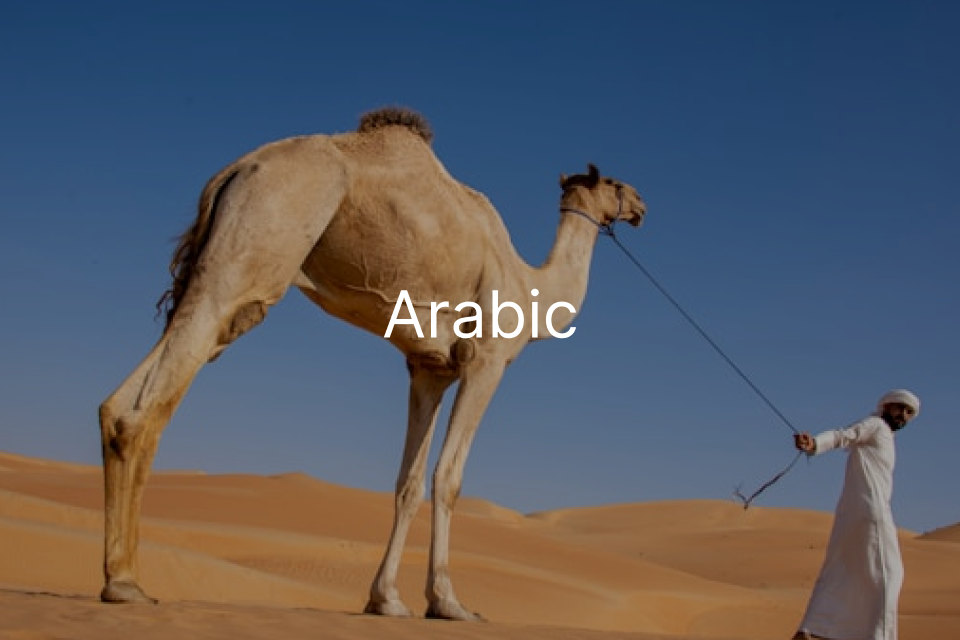
With over 400 million speakers, a rich history, and a unique structure, Arabic is one of the world's most influential languages. From its poetic origins to its modern-day dialects and the AI tools that bridge them, this guide offers a clear and engaging exploration for learners and the curious alike.
Quechua is a language spoken in Peru, Bolivia, Ecuador, and to a lesser extent in Colombia, Argentina, and Chile. It's a vibrant testament to the history and resilience of the indigenous cultures of the Andes.
Discover the Chinese language, its history, and why it's a valuable skill to learn.
Vietnamese is a tonal language spoken by over 86 million people, with a rich history and influences from Chinese and French.
Discover Malayalam, the vibrant language of Kerala, India. This guide explores its history, script, and practical tips for beginners.

Urdu, a vibrant language spoken in Pakistan and India, is a rich blend of Persian and Arabic influences. This guide explores its history, script, phonology, grammar, and cultural significance, providing a comprehensive introduction for learners and curious readers.
Welcome to the fascinating world of Middle English, the form of the English language spoken from approximately 1100 to 1500. This pivotal period, spanning the High and Late Middle Ages, witnessed English transform from the heavily inflected Old English of Beowulf into a language recognizably closer to what we speak today. In this comprehensive guide, we'll explore what Middle English is, its rich historical context, distinctive linguistic features, major literary achievements, and practical strategies for reading it. You'll also have the opportunity to test your understanding with an interactive quiz and discover resources to help navigate challenging passages.
The Navajo language, known as Diné Bizaad, is a cornerstone of Navajo culture and one of the most widely spoken Native American languages in the United States, with approximately 170,000 speakers as of 2025. Rooted in the Southwestern Navajo Nation, this Southern Athabaskan language is both a linguistic marvel and a cultural treasure. However, it faces endangerment due to declining use among younger generations. This comprehensive guide delves into the language's linguistic features, cultural significance, current challenges, and preservation efforts, offering readers an engaging journey enriched with interactive elements and authoritative resources, including tools like OpenL Translate to explore Navajo further.
Old English, also known as Anglo-Saxon, is the earliest form of English, spoken in England and southeastern Scotland from c. 450 to c. 1150 CE. Brought by Anglo-Saxon settlers, it's a Germanic language with Latin and Old Norse influences. Its complex grammar and unique vocabulary make it distinct from Modern English. Iconic works like Beowulf offer a window into Anglo-Saxon culture.
Ancient Greek is a language over 3,000 years old that's woven into modern culture. From epic poems to the foundations of science, Ancient Greek is a living legacy.