Amharic: Ethiopia's Ancient Semitic Language
TABLE OF CONTENTS
The only Semitic language written left-to-right with its own 2,000-year-old script — and one where “hello” also means “peace.”
Classification
Amharic (አማርኛ, Amarəñña) belongs to the Ethio-Semitic branch of the Semitic language family, which itself is part of the larger Afroasiatic phylum. It is the second most widely spoken Semitic language in the world after Arabic, with roughly 35–40 million native speakers and an additional 20–25 million second-language speakers.
Within Ethio-Semitic, Amharic sits in the South Ethiopic subgroup alongside languages like Argobba, Harari, and the Gurage cluster. Its closest relative by shared vocabulary is Argobba, though the two are not mutually intelligible.
A common misconception is that Amharic descends directly from Ge’ez (ግዕዝ), the ancient liturgical language of the Ethiopian Orthodox Tewahedo Church. In fact, the two are sister languages that share a common Proto-Ethio-Semitic ancestor. Amharic and Ge’ez have about 62% lexical similarity — comparable to the distance between German and English. Ge’ez plays a role similar to Latin in Europe: a classical language preserved in liturgy and scholarship, still influencing its modern descendants centuries after it ceased to be spoken natively.
Where It’s Spoken
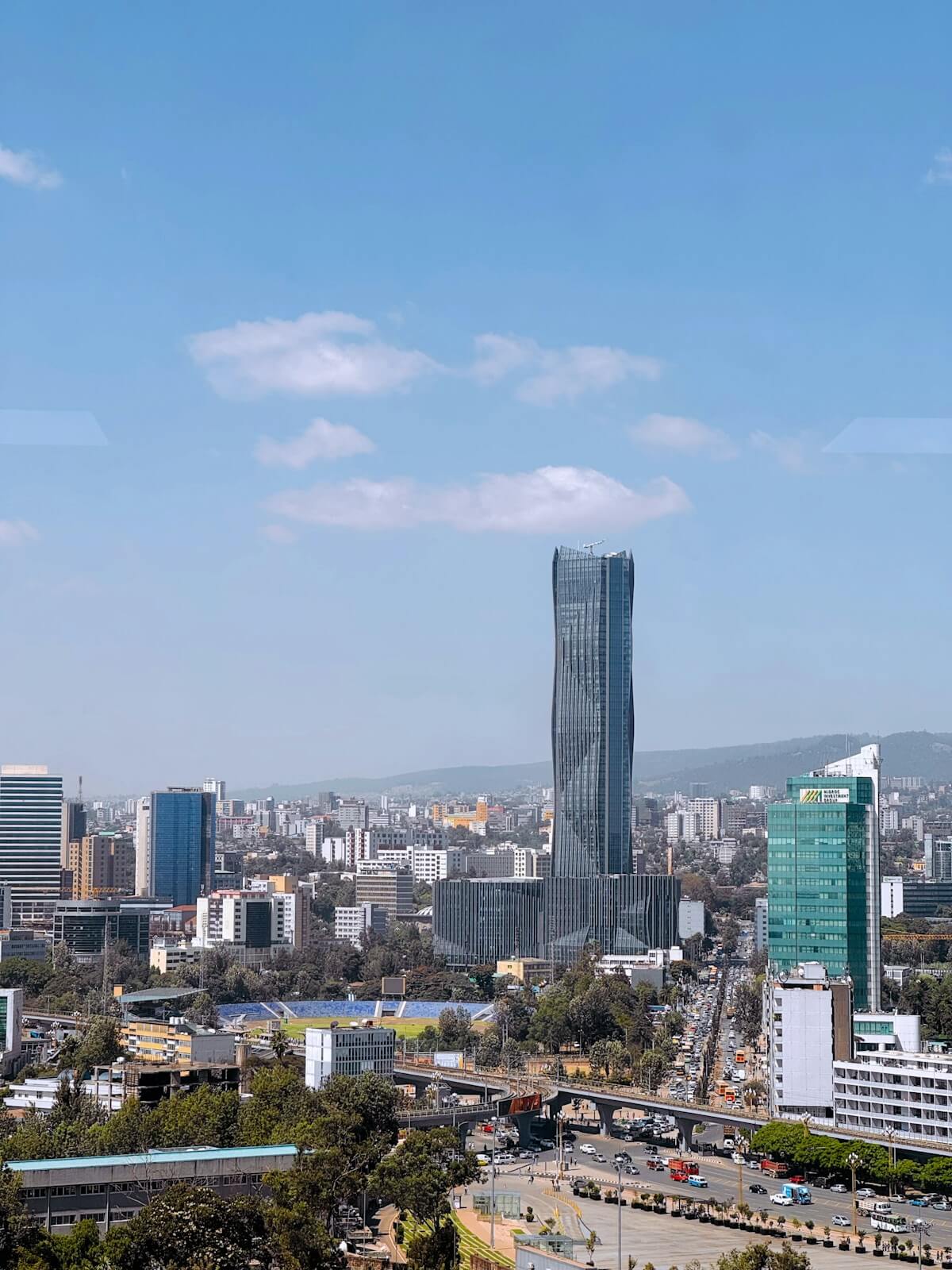
Amharic is the official working language of the Federal Democratic Republic of Ethiopia. All federal laws are published in Amharic, and it serves as the language of government, national media, and the education system. It is also the official or working language of several regional states, including Amhara, Benishangul-Gumuz, Gambela, and the capital Addis Ababa.
Beyond Ethiopia, Amharic holds working language status at the African Union. Significant diaspora communities speak Amharic in:
| Country | Estimated Speakers |
|---|---|
| United States | 250,000+ (concentrated in Washington D.C., Minnesota, California) |
| Israel | 177,600+ (Beta Israel / Ethiopian Jewish community) |
| Canada | 45,000+ (Toronto, Calgary) |
| United Kingdom | 30,000+ (London) |
| Sweden | 20,000+ |
| Eritrea | Used as a second language in border regions |
| Djibouti & Sudan | Minority language communities |
Within Ethiopia, Amharic functions as a lingua franca across the country’s 80+ ethnic groups. While only about 27% of Ethiopians speak it as a first language, an estimated 55–65 million people — over half the population — use it as either a first or second language.
Dialects & Varieties
Amharic has five major dialect regions, all mutually intelligible but with notable differences in pronunciation, vocabulary, and even grammar. The Addis Ababa variety serves as the standard used in media, education, and government.
| Dialect Region | Divergence from Standard | Key Cities | Distinctive Feature |
|---|---|---|---|
| Addis Ababa | Standard | Addis Ababa | Prestige dialect; basis for all formal Amharic |
| Gojjam | Most divergent | Debre Marqos, Bahir Dar | /b/ → [w] (e.g., kəbt → kawt “cattle”); unique negative gerund verb form impossible in standard Amharic |
| Gondar | Near-standard | Gondar, Debre Tabor | Has a morphological future tense absent in Addis Ababa Amharic; influenced by neighboring Tigrinya |
| Wollo | Somewhat divergent | Dessie, Weldiya | Consonant metathesis (e.g., mārṭābya → māṭrābya “axe”); South Wollo varieties group closer to North Shewa |
| Shewa | Somewhat divergent | Debre Berhan | Consonant lenition: /kʼ/ → [ʔ], /k/ → [h] between vowels |
The Gojjam dialect deserves special mention. It is so distinct that linguist Mengistu Tadesse’s 2021 re-classification argues only East Gojjam should be considered the true distinct “Gojjam” variety — West Gojjam speech is actually closer to the Addis Ababa standard. Gojjam’s most striking feature is using the negative gerund as an independent verb form (al-bälto-mm “he did not eat”), something impossible in standard Amharic.
An additional variety, Jewish Amharic, was spoken by the Beta Israel (Ethiopian Jewish) community and now survives primarily in Israel. It incorporates Jewish-specific vocabulary — for example, referring to a type of grasshopper as “Moses’s horses” rather than the Christian “Mary’s horses.” This variety is declining as younger generations shift to Modern Hebrew.
History
The history of Amharic is inseparable from the political and demographic history of the Ethiopian highlands.
Ancient Roots
Semitic-speaking peoples first crossed from South Arabia into the Ethiopian highlands well before 500 BC, with linguistic evidence suggesting a presence as early as 2000 BC. These migrants brought the ancestor of Proto-Ethio-Semitic, which would eventually split into the northern branch (giving rise to Ge’ez and Tigrinya) and the southern branch (giving rise to Amharic and its relatives).
The Kingdom of Aksum (c. 100–940 AD), one of the great civilizations of late antiquity, used Ge’ez as its written language. Amharic, at this stage, was an unwritten spoken vernacular developing in the Bashilo River basin of what is now the Amhara region.
The Cushitic Substratum
This is the single most important fact about Amharic’s evolution: the Amhara people were originally Agew (Central Cushitic) speakers who adopted the Semitic language of incoming settlers. As they shifted languages over generations, they retained the syntactic patterns of their original Cushitic tongue.
The result is a language with a Semitic vocabulary built on a Cushitic grammatical skeleton. This explains virtually every “un-Semitic” feature of modern Amharic: the SOV word order, the postpositions, and the pre-nominal relative clauses.
Rise to Prominence
| Period | Milestone |
|---|---|
| 4th–9th c. AD | Proto-Amharic emerges as a distinct spoken variety |
| Late 12th c. | Becomes the working language of courts and military |
| 1270 | Emperor Yekuno Amlak makes Amharic Lisane Negus — “Language of the King” |
| 14th c. | First written attestations; “Victory Songs” of Amda Seyon |
| 14th–17th c. | Rapid grammatical restructuring: VSO → SOV, loss of guttural consonants, development of postpositions |
| 19th c. | Ge’ez ceases to be the official written language, replaced by Amharic |
| 1995 | Ethiopian constitution designates Amharic as the federal working language |
The southward shift of the Ethiopian empire’s center of gravity — from the old Aksumite north to the Amhara heartland — sealed Amharic’s dominance. By the 19th century, emperors like Tewodros II and Menelik II used Amharic as an instrument of centralization in the newly unified Ethiopian state.
The Pidginization Debate
Lionel Bender (1983) proposed that Amharic may have originated as a pidgin enabling communication between Aksumite soldiers speaking Semitic, Cushitic, and Omotic languages. While this theory remains controversial — Girma Demeke calls it “blatantly implausible” and argues that most non-Semitic features are recent innovations — it highlights the genuinely unusual degree of contact-induced change in Amharic compared to other Semitic languages.
The Encyclopaedia Britannica (1911) captured the paradox well: “It is scarcely going too far to say that a person who has learnt no Semitic language would have less difficulty in mastering the Amharic construction than one to whom the Semitic syntax is familiar.”
Writing System
The Ge’ez script (ፊደል, Fidäl), used to write Amharic, is one of the world’s most distinctive writing systems — and one of Africa’s few indigenous scripts still in wide use today.
Structure: An Abugida
The Ge’ez script is an abugida (alphasyllabary), meaning each base character represents a consonant plus an inherent vowel, and other vowels are marked by systematically modifying the base shape. Unlike a pure alphabet (where consonants and vowels are independent letters) or a syllabary (where each syllable is an unrelated symbol), the abugida sits between the two — and the Ge’ez script is arguably the most regular example of the type. Like the Georgian Mkhedruli alphabet, it is one of the few indigenous scripts still actively used by millions of speakers, but its abugida structure sets it apart from Georgia’s purely alphabetic system.
Amharic uses 34 base consonant characters, each appearing in 7 vowel forms (called “orders”), producing roughly 238 core syllable characters:
| Order | Vowel | Example with /l/ | Modification |
|---|---|---|---|
| 1st (Ge’ez) | ä /ə/ | ለ lä | Base form |
| 2nd (Kä’ib) | u /u/ | ሉ lu | Horizontal dash on right side |
| 3rd (Säləs) | i /i/ | ሊ li | Horizontal stroke at bottom-right |
| 4th (Rab’ə) | a /a/ | ላ la | Right leg elongated |
| 5th (Ḫaməs) | e /e/ | ሌ le | Small ring/loop at bottom-right |
| 6th (Sadəs) | ə /ɨ/ | ል lə | Irregular — varies by consonant |
| 7th (Sab’ə) | o /o/ | ሎ lo | Left leg modification or top loop |
The pattern is surprisingly learnable. Orders 2 through 5 are highly regular across most consonants. Orders 6 and 7 are where memorization kicks in.
Character Derivation — A Built-in Logic
One of the script’s most elegant features is how new characters were derived from existing ones. To represent sounds that entered Amharic but weren’t in classical Ge’ez, scribes added a horizontal top stroke to visually related characters:
| Original | Sound | Modified | Sound |
|---|---|---|---|
| በ | b | ቨ | v |
| ተ | t | ቸ | č (ch) |
| ደ | d | ጀ | ǧ (j) |
| ሰ | s | ሸ | š (sh) |
| ነ | n | ኘ | ñ (ny) |
This derivational logic — where new symbols are visually and systematically related to the sounds they represent — is rare among the world’s writing systems.
Labiovelars
A distinctive feature is a separate set of characters for labialized velar consonants (consonants pronounced with lip-rounding: /kʷ/, /gʷ/, /qʷ/, /xʷ/). These are visually distinct and contain only five vowel forms instead of seven:
| Base | Plain | Labialized |
|---|---|---|
| k | ከ | ኰ |
| g | ገ | ጐ |
| q | ቀ | ቈ |
| x | ኸ | ዀ |
Other Features
- Direction: Left-to-right — unusual for a Semitic script (Arabic and Hebrew are right-to-left)
- Case: No upper/lower case distinction
- Word separation: Traditionally uses the two-dot symbol ፡ between words (though modern printing often uses spaces)
- Punctuation: Distinctive marks including ። (full stop), ፣ (comma), ፤ (semicolon), and ፨ (paragraph separator)
- Numerals: The script has its own numeral system (፩=1, ፪=2… ፲=10, ፳=20… ፻=100, ፼=10,000)
- Phonetic consistency: Virtually no silent letters or irregular spellings — what you see is what you say
The Redundant Letters
One quirk for learners: Amharic preserves several characters from Ge’ez that represent the same sound in modern pronunciation. For example, ሀ, ሐ, ኀ, and ኸ all represent /h/ in Amharic (they were distinct in classical Ge’ez). Similarly, ሰ and ሠ both represent /s/, and ጸ and ፀ both represent /tsʼ/. These are preserved in traditional spelling and must be memorized word by word.
Phonology
Amharic’s sound system is where its Semitic heritage and Cushitic influence are both on full display.
Ejective Consonants
The most distinctive feature of Amharic phonology is its series of five ejective consonants — sounds produced not with lung air, but by trapping air in the mouth above a closed glottis and ejecting it with a sharp burst:
| Ejective | IPA | Script | Plain Counterpart | Voiced Counterpart |
|---|---|---|---|---|
| p’ | /pʼ/ | ጰ | p (ፐ) | b (በ) |
| t’ | /tʼ/ | ጠ | t (ተ) | d (ደ) |
| s’ (ts’) | /sʼ/ or /tsʼ/ | ጸ | s (ሰ) | z (ዘ) |
| č’ | /tʃʼ/ | ጨ | č (ቸ) | ǧ (ጀ) |
| k’ | /kʼ/ | ቀ | k (ከ) | g (ገ) |
To produce an ejective: briefly hold your breath, build pressure in your mouth, and release with a sharp, controlled pop. The sound has a distinctive “clicking” quality quite unlike anything in English.
The ejective fricative /sʼ/ (ጸ) is particularly rare — few languages in the world extend ejectivity to a fricative. Amharic also allows ejective consonants to be geminated (lengthened/doubled), adding another layer of phonemic contrast.
These sounds create meaningful distinctions — minimal pairs where the ejective vs. plain contrast changes the meaning entirely:
- ቃል (kʼal) “word, promise” vs. ካል (kal) “say”
- ጠኛ (tʼäñña) “guard” vs. ተኛ (täñña) “sleep”
Consonant Gemination
Gemination (consonant doubling) is phonemic in Amharic — it distinguishes otherwise identical words. The difference between alä “he said” and allä “there is” is entirely in how long you hold the /l/. This feature is shared with Arabic and other Semitic languages, but Amharic applies it even to ejectives, which is unusual cross-linguistically.
Crucially, gemination is not marked in writing. The same written form can mean “he hits” (yemätall) or “he is hit” (yemmättall), with only context and the reader’s knowledge to disambiguate. This is one of the hardest aspects of Amharic for both human learners and NLP systems.
Vowel System
Amharic has a relatively simple seven-vowel system:
| Vowel | IPA | Example |
|---|---|---|
| ä | /ə/ or /ɐ/ | ለ lä |
| u | /u/ | ሉ lu |
| i | /i/ | ሊ li |
| a | /a/ | ላ la |
| e | /e/ | ሌ le |
| ə | /ɨ/ | ል lə |
| o | /o/ | ሎ lo |
The central vowels /ɨ/ and /ə/ can be challenging for English speakers, as English doesn’t have an exact equivalent of the high central /ɨ/.
Grammar
Amharic grammar is where the language’s dual Semitic-Cushitic identity is most visible. The vocabulary and root system are unmistakably Semitic. The word order and sentence structure are unmistakably Cushitic. The result is a grammar unlike anything else in the Semitic family.
The Root-and-Pattern System
Like Arabic and Hebrew, Amharic builds vocabulary from consonantal roots — typically three consonants that carry an abstract meaning — slotted into vowel patterns that express grammatical distinctions:
| Root | Meaning | Forms |
|---|---|---|
| s-b-r | break | säbbär-ä “he broke,” yə-säbr “he breaks,” səbabbar- “break repeatedly into pieces” |
| g-d-l | kill | gäddäl-ä “he killed,” yə-gädl “he kills,” tä-gäddäl-ä “he was killed” |
| l-b-s | wear | läbbäs-ä “he wore,” a-läbbäs-ä “he dressed someone,” tä-läbbäs-ä “he got dressed” |
The system goes beyond tri-consonantal roots. Amharic allows quadri-radical (four-consonant) and even longer roots, often created through reduplication — repeating part of the root to express intensity or repetition.
Gemination and Reduplication for Meaning
Amharic uses consonant lengthening and syllable repetition not just for lexical contrast but as a productive grammatical tool:
| Form | Pattern | Meaning |
|---|---|---|
| säbbär-ä | geminated root | ”he broke” (simple action) |
| səbbərr- | intensive gemination | ”break completely” |
| sabarr- | attenuative | ”break lightly” |
| sababbar- | 1st-degree redup. | ”break repeatedly” |
| səbbərbərr- | 2nd-degree redup. | ”break into pieces completely” |
The third degree of reduplication is open-ended — a speaker can keep going until the desired intensity is expressed. This kind of iconic morphology (where more form = more meaning) is relatively rare in Semitic and likely reflects Cushitic influence.
SOV Word Order
This is the biggest syntactic departure from classical Semitic. Where Arabic, Hebrew, and Ge’ez use VSO (Verb-Subject-Object), Amharic uses SOV (Subject-Object-Verb):
Amharic: Almaz buna t’ättačč.
(Almaz coffee she-drank = “Almaz drank coffee.”)
Arabic equivalent: Šaribat Almaz al-qahwa.
(She-drank Almaz the-coffee.)
The verb always comes last. Postpositions replace prepositions. Relative clauses and adjectives precede the noun they modify — another reversal of the typical Semitic pattern.
Subject Marking on Verbs
Amharic verbs obligatorily mark the subject through suffixes. There is no equivalent of English’s bare verb — every verb form encodes person, number, and (in the 2nd and 3rd person singular) gender:
| Person | Suffix | Example (root sbr “break”) |
|---|---|---|
| I | -ku | säbbär-ku “I broke” |
| You (m.) | -k | säbbär-ək “you (m.) broke” |
| You (f.) | -š | säbbär-əš “you (f.) broke” |
| He | -ä | säbbär-ä “he broke” |
| She | -äčč | säbbär-äčč “she broke” |
| We | -n | säbbär-ən “we broke” |
| They | -u | säbbär-u “they broke” |
Polite Forms
A feature absent in most other Semitic languages: Amharic developed distinct polite/formal forms for second and third person pronouns and their corresponding verb inflections. This likely emerged during its millennium-long use as an administrative and court language:
| Person | Plain | Polite |
|---|---|---|
| You (sg.) | antä (m.) / anči (f.) | əssəwo (gender-neutral) |
| He/She | əssu / əsswa | əssaččäw |
Vocabulary & Loanwords
Approximately 73% of identifiable Amharic roots are of Semitic origin, rising to about 85% in high-frequency everyday vocabulary. The remaining lexicon reflects Ethiopia’s position at a crossroads of linguistic contact.
| Source | Examples |
|---|---|
| Cushitic (Agaw) | wəšša “dog,” dul “pile, lump,” gərär “type of tree” — everyday words often from the original Agew substrate |
| Arabic | mäskid “mosque,” bərr “gate,” sälam “peace” — religious and commercial terms |
| Ge’ez | məslä “with,” nəguś “king,” betä krəstiyan “church” — formal, religious, and literary vocabulary; much like Latin borrowings in English |
| Italian | bänna “van,” borsa “bag,” čaw “goodbye” (from ciao), bira “beer” (from birra), posta “mail” — legacy of the brief Italian occupation (1936–1941) |
| English | telefon, kompyuter — modern technological and global terms |
| Portuguese | bäqqolo “type of bread” — from 16th-century Portuguese Jesuit contact |
The Italian influence is charmingly specific. After only five years of occupation, Amharic absorbed everyday words that persist over 80 years later. Walking through Addis Ababa, you can say čaw to say goodbye and order a bira — both living traces of that brief colonial encounter.
Common Phrases
Amharic greetings are famously elaborate — a quick “hi” can turn into a multi-turn exchange about health, family, and God’s blessing. Here are the essentials:
| English | Amharic | Pronunciation |
|---|---|---|
| Hello / Peace | ሰላም | sä-lam (seh-LAHM) |
| Good morning | ደህና አደርክ (to m.) / አደርሽ (to f.) | deh-na a-der-ik / a-der-ish |
| How are you? | እንዴት ነህ? (to m.) / ነሽ? (to f.) | ən-det neh? / nesh? |
| I’m fine | ደህና ነኝ | deh-na näñ |
| Thank you | አመሰግናለሁ | a-me-sä-gə-na-lä-hu (ah-meh-seh-gun-AH-leh-hoo) |
| You’re welcome | ምንም አይደል | mən-nəm ay-del (lit. “it’s nothing”) |
| Please | እባክህ (to m.) / እባክሽ (to f.) | ə-bak-əh / ə-bak-əš |
| Excuse me / Sorry | ይቅርታ | yə-qər-ta |
| Goodbye | ደህና ሁን (to m.) / ሁኚ (to f.) | deh-na hun / hun-yi |
| Goodbye (informal) | ቻው | čaw (from Italian ciao) |
| Yes / No | አዎ / አይ | awo / ay |
| God bless you | እግዚአብሔር ይመስገን | əg-zi-ab-her yəm-mäs-gän |
Note how gender determines the verb ending even in basic greetings. Saying “how are you” to a man uses neh, to a woman uses nesh, and to an elder or group uses naččäw. Getting this right is the difference between polite and awkward.
The Amharic love of extended greetings means the exchange Sälam! Endet neh? Dehna näñ. Igziabher yəmmäsgän. (“Hello! How are you? I’m fine. God be praised.”) can easily become a two-minute ritual — and skipping it feels rude.
Is It Hard to Learn?
The U.S. Foreign Service Institute (FSI) classifies Amharic as Category IV — “hard” for English speakers — requiring approximately 44 weeks or 1,100 class hours to reach professional working proficiency. This puts it in the same tier as Hindi, Russian, Greek, and Thai — harder than Romance and Germanic languages, but not as hard as Arabic, Mandarin, Japanese, or Korean (Category V, 88 weeks).
What Makes It Hard
The Script. Learning 238+ syllable characters with no Latin-script crutch is the first major barrier. While the vowel modifications are more regular than they appear at first glance, orders 6 and 7 require pure memorization. The redundant characters (four ways to write /h/) add an extra memory load.
Ejective Consonants. Producing a sharp /kʼ/ or /tʼ/ is a motor skill English speakers have never practiced. It takes weeks of repetition before the distinction between kal (“say”) and kʼal (“word”) becomes automatic.
SOV Word Order. English speakers are used to the verb coming right after the subject. In Amharic, you may need to hold several nouns and adverbs in mind before the verb arrives at the end to complete the thought.
Gender Agreement. Every sentence requires tracking whether you’re talking to a man, a woman, or a group — and adjusting verb suffixes accordingly.
Unmarked Gemination. Because the double-consonant distinction is not written, you can’t simply “read” whether a word has a geminate. You have to know.
What’s Easier Than You’d Think
Phonetic Spelling. Unlike English or French, Amharic is written almost exactly as it sounds. No silent letters, no irregular spellings, no ambiguous letter combinations. Once you learn the script, you can pronounce any word you see.
No Arbitrary Gender. Grammatical gender in Amharic is natural gender — it follows biological sex. A table is not “masculine” or “feminine”; it’s just a table. This is dramatically simpler than French or German, where every noun has an arbitrary gender to memorize.
Regular Word Formation. The root-and-pattern system, once internalized, means you can often guess the meaning of unfamiliar words by recognizing the root consonants.
No Case System. Unlike Russian (6 cases) or Finnish (15 cases), Amharic nouns don’t decline. Relationships between words are expressed through word order and postpositions, not case endings.
Tips for Learning
Master the script first. Dedicate the first 1–2 weeks exclusively to the Fidäl. Focus on learning the 34 base characters and their 7 orders as a system — the patterns are regular enough that rote memorization of 238 individual symbols is the wrong approach. The 2nd through 5th orders follow predictable modification rules for most consonants. Orders 6 and 7 are where flashcards become necessary.
Start with the 1st order. The base form (Ge’ez order, vowel /ə/) is the most common. Being able to recognize base characters makes you functionally semi-literate faster than trying to master all seven orders at once.
Practice ejectives early. Record yourself saying minimal pairs like kal vs. kʼal and compare to native audio. The earlier you train the motor pattern, the less you’ll have to unlearn later.
Use FSI’s free Amharic Basic Course. The U.S. Foreign Service Institute’s Amharic materials — originally developed for diplomats — are in the public domain and available for free online. They remain one of the best structured introductions to the language.
Find an Ethiopian language partner. Amharic-speaking communities are active on HelloTalk, Tandem, and iTalki. Native speakers are generally delighted when foreigners attempt their language and will happily coach you through the extended greetings ritual.
Immerse through music and YouTube. Ethiopian music (from the hypnotic tizita ballads to modern Ethio-jazz) is rich in Amharic lyrics with clear diction. YouTube channels like Amharic4Rastafari and Learn Amharic with Tiblet offer structured video lessons.
Visit Addis Ababa if you can. There is no substitute for hearing Amharic spoken at the sprawling Merkato market, in the jazz clubs of Piazza, or over a macchiato at Tomoca Coffee. Ethiopia’s capital is one of Africa’s most vibrant cities and full immersion dramatically accelerates progress.
AI Translation and Amharic
Amharic embodies the structural challenges of low-resource language AI translation. Despite having over 55 million speakers, it represents roughly 0.0036% of indexed web content — about 1 page in every 28,000. The Amharic Wikipedia has ~15,000 articles versus English’s 6+ million.
The Three Core Problems
Tokenization Penalty. Because the Ge’ez script is poorly represented in tokenizers trained primarily on Latin-script data, a single Amharic word can be split into 5–10× more tokens than its English equivalent. The word ኢትዮጵያ (“Ethiopia”) consumes 10 tokens versus 3 for “Ethiopia.” This makes Amharic AI interactions more expensive, slower, and less capable — the model’s context window fills up faster, leaving less room for actual reasoning.
The Romanized Amharic Blind Spot. Millions of urban Ethiopians write Amharic phonetically in Latin script on social media: “Selam endet neh?” instead of “ሰላም እንዴት ነህ?” AI training pipelines misclassify this as garbled English and ignore it. An enormous volume of real conversational data contributes zero training signal.
Economic Disincentives. Frontier AI companies optimize for dollar-denominated markets. Amharic speakers — despite numbering in the tens of millions — don’t represent the kind of market that drives product roadmaps. There are effectively no Amharic RLHF raters, no Amharic safety testing, and reasoning chains remain English all the way down.
2025–2026 Progress
There are signs of progress. Google AI Overviews expanded to support Amharic in typed and spoken queries. The AfriNLLB project released lightweight compressed models from NLLB-200 supporting Amharic alongside 14 other African languages, optimized for deployment in resource-constrained settings. The Masakhane grassroots research community continues building open Amharic datasets and models designed for African linguistic realities rather than borrowed from English-centric architectures.
Academic efforts are also accumulating: the AFRIDOC-MT corpus provides document-level parallel data for English-Amharic in health and IT domains, and LLaMA-2-Amharic instruction fine-tuning datasets are emerging from Ethiopian NLP researchers.
For everyday translation tasks, OpenL supports Amharic alongside 100+ languages, providing an accessible option for speakers and learners who need quick, reliable translations without the token overhead and cultural blind spots of general-purpose chatbots. If you’re comparing translation tools more broadly, see our guide to the best free online translators in 2026.
The trajectory is positive but the gap remains wide. Closing it will require not just better models but deliberate investment in Amharic-language data creation, script-aware tokenization, and native-speaker evaluation frameworks.
Sources
- Amharic — Wikipedia — comprehensive overview of classification, phonology, grammar, and dialects
- Ge’ez script — Wikipedia — detailed description of the writing system’s structure and history
- Ethiopian Semitic languages — Wikipedia — classification and historical development of the Ethio-Semitic branch
- Amharic — The Languages of Berkeley — accessible introduction to the language’s history and structure
- FSI Amharic Basic Course — free public-domain course materials from the U.S. Foreign Service Institute
- Amharic — Britannica — authoritative overview of the language
- Is Amharic Hard To Learn? — Ling App — learner-focused difficulty breakdown
- Amharic Dialects — Mengistu Tadesse — 2021 re-classification of Amharic dialect regions
- Why Can’t LLMs Speak Amharic? — StockMarket.et — analysis of economic barriers to Amharic AI
- Africa Speaks 2,000 Languages. Can AI Keep Up? — Tech4D — overview of AI challenges for African languages
- Amharic MT Systematic Review — Frontiers in AI — 2025 academic survey of Amharic machine translation progress
- Preply — Amharic Greetings — practical phrase guide with pronunciation
- Preply — Amharic Minimal Pairs — ejective vs. plain consonant examples