Georgian: Europe's Most Unique Alphabet, Still Thriving After 1,500 Years
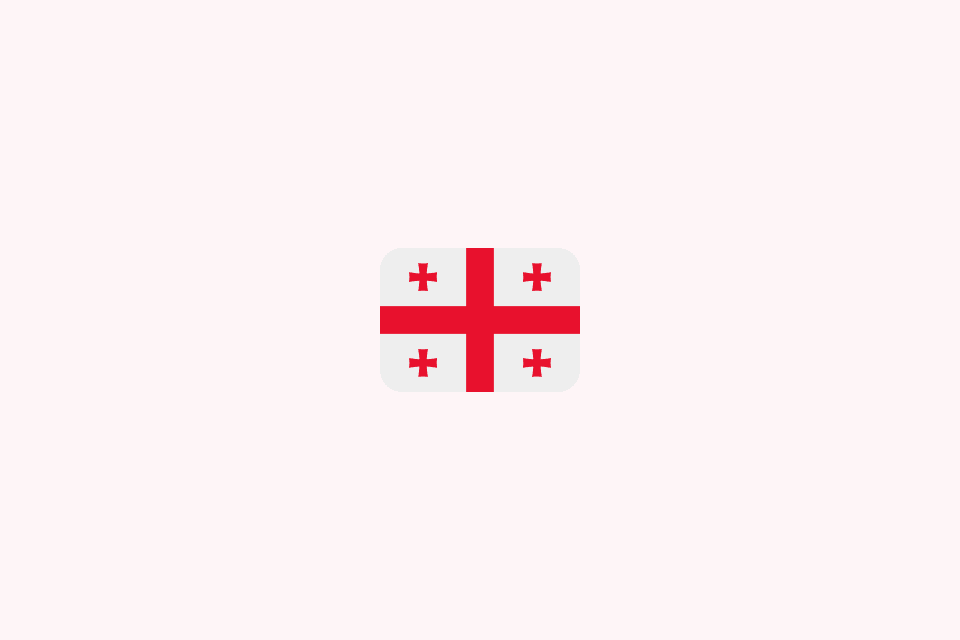
TABLE OF CONTENTS
Georgian isn’t related to any major language family. Its 33-character alphabet was designed specifically for its sounds, its verbs can mark three people at once, and it counts by twenties. This is the language that linguists call one of the world’s most fascinating puzzles.
Classification
Georgian (ქართული ენა, kartuli ena) belongs to the Kartvelian (also called South Caucasian) language family — one of the world’s primary language families with no demonstrable genetic relationship to Indo-European, Turkic, or any other known family. It stands completely alone.
The Kartvelian family has four living members:
| Language | Speakers | Status |
|---|---|---|
| Georgian | ~4 million | Official language of Georgia; only one with a full literary tradition |
| Mingrelian | ~500,000 | Western Georgia; no standard written form |
| Svan | ~35,000–40,000 | Mountainous NW Georgia; most archaic, split off first |
| Laz | ~22,000 | NE Turkey and Adjara; critically endangered |
Proto-Kartvelian, the common ancestor, was spoken around 2500–2000 BCE in what is now western Georgia. A 2023 multidisciplinary study using Bayesian phylogenetics pushed the Svan divergence even further back — to the Early Copper Age, roughly 7,600 years ago — suggesting the family is far older than traditional estimates.
Where It’s Spoken
Georgian is spoken by approximately 4 million people in Georgia, where it is the sole official language and the mother tongue of roughly 87% of the population.
Significant diaspora communities exist in:
| Country | Estimated Speakers | Origin |
|---|---|---|
| Russia | ~170,000 | Historical migration and Soviet-era movement |
| Turkey | ~150,000 | 19th-century migration and historical Georgian territories |
| Iran | ~60,000 | 17th–19th century deportations (Fereydanian dialect) |
| Azerbaijan | ~20,000 | Indigenous Ingiloan community in Saingilo region |
| United States | ~15,000 | Post-1991 immigration |
| Ukraine, Greece, Western Europe | ~50,000 combined | Recent economic migration |
Within Georgia, the language dominates public life — government, education, media, and daily commerce all operate in Georgian. Russian remains a common second language among older generations, while English has rapidly gained ground among younger Georgians since independence in 1991.

Dialects
Georgian has at least 18 recognized dialects, traditionally divided into East and West groups. All are mutually intelligible — unlike the sister Kartvelian languages (Mingrelian, Laz, Svan), which Georgian speakers cannot understand without study.
The five main dialect clusters:
| Group | Dialects | Region |
|---|---|---|
| Northwest | Imeretian, Lechkhumian, Rachan | Imereti, Lechkhumi, Racha |
| Southwest | Gurian, Adjarian, Imerkhevian | Guria, Adjara, NE Turkey |
| Central | Kartlian, Meskhian, Javakhian | Kartli, Meskheti, Javakheti |
| Northeast | Mokhevian, Mtiuletian, Khevsurian, Pshavian, Tushetian | Mountainous NE |
| Eastern | Kakhetian, Tianetian, Ingiloan, Fereydanian | Kakheti + diaspora |
Standard Georgian is based on the Kartlian dialect of the central region around Tbilisi. The most distinctive variations from the standard are found in the mountainous northeast (which preserves archaic sounds like the glides [j] and [w]) and the southwest (where Adjarian shows substantial Turkish and Arabic vocabulary from centuries of Ottoman rule).
The diaspora dialects face the steepest decline: Kizlar-Mozdokian (spoken by 18th-century emigrants in Russia) is now extinct, and Fereydanian in Iran is under heavy pressure from Persian.
History
Georgian’s written history begins in the 5th century CE, but the spoken language is far older.
Origins (2500–2000 BCE). Proto-Kartvelian speakers inhabited the Colchidian plain along the Rioni River in western Georgia. Early contact with Indo-European, Semitic, and Hurro-Urartian languages left layers of loanwords still visible today.
First texts (~430 CE). The earliest known Kartvelian inscription — the Bir el Qutt inscriptions — comes from a Georgian monastery near Bethlehem, written in the Asomtavruli script. These mark the beginning of Old Georgian, a period dominated by Bible translations, hagiography, and liturgical texts heavily influenced by Greek and Aramaic.
Literary golden age (12th century). Shota Rustaveli’s epic poem “The Knight in the Panther’s Skin” (ვეფხისტყაოსანი, Vepkhist’q’aosani) established a secular literary standard. The poem — roughly 1,600 stanzas in a complex shairi meter — remains a national symbol; every Georgian schoolchild studies it, and its lines are quoted in daily conversation.
Printing and standardization (17th–19th centuries). The first Georgian printed book appeared in Rome in 1629. Modern literary Georgian was fully codified in the 19th century based on East Georgian dialects, and the 1879 orthographic reform removed five archaic letters, settling on the current 33-letter alphabet.
Soviet and post-Soviet era. Under Soviet rule (1921–1991), Georgian retained official status within the Georgian SSR — unlike many Soviet republics where Russian displaced the local language. Since independence, Georgian has been constitutionally protected as the state language, with active promotion in education, government, and digital domains.
Writing System
Georgian has been written in three distinct scripts, all indigenous to the Kartvelian family:
| Script | Period | Use |
|---|---|---|
| Asomtavruli (ასომთავრული) | 5th–9th c. | Majuscule, rounded letters; inscriptions and early religious texts |
| Nuskhuri (ნუსხური) | 9th–11th c. | Minuscule, angular; religious manuscripts |
| Mkhedruli (მხედრული) | 11th c.–present | Modern cursive script; all contemporary use |
The origin story is debated. Medieval Georgian tradition credits King Parnavaz I (3rd century BCE) with inventing the script, but the earliest archaeological evidence — the Bir el Qutt inscriptions — dates to about 430 CE. The alphabetic order and some letter shapes suggest possible derivation from Greek, but the majority of characters are original creations designed specifically for Georgian phonology.
The modern Mkhedruli alphabet has 33 letters, each representing a single phoneme — Georgian spelling is almost perfectly phonetic. Key features:
- No uppercase/lowercase distinction. There is a separate Mtavruli style (all-caps) used for titles, signage, and emphasis, but it functions as a typographic variant, not a case system.
- Left-to-right writing.
- No ligatures or connected letters — each character stands alone.
- Five letters (ჱ, ჲ, ჳ, ჴ, ჵ) were retired in 1879 and only appear in historical texts. They are still used when writing Svan, Mingrelian, and Laz.
The script is one of only about 14 alphabets currently in active use worldwide — and one of the few originally designed for a specific language rather than borrowed and adapted.
Phonology
Georgian phonology is built around a single, defining feature: ejective consonants.
The Three-Way Stop System
Georgian stops and affricates come in three varieties — voiced, aspirated, and ejective:
| Type | Examples | How It Sounds |
|---|---|---|
| Voiced | ბ (b), დ (d), გ (g) | Like English b, d, g |
| Aspirated | ფ (p), თ (t), ქ (k) | Like English p, t, k with a puff of air |
| Ejective | პ (p’), ტ (t’), კ (k’), ყ (q’), წ (ts’), ჭ (ch’) | A “popping” sound — close the glottis, build pressure, release sharply |
Ejectives are the sound that defines Georgian to foreign ears. There are three different k-like sounds (ქ k, კ k’, ყ q’) and three ts-like sounds (ც ts, ძ dz, წ ts’). If you mispronounce an ejective as its plain counterpart, you change the word entirely. Compare:
- ქარი (kari, with aspirated k) = “wind”
- კარი (k’ari, with ejective k) = “door”
Consonant Clusters
Georgian allows consonant sequences that look impossible to non-native speakers. The most famous example:
მწვრთნელი — mts’vrtneli (“trainer”), opening with six consecutive consonants
The word გვფრცქვნი (gvprtskvni, “you are peeling us”) is often cited as an extreme case, packing eight consonants together.
These clusters follow phonological rules — they’re “harmonic clusters” where sonority decreases then increases — but they remain one of the hardest aspects of Georgian pronunciation to master.
Vowels
Georgian has just five vowels, identical to Spanish:
| Letter | IPA | Like |
|---|---|---|
| ა (a) | /a/ | ”father” |
| ე (e) | /ɛ/ | ”bed” |
| ი (i) | /i/ | ”see” |
| ო (o) | /ɔ/ | ”or” |
| უ (u) | /u/ | ”blue” |
No long vowels, no tones, no nasal vowels. If you can say a, e, i, o, u clearly, Georgian vowels won’t trouble you.
Grammar
Georgian grammar is where the language earns its reputation. Three features stand out.
Split Ergativity
Most languages use one system for marking subjects and objects. English is nominative-accusative: the subject of “I see him” and “I run” both take the same form. Georgian uses two different systems depending on the verb’s tense:
| Verb Series | Subject of Transitive Verb | Direct Object | Example Tense |
|---|---|---|---|
| Series I (present) | Nominative | Dative | Present, future |
| Series II (aorist) | Ergative | Nominative | Simple past |
| Series III (perfect) | Dative | Nominative | Present perfect |
This means the same noun changes case depending on which tense the verb is in:
- Present: ბიჭი ხატავს (bich’i khat’avs) — “the boy (NOM) draws it”
- Past: ბიჭმა დახატა (bich’ma dakhat’a) — “the boy (ERG) drew it”
- Perfect: ბიჭს დაუხატავს (bich’s daukhata’vs) — “the boy (DAT) has drawn it”
The boy goes from bich’i to bich’ma to bich’s. Split ergativity is rare among the world’s languages, which is why Georgian is a prized case study for linguists.
Polypersonal Verbs
A single Georgian verb can encode the person and number of up to three participants — subject, direct object, and indirect object. A verb can contain as many as eight morphemes in a single word.
Take the root -წერ- (-ts’er-, “write”):
დამიწერე — damits’ere = “write it to me”
- და- = preverb (completive)
- -მ- = first person singular indirect object (“to me”)
- -ი- = version marker
- -წერ- = root (“write”)
- -ე = imperative
Six morphemes, one word. In English, that’s four words: “Write it to me.”
This system is called polypersonalism, and it means Georgian verb conjugation tables are enormous — each verb has dozens upon dozens of forms.
Seven Noun Cases
| Case | Function | Example Suffix |
|---|---|---|
| Nominative | Subject (Series I, II object) | -ი (-i) |
| Ergative/Narrative | Transitive subject (Series II) | -მა (-ma) |
| Dative | Indirect object; subject in Series III | -ს (-s) |
| Genitive | Possession | -ის (-is) |
| Instrumental | Means, tool, method | -ით (-it) |
| Adverbial | Adverbial modifier | -ად (-ad) |
| Vocative | Direct address | -ო (-o) |
What Georgian Doesn’t Have
Three things that make the grammar easier than it first appears:
- No grammatical gender. No masculine/feminine/neuter distinctions anywhere. Even the pronoun ის (is) means “he,” “she,” or “it” — Georgian doesn’t care.
- No articles. No equivalent of “the” or “a.”
- Phonetic spelling. Every letter has exactly one sound. If you can pronounce it, you can spell it.
Vigesimal Numbers
Georgian counts by twenties, not tens:
| Number | Georgian | Literal Meaning |
|---|---|---|
| 20 | ოცი (otsi) | “twenty” |
| 30 | ოცდაათი (otsdaati) | “twenty and ten” |
| 40 | ორმოცი (ormotsi) | “two twenties” |
| 60 | სამოცი (samotsi) | “three twenties” |
| 80 | ოთხმოცი (otkhmotsi) | “four twenties” |
| 99 | ოთხმოცდაცხრამეტი | ”four twenties and nineteen” |
This is a genuine areal feature shared with Basque and some Celtic counting systems — and a reminder that “ten-based” is a convention, not a universal.
Vocabulary & Loanwords
Georgian sits at the crossroads of Europe and Asia, and its vocabulary reflects millennia of contact.
| Source | Examples |
|---|---|
| Greek | eklesia “church,” paraskevi “Friday” |
| Persian | shakar “sugar,” bāzār “market” |
| Arabic | khalkhi “people” (from khalq), kitabi “book” |
| Turkish | chai “tea,” numerous food and trade terms |
| Russian | gazeti “newspaper,” traktori “tractor,” Soviet-era administrative vocabulary |
| English | kompiuteri, telefoni, interneti — recent borrowings, adapted to Georgian phonology |
Deeper layers trace back further. Some scholars identify possible borrowings from Hittite and other Anatolian languages — veli (“field,” cf. Hittite wēllu- “pasture”) and k’ak’abi (“partridge,” cf. Hittite kakkabi-) — pointing to Bronze Age contact.
Georgian also forms words aggressively through its own derivational system. The root -კაც- (-k’ats-, “man”) produces k’atsi (man), sak’atso (mankind), mok’atseoba (citizenship), uk’atso (rude), and dozens more through prefixation and suffixation.
Common Phrases
| English | Georgian | Pronunciation | Notes |
|---|---|---|---|
| Hello | გამარჯობა | gamarjoba | Literally “victory!” — a uniquely Georgian greeting |
| Goodbye | ნახვამდის | nakhvamdis | ”Until we see each other” |
| Thank you | მადლობა | madloba | From madli (“grace”) |
| Please | თუ შეიძლება | tu sheidzleba | Literally “if it is possible” |
| Yes | კი / დიახ | ki / diakh | Ki is casual, diakh is formal |
| No | არა | ara | |
| Excuse me | ბოდიში | bodishi | Also means “sorry” |
| How are you? | როგორ ხარ? | rogor khar? | Informal singular |
| Cheers! | გაუმარჯოს! | gaumarjos! | Toast — literally “victory to you!” |
| I love Georgia | მე მიყვარს საქართველო | me miq’vars sakartvelo |
The toast tradition deserves special mention. Georgians are famous for elaborate toasting rituals led by a თამადა (tamada, toastmaster) at feasts (supra). Every toast begins with gaumarjos — “victory to you” — connecting daily speech to a deep cultural tradition of hospitality.
Is It Hard to Learn?
Short answer: yes. The Foreign Service Institute (FSI) classifies Georgian as Category IV — requiring approximately 1,100 class hours (44 weeks) for an English speaker to reach professional proficiency. Georgian gets an asterisk (*) in FSI tables, meaning it’s typically harder than other languages in the same tier.
What makes it hard:
| Challenge | Why It’s Difficult |
|---|---|
| Verb system | Polypersonal agreement + split ergativity + 11 screeves (tense-aspect-mood combinations) |
| Ejective consonants | No English equivalent; you must train your glottis to produce them |
| Consonant clusters | Words like mts’vrtneli require reprogramming your tongue |
| Vocabulary | Virtually zero cognates with English; everything is new |
| Non-Latin script | 33 unfamiliar characters to master before you can read a street sign |
What’s easier than you’d expect:
| Advantage | Why It Helps |
|---|---|
| No gender | Never memorize “le” vs. “la” again |
| Phonetic spelling | Every letter = one sound; no silent letters, no exceptions |
| No articles | No “a/an/the” decisions |
| Regular stress | Word stress is mostly predictable |
| Warm reception | Georgians genuinely appreciate any attempt to speak their language |
Tips for Learning Georgian
1. Start with the alphabet — and nothing else. Before touching grammar, drill the 33 Mkhedruli letters until you can read them automatically. Without this, every subsequent step will be slower and more frustrating. Flashcards and handwriting practice are your best tools.
2. Master the ejectives early. Record yourself pronouncing minimal pairs (ქარი vs. კარი) and compare with native audio. Ejectives require muscle memory in your glottis that English never uses — it’s a physical skill, not an intellectual one.
3. Learn verbs in “screeves,” not tenses. Georgian verbs are organized into 11 screeves (მწკრივი, mts’k’rivi) — combinations of tense, aspect, and mood. Don’t try to map them onto English tenses directly. Instead, learn what each screeve does in context.
4. Find a native speaker. Georgian has limited textbook resources compared to major languages. Language exchange partners, tutors on platforms like iTalki, or Tbilisi-based language schools with online programs are the most effective route.
5. Use Georgian media. Watch Georgian films on Netflix, listen to Georgian music on Spotify, follow Georgian news sites. Even passive exposure helps internalize the sound of ejectives and the rhythm of consonant clusters.
6. Be patient with yourself. Category IV means 1,100+ hours. If you study 5 hours a week, that’s over four years to professional proficiency. Set milestones in months, not weeks.
AI Translation for Georgian
Georgian’s small speaker base (~4 million) and complex morphology have historically made it a low-resource language for machine translation — there simply isn’t as much training data as there is for Spanish, Chinese, or Arabic.
This is changing fast. As of 2026:
- Translated’s Lara 200 now includes Georgian, showing a +13% improvement over previous state-of-the-art systems in professional human evaluations. Its Lara Think reasoning model reduces errors by 50–60% on morphologically complex sentences.
- GPT-4o and Mistral-large handle Georgian lemmatization and POS-tagging with accuracy rates of 76–87%, though they still trail their performance on major European languages.
- Meta’s NLLB-200 (No Language Left Behind) provides open-source Georgian translation capability, serving as the backbone for many smaller translation apps.
- Multiple mobile apps now offer Georgian voice, camera, and text translation.
The remaining challenges are the same features that make Georgian linguistically fascinating: polypersonal verbs where one word encodes three participants, ejective consonants that speech-to-text systems struggle to distinguish, and the split ergativity that confuses models trained on consistently nominative-accusative languages.
For reliable Georgian translation today, tools like OpenL support Georgian among 100+ languages, with context-aware neural translation that handles the language’s complex verb agreement better than word-for-word approaches. If you’re comparing translation options for low-resource languages like Georgian, see our roundup of Google Translate alternatives. When translating Georgian documents, look for services with explicit Mkhedruli script support to avoid encoding errors — especially with PDFs.
Sources
- Kartvelian languages — Britannica — Classification, history, and linguistic features of the family
- Georgian language — Britannica — Comprehensive overview of Georgian dialects, grammar, and literary history
- Kartvelian languages — Wikipedia — Detailed linguistic classification and Proto-Kartvelian reconstruction
- Georgian dialects — Wikipedia — 18-dialect classification, regional features, diaspora varieties
- Standard Georgian — Cambridge University Press (2024) — IPA illustration of Standard Georgian phonology
- FSI Language Difficulty Rankings — U.S. Department of State — Category IV classification and 1,100-hour estimate
- Lara 200 Languages — Translated (2025) — Georgian inclusion in Lara 200, +13% over ModernMT
- LLMs for Historical Georgian — Vidal-Gorene, Cafiero & Kindt (2025) — GPT-4o and Mistral performance on Georgian NLP tasks
- Gavashelishvili et al. (2023) — The Time and Place of Origin of South Caucasian Languages — Bayesian phylogenetic dating of Proto-Kartvelian to ~7600 YBP
- A Concise Georgian Grammar, 2nd ed. — Tamar Makharoblidze (2024) — Recent academic grammar of modern Georgian