Welsh: Britain's Celtic Language That Defied Extinction
 Add to Chrome
TABLE OF CONTENTS
In 1536, Henry VIII banned Welsh from courtrooms and government. Four centuries later, it became an official language of Wales — and today the Welsh Government aims for one million speakers by 2050.
What Is Welsh?
Welsh (Cymraeg) is a Celtic language belonging to the Brythonic (or Brittonic) branch of the Insular Celtic family. It is the direct descendant of Common Brittonic, the language spoken across Britain before the arrival of the Anglo-Saxons.
Welsh belongs to the P-Celtic group, so called because Proto-Celtic kw sounds shifted to p. This is the key dividing line between the two Insular Celtic branches:
| Feature | Brythonic (P-Celtic) | Goidelic (Q-Celtic) |
|---|---|---|
| Key sound shift | kw → p | kw → k/c |
| ”Head” | pen | Irish ceann |
| ”Son” | mab (older map) | Irish mac |
| ”Four” | pedwar | Irish ceathair |
| Living languages | Welsh, Cornish, Breton | Irish, Scottish Gaelic, Manx |
Welsh’s closest living relatives are Cornish (revived in the 20th century) and Breton (spoken in Brittany, France). Among the Celtic languages, Welsh is by far the healthiest — it is the only Celtic language not classified as endangered by UNESCO.
Where Is Welsh Spoken?
Welsh is spoken primarily in Wales (Cymru), where it holds official language status alongside English under the Welsh Language (Wales) Measure 2011.
How many people speak Welsh?
This depends on which survey you consult:
| Source | Estimated Speakers | % of Wales (aged 3+) |
|---|---|---|
| 2021 Census | ~538,300 | ~17.8% |
| Annual Population Survey (year ending Sept 2025) | ~828,500 | ~26.9% |
| Welsh Government estimate | ~700,000 | ~23% |
The Census asks a simple self-assessment (“Can you speak Welsh?”) and produces a lower figure. The Annual Population Survey uses different sampling methods and reflects a broader definition of “ability.” However, the UK Office for Statistics Regulation has temporarily removed accreditation for APS Welsh-language statistics due to declining sample sizes, so the Census figure is considered more authoritative. The Welsh Government tracks progress toward its targets using Census data.
Among Welsh speakers, around 431,700 people (14%) speak Welsh every day.
The highest concentrations of Welsh speakers are in the traditional heartlands of Gwynedd (73.4%) and Anglesey (61.8%) in northwest Wales.
Y Wladfa: Welsh in Patagonia
Remarkably, there is a Welsh-speaking community 7,500 miles from Wales in the Chubut Province of Patagonia, Argentina. In 1865, 153 Welsh settlers arrived on the tea-clipper Mimosa, seeking to create a “little Wales beyond Wales” free from English cultural dominance.
Today, approximately 50,000–70,000 people of Welsh descent live in the region, with an estimated 1,500–5,000 Welsh speakers — though almost all speak it as a second language. The community maintains three bilingual Welsh-Spanish primary schools, holds annual Eisteddfodau (Welsh cultural festivals), and has seen growing interest in Welsh-language learning since a revival push in the 1990s.
There are also Welsh-speaking diaspora communities in England (particularly along the border), the United States, Canada, and Australia.
A Tale of Survival: The History of Welsh
The story of Welsh is one of persistence against remarkable odds.
Common Brittonic emerged as a distinct Celtic language around 600 BC and was spoken throughout what is now England, Wales, and southern Scotland. During the Roman occupation (AD 43–410), it absorbed approximately 800 Latin loanwords through direct contact between Britons and Roman soldiers and traders — words like ffenestr (window, from Latin fenestra) and pont (bridge, from Latin pons) that remain in use today.
When the Romans withdrew, Anglo-Saxon migrations pushed Brittonic speakers westward into the highlands of Wales, Cornwall, and Cumbria — the same Anglo-Saxon invasions that would eventually give rise to Old English. By around AD 550, scholar Kenneth H. Jackson identified the completion of major sound changes that mark the birth of Primitive Welsh.
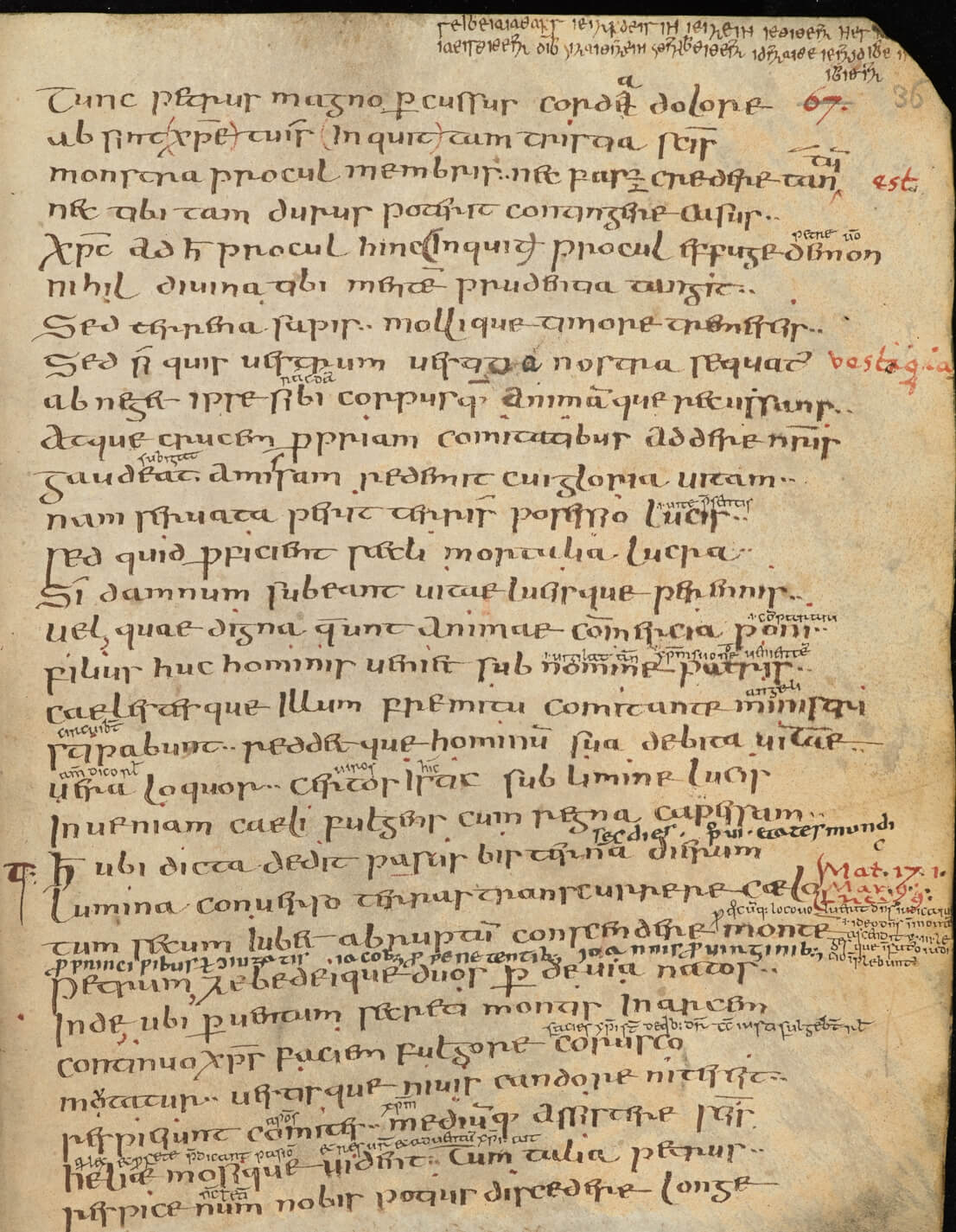
Old Welsh (c. 800–1150) survives mainly in glosses, inscriptions, and the earliest bardic poetry attributed to the Cynfeirdd — the early poets Aneirin and Taliesin. One of the oldest surviving examples of written Welsh is the Juvencus cryptogram, a 9th-century manuscript marginalia.
Middle Welsh (12th–14th centuries) gives us the manuscripts of the Mabinogion, the famous collection of medieval Welsh tales, along with Welsh law texts.
The critical turning point came in 1536, when the Act of Union under Henry VIII formally incorporated Wales into England and banned Welsh from courts and public office. Welsh became stigmatised as a lower-class language, and the gentry rapidly anglicised.
Then came the single most important event in the language’s survival: William Morgan’s Welsh Bible of 1588. This translation fixed a literary standard for Welsh and, during the 18th-century Methodist revival, created a network of circulating schools that taught ordinary people to read it. At the start of the 19th century, around 80% of Wales was Welsh-speaking.
The Industrial Revolution brought enormous numbers of English-speaking workers into South Wales, and by 1901 Welsh speakers had fallen to 50% of the population. The decline accelerated through the 20th century, hitting a low of around 395,000 speakers (~14%) by the early 1980s.
Then came the fightback. The Welsh Language Act 1967 gave Welsh limited legal validity. S4C, the Welsh-language TV channel, launched in 1982. The Welsh Language Act 1993 placed Welsh and English on an equal footing in public life, and the 2011 Measure gave Welsh official status.
Today, the Welsh Government’s Cymraeg 2050 strategy targets one million Welsh speakers and 20% daily use by 2050, backed by expanding Welsh-medium education and a renewed technology strategy.
Is Welsh still at risk?
Welsh is not currently classified as endangered by UNESCO — a status unique among Celtic languages. However, concerns persist. The Annual Population Survey showed a slight decline in the percentage of Welsh speakers in 2025, and the number of children aged 3–15 who can speak Welsh has been slowly declining since 2019. A March 2026 Guardian report warned that a “Welsh revolution” in education, community use, and technology was required to reach the 2050 targets. The language is safe, but the gains are fragile — a situation familiar to other small but resilient European languages like Icelandic.
North vs South: The Dialect Divide
Welsh dialects are traditionally split into North Walian (Gog, from gogledd “north”) and South Walian (Hwntw), though linguists recognise up to five distinct regional varieties. The differences are substantial enough that learners (and even native speakers) occasionally trip over them.
Key vocabulary differences
| English | North Wales | South Wales |
|---|---|---|
| Milk | llefrith | llaeth |
| Money | pres | arian |
| Now | rŵan | nawr |
| Want | isio / isho | moyn |
| Boy | hogyn | bachgen / crwt |
| Girl | hogan | merch |
| Grandmother | nain | mam-gu |
| Grandfather | taid | tad-cu |
| Cake | cacen | teisen |
| Out | allan | mas |
| Key | agoriad | allwedd |
| Crying | crio / wylo | llefain |
| Fox | llwynog | cadno |
Watch out for “false friends”: llaeth means “milk” in South Wales but “buttermilk” in the North — a famous source of confusion at the breakfast table.
Grammatical differences exist too. “I have…” uses Mae gen i… in the North but Mae … ‘da fi in the South. The past tense in the North favours an auxiliary construction (Mi wnes i ddweud — “I did say”), while the South prefers conjugated verb endings (Mi ddwedes i).
The dialect border roughly follows a line between Aberystwyth and Machynlleth in mid-Wales, though it’s a fuzzy continuum rather than a sharp divide. Both dialects are mutually intelligible to fluent speakers.
The Welsh Writing System
Welsh is written in the Latin alphabet and has been since the earliest surviving written samples from the 6th century. It is one of the most phonetically transparent writing systems in Europe — spelling predicts pronunciation with remarkable consistency.
The 29-letter alphabet
The modern Welsh alphabet has 29 letters, including 8 digraphs (two-character combinations treated as single letters for alphabetisation):
| Letter | Letter | Letter |
|---|---|---|
| a | ng | ph |
| b | h | r |
| c | i | rh |
| ch | j | s |
| d | l | t |
| dd | ll | th |
| e | m | u |
| f | n | w |
| ff | o | y |
| g | p |
The digraphs ch, dd, ff, ng, ll, ph, rh, th are each treated as a single letter for sorting purposes. For example, Llanelli has only 6 letters in Welsh, not 8.
Why are there no K, Q, V, X, or Z?
The letter k was dropped from Welsh in the 16th century for a wonderfully practical reason: English printers of the Welsh Bible didn’t have enough k type pieces. As translator William Salesbury wrote, “C for K, because the printers have not so many as the Welsh requireth.”
The letters q, v, x, and z are not part of the traditional alphabet either, though j was adopted relatively recently for loanwords like garej (garage) and ffrij (fridge).
Capitalisation rules
When capitalising a word beginning with a digraph, only the first letter is capitalised: Llandudno (not LLandudno). Both letters are capitalised only in all-uppercase text: LLANDUDNO.
Diacritics
Welsh uses four diacritical marks:
- Circumflex (ˆ) — marks long vowels: â, ê, î, ô, û, ŵ, ŷ
- Grave accent (`) — marks unexpectedly short vowels: pàs (pass) vs pas (cough)
- Acute accent (´) — marks stressed final syllables: gwacáu (to empty)
- Diaeresis (¨) — indicates two adjacent vowels are pronounced separately: copïo (to copy)
The modern orthography was standardised in 1928 by a committee chaired by Sir John Morris-Jones, with further refinements in 1987.
The Famous Consonant Mutations
Consonant mutation is the signature feature of all modern Celtic languages — and Welsh has a particularly rich system. The initial consonant of a word changes depending on the grammatical context, and these changes are reflected in the spelling.
Welsh has three main mutations:
1. Soft Mutation (Treiglad Meddal)
The most common. Unvoiced plosives become voiced; voiced plosives become fricatives (or disappear):
| Radical | → Soft | Example |
|---|---|---|
| p | b | pen → ei ben (his head) |
| t | d | tŷ → ei dŷ (his house) |
| c | g | cath → ei gath (his cat) |
| b | f | brawd → ei frawd (his brother) |
| d | dd | dŵr → ei ddŵr (his water) |
| g | deletes | gardd → yr ardd (the garden) |
| m | f | mam → ei fam (his mother) |
| ll | l | llaw → ei law (his hand) |
| rh | r | rhywbeth → ei rywbeth (his something) |
The soft mutation is triggered by feminine singular nouns after the definite article, after certain prepositions, after dy (“your”) and ei (“his”), after the number two (dau/dwy), and on objects following conjugated verbs.
2. Nasal Mutation (Treiglad Trwynol)
Voiced stops become nasals; voiceless stops become voiceless nasals:
| Radical | → Nasal | Example |
|---|---|---|
| p | mh | pen → fy mhen (my head) |
| t | nh | tŷ → fy nhŷ (my house) |
| c | ngh | cath → fy nghath (my cat) |
| b | m | brawd → fy mrawd (my brother) |
| d | n | dŵr → fy nŵr (my water) |
| g | ng | gardd → fy ngardd (my garden) |
The nasal mutation is triggered after fy (“my”) and after the preposition yn meaning “in.”
3. Aspirate Mutation (Treiglad Llaes)
The least-used mutation colloquially. Voiceless plosives become fricatives (spelled with an added h):
| Radical | → Aspirate | Example |
|---|---|---|
| p | ph | pen → ei phen (her head) |
| t | th | tŷ → ei thŷ (her house) |
| c | ch | cath → ei chath (her cat) |
The aspirate mutation is triggered after ei (“her”), after a (“and”), after â (“with”), and after tri (“three” — masculine).
Why does Welsh change the first letter of words?
One word, carreg (“stone”), shows all three mutations in action:
- y garreg — “the stone” (soft mutation, after feminine noun with definite article)
- fy ngharreg — “my stone” (nasal mutation, after fy)
- ei charreg — “her stone” (aspirate mutation, after ei)
Mutations aren’t random — they encode grammatical meaning. They mark gender, possession, prepositions, and syntactic relationships. Once you recognise them, you start seeing them everywhere, including in Welsh place names: Llanfair = llan (“church”) + Mair (“Mary,” soft-mutated from Mair), and Pontardawe = pont ar Dawe (“bridge on the [river] Tawe”).
Takeaway: Mutations feel alien at first, but they follow consistent patterns. Within about two weeks of exposure, most learners report that they “click” — the trick is to learn them through context rather than memorising tables.
More Grammatical Surprises
Beyond the headline-grabbing mutations, Welsh has several other features that stand out from a European perspective. These are less famous but equally distinctive.
VSO word order
Welsh is a Verb–Subject–Object language, rare among European languages (English and most Romance languages use SVO) — a feature it shares with the other Celtic languages but few others in Europe, though Basque has its own entirely unrelated grammatical surprises:
- Gwelodd Mair ddraig — Literally: “Saw Mair a-dragon” = “Mair saw a dragon.”
Questions are formed with a special particle a before the verb, and in colloquial speech, auxiliary constructions (Mae…yn…) are even more common than conjugated verbs.
No indefinite article
Welsh has no word for “a” or “an.” The word cath can mean “cat” or “a cat” depending on context. There is also no plural indefinite article. This takes some getting used to for speakers of English or Romance languages.
The collective/singulative number system
This is one of Welsh’s most elegant features. For many nouns referring to things that naturally occur in groups, the plural is the base form, and you add a suffix to make the singular:
| Collective (plural-like base) | Singulative |
|---|---|
| plant — children | plentyn — a child |
| coed — trees / forest | coeden — a tree |
| adar — birds | aderyn — a bird |
| ser — stars | seren — a star |
| moch — pigs | mochyn — a pig |
| gwenyn — bees | gwenynen — a bee |
This is the conceptual reverse of English, where the singular (tree) is the base and you add -s for the plural (trees).
Inflected prepositions
Welsh prepositions conjugate for person and number — a feature found in Celtic and Semitic languages but rare in Europe:
| Person | ar (“on”) | i (“to/for”) | gan (“with/by”) |
|---|---|---|---|
| 1st sing. (me) | arna i | i mi / i fi | gen i |
| 2nd sing. (you) | arnat ti | i ti | gen ti |
| 3rd sing. masc. (him) | arno fe / fo | iddo fe / fo | ganddo fe / fo |
| 3rd sing. fem. (her) | arni hi | iddi hi | ganddi hi |
| 1st pl. (us) | arnon ni | i ni | gynnon ni |
| 2nd pl. (you) | arnoch chi | i chi | gynnoch chi |
| 3rd pl. (them) | arnyn nhw | iddyn nhw | ganddyn nhw |
The predicative yn
Welsh uses a special particle yn before predicates (adjectives or nouns following “to be”):
- Mae hi’n dda — “She is good” (literally: “Is she PRED good”)
This yn is entirely distinct from the preposition yn (“in”), which triggers nasal mutation instead.
No single word for “yes” or “no”
Welsh has no direct equivalent of “yes” or “no.” Instead, you respond by repeating the verb from the question in the appropriate form:
- Wyt ti’n hapus? (“Are you happy?”) → Ydw (“I am”) or Nac ydw (“I am not”)
- Oes cath gyda ti? (“Do you have a cat?”) → Oes (“There is”) or Nac oes (“There is not”)
For English speakers, this is one of the hardest habits to internalise — but it’s perfectly logical.
Distinctive Sounds of Welsh
Welsh phonology includes several sounds that don’t exist in English:
| Sound | Description | Example |
|---|---|---|
| ll /ɬ/ | Voiceless lateral fricative — place tongue for “l” and blow air around the sides | Llanelli |
| ch /χ/ | Voiceless uvular fricative, like Scottish “loch” | chwaer (sister) |
| rh /r̥/ | Voiceless rolled R, a breathy “hr” | rhywbeth (something) |
| dd /ð/ | Voiced “th” as in “these” | dda (good, soft-mutated) |
| th /θ/ | Voiceless “th” as in “thin” | byth (ever/never) |
| f /v/ | Like English “v” (NOT “f”) | fawr (big, soft-mutated) |
| ff /f/ | Like English “f” | coffi (coffee) |
W and Y as vowels
In Welsh, w and y are full vowels:
- w represents /ʊ/ (as in “book”) or /uː/ (as in “pool”): cwrw (beer) = “koo-roo”
- y has two sounds: a “clear” sound /ɨ, iː/ (like “machine”) and an “obscure” /ə/ (like “about”)
Between them, Welsh effectively has 7 vowels: a, e, i, o, u, w, y.
Stress and h-prothesis
Stress almost always falls on the penultimate (second-to-last) syllable, giving Welsh its characteristic rhythm. An h is added to vowel-initial words after certain possessives: oedran (“age”) becomes ei hoedran hi (“her age”), and also after ein (“our”) and eu (“their”). This is called h-prothesis.
Vocabulary: Latin Roots, English Neighbors
Welsh vocabulary reveals the layers of history embedded in the language.
Celtic core: Words like afon (river), dyn (man), haul (sun), and drws (door) are native Celtic vocabulary dating back millennia.
Latin layer (~800 words): Unlike English, where Latin words arrived mainly through Norman French or scholarly borrowing, Welsh absorbed Latin directly during the Roman occupation through everyday contact. The results are surprisingly mundane:
| Welsh | Latin | Meaning |
|---|---|---|
| ffenestr | fenestra | window |
| pont | pons | bridge |
| mur | murus | wall |
| pobl | populus | people |
| barf | barba | beard |
| ysgrifennu | scribere | to write |
| tafarn | taverna | tavern |
| bresych | brassica | cabbage |
English and French additions: Medieval trade brought cwpan (cup), sidan (silk), and bwrdd (table/board). Norman French contributed cwarel (windowpane), marchnad (market), and barwn (baron). Modern borrowings include ffôn (telephone), garej (garage), and ffrij (fridge).
Despite extensive borrowing, Welsh retains a strong preference for coining new terms from native roots. Cyfrifiadur (computer), built from cyfrif (“count”) plus an agent suffix, is a calque — and entirely Welsh.
Common Welsh Phrases
| Welsh | English | Pronunciation (approximate) |
|---|---|---|
| Helô / Hylô | Hello | ”hell-oh / hill-oh” |
| Shwmae / S’mae | Hi / How are you? (informal) | “shoo-my” |
| Bore da | Good morning | ”boh-reh dah” |
| Prynhawn da | Good afternoon | ”prin-hown dah” |
| Noswaith dda | Good evening | ”noss-why-th thah” |
| Nos da | Good night | ”nohs dah” |
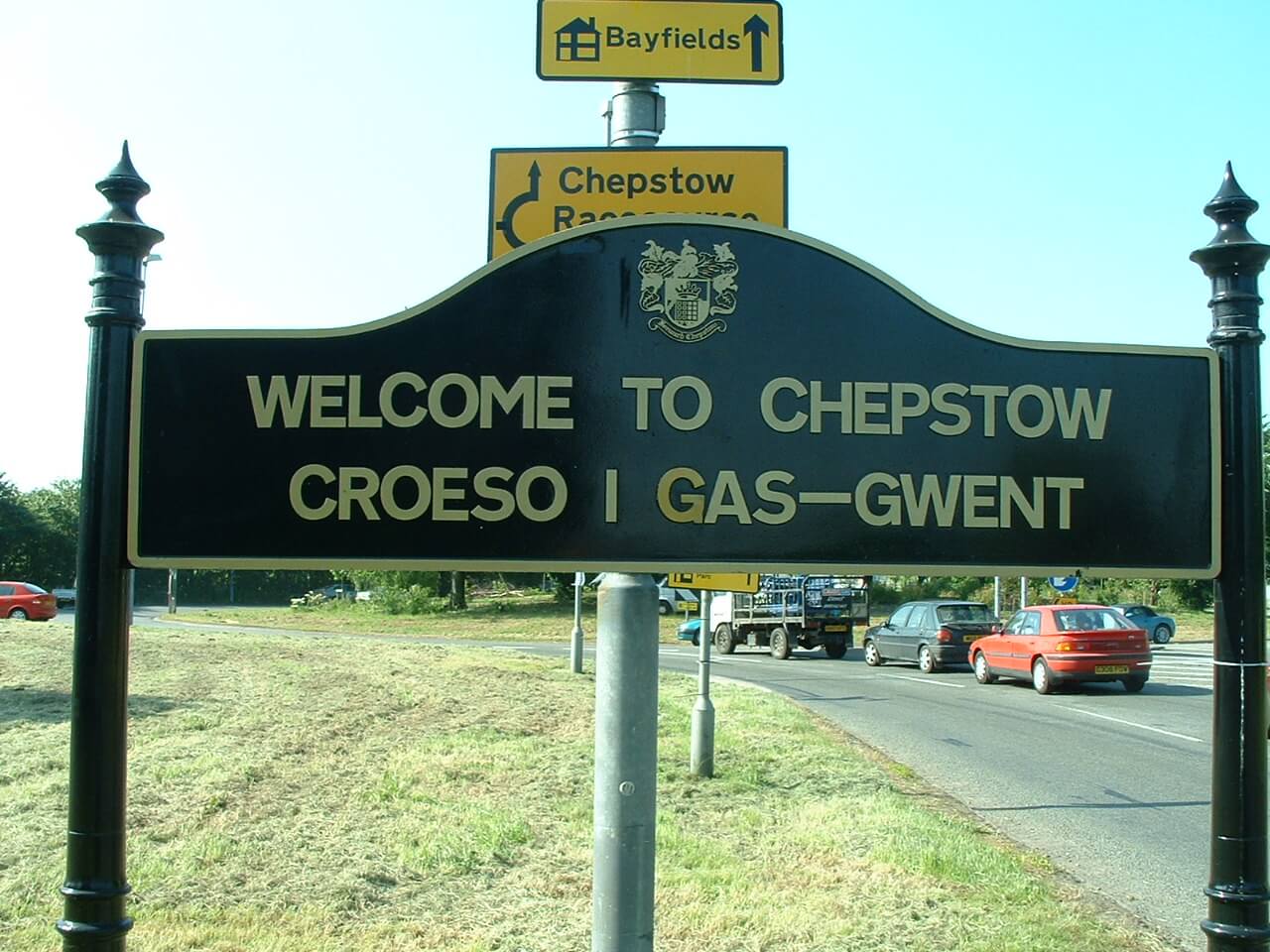
| Croeso | Welcome / You’re welcome | ”croy-so” |
| Os gwelwch yn dda | Please | ”os gwel-ookh un tha” |
| Diolch | Thank you | ”dee-olch” |
| Diolch yn fawr | Thank you very much | ”dee-olch un vow-er” |
| Hwyl fawr | Goodbye | ”hoo-eel vow-er” |
| Iechyd da | Cheers! (toast) | “yeah-chid dah” |
| Sut wyt ti? | How are you? (informal) | “sit oyt tee” |
| Da iawn, diolch | Very well, thank you | ”da-yow-un dee-olch” |
| Cwtch | Hug / Cuddle | ”kutch” |
| Cariad | Love / Darling | ”carry-ad” |
How do you say “hello” in Welsh?
The most common everyday greeting is Shwmae (pronounced “shoo-my”), a contraction of Sut mae? (“How is it?”). Helô works too but feels more like a borrowing from English. For formal contexts or the morning, Bore da (“Good morning”) is standard. Switch to Prynhawn da after midday and Noswaith dda in the evening.
Is Welsh Hard to Learn?
Welsh is not officially ranked by the U.S. Foreign Service Institute, but it is widely estimated to fall into Category III — around 1,100 classroom hours to fluency, roughly on par with Irish, Hindi, or Russian. That makes it harder than Romance languages but significantly easier than Arabic, Japanese, or Mandarin.
What makes Welsh challenging
| Challenge | Difficulty |
|---|---|
| Consonant mutations — the first letter of a word changes depending on context | High (patterns click in ~2 weeks) |
| VSO word order — verb first, then subject, then object | Moderate |
| Unfamiliar sounds — ll, ch, rh | Moderate (learnable with practice) |
| Dialect variation — North and South can feel like different languages | Moderate |
| Answering without “yes/no” | Low-moderate |
What makes Welsh easier than you’d think
- Phonetic spelling — Welsh is almost 100% phonetic. What you see is what you say. No silent letters, no chaos like English through, though, tough.
- ~20% shared vocabulary — via Latin and French cognates (ffenestr / fenêtre / “fenestration,” nos / “nocturnal”).
- No noun gender in modern colloquial speech — unlike French, German, or Spanish.
- Abundant free resources — Duolingo, BBC Bitesize, SaySomethingInWelsh, S4C TV.
Can I learn Welsh on Duolingo?
Yes. Duolingo offers a full Welsh course with approximately 150 hours of content, which can get you to basic conversational level. However, most serious learners supplement it with other resources — Duolingo alone won’t teach you to produce natural-sounding Welsh, particularly with mutations and dialect choices.
Realistic milestones
| Level | Timeframe |
|---|---|
| A1 (basic phrases and greetings) | 1–2 months |
| A2 (simple conversations) | 3–6 months |
| Conversational | 6–12 months consistent study |
| Fluency | ~1,100 hours total |
Tips for Learning Welsh
-
Start with SaySomethingInWelsh — this audio-first method is widely praised for building speaking confidence faster than app-based approaches. It drills mutation patterns in context rather than as abstract rules.
-
Use Duolingo daily — 15–20 minutes per day builds vocabulary and reading skills. The gamified format makes it easy to maintain the habit.
-
Watch S4C Clic — the Welsh-language broadcaster’s free streaming service. Start with children’s programmes (Cyw for very young learners, Stwnsh for older ones) — they use simpler Welsh and are subtitled.
-
Listen to Radio Cymru — even as background noise, it tunes your ear to Welsh rhythm and intonation. Try the Pigion highlights podcast.
-
Pick a dialect and stick with it — North or South, it matters less which you choose than that you’re consistent. Switching mid-learning is confusing.
-
Learn mutations through songs and place names — Welsh folk music (Calan, 9Bach) and place-name etymology make mutations memorable. Pont-y-pŵl (“Bridge of the Pool”) is more interesting than a grammar table.
-
Find a speaking partner — the Welsh-speaking community is famously supportive of learners. Apps like Tandem or local Sadwrn Siarad (Speaking Saturday) events can connect you with patient native speakers.
Welsh and AI Translation
Welsh poses distinctive challenges for machine translation systems.
The data problem. Welsh is classified as a low-resource language in NLP terms. One study found Welsh made up just 0.00177% of one major LLM’s training data. Copyright barriers prevent large volumes of Welsh-language material from being used for training, and the foundation model’s understanding of Welsh is consequently shallower than for languages like French or German.
The mutation problem. Initial consonant mutations mean that the same word can appear in multiple surface forms (Cymru, Gymru, Nghymru, Chymru). Machine translation systems trained primarily on larger languages struggle with this. A 2026 paper from Cardiff University found that linguistically-informed rule-based systems actually outperformed GPT-4o-Mini and Claude-4-Sonnet on mutation analysis tasks.
The dialect problem. Most Welsh MT systems produce a “standardised” output that flattens the rich North/South variation, which native speakers notice immediately.
Progress is happening. In January 2026, DeepL added Welsh to its Language AI platform, bringing enterprise-grade neural MT to Welsh for the first time. The UK Government’s Sovereign AI initiative, built on NVIDIA Nemotron models and trained on the Isambard-AI supercomputer, includes Welsh as a priority language. Bangor University’s Canolfan Bedwyr has been instrumental in developing Welsh NLP tools, from mutation handling to the Welsh Natural Language Toolkit.
For everyday Welsh translation needs, OpenL supports Welsh alongside 100+ other languages. Its context-aware neural engine is particularly relevant for Welsh because it processes sentences holistically rather than word-by-word — important for a VSO language where the verb leads the sentence and mutations change word forms depending on surrounding grammatical context. OpenL handles Welsh-to-English and English-to-Welsh translation across text, documents, and images, making it a practical option for learners working through Welsh-language materials, travellers navigating bilingual signage, or anyone needing quick translations of Welsh content.
The quality gap between Welsh MT and English MT is real — but closing fast as investment in Welsh language technology accelerates in line with the Cymraeg 2050 targets.
Sources
- Welsh language — Britannica — classification, history, and grammar overview
- History of the Welsh language — Wikipedia — comprehensive timeline from Common Brittonic to present
- Cymraeg 2050: Welsh language strategy action plan 2026 to 2027 — GOV.WALES — official strategy document with speaker targets
- Welsh ‘revolution’ required to hit target of 1m speakers by 2050 — The Guardian — March 2026 report on Cymraeg 2050 progress
- Annual Population Survey shows fall in number of Welsh speakers — Nation.Cymru — latest speaker statistics
- Welsh orthography — Wikipedia — alphabet, digraphs, diacritics, and standardisation history
- Colloquial Welsh morphology — Wikipedia — mutations, inflected prepositions, and grammatical features
- Patagonian Welsh — Wikipedia — Y Wladfa colony history and current status
- Unsupervised labelling of mutation triggers in Welsh — Gutiérrez-Rolón & Alva-Manchego (2026) — LREC 2026 paper on computational mutation analysis
- DeepL to launch Welsh on its Language AI platform — UK Tech News — January 2026 DeepL Welsh launch
- Reaching Across the Isles: UK-LLM Brings AI to UK Languages — Bangor University / NVIDIA — UK Sovereign AI initiative with Welsh language model
- AI: More Welsh data needed to improve accuracy — BBC News — data scarcity challenges for Welsh NLP
- Basic Welsh phrases — Hoseasons — common phrases and pronunciation guide
- North vs South Welsh vocabulary — WalesOnline — dialect word comparisons
- How Latin lives on in Welsh — The New World — Latin loanword etymologies