Icelandic: The Language of the Vikings That Refuses to Change
TABLE OF CONTENTS
Imagine picking up an 800-year-old manuscript and reading it like yesterday’s newspaper. For Icelanders, this is everyday reality — a linguistic time capsule that has survived Vikings, volcanoes, and now, the internet.
A Brief History of Icelandic
Icelandic belongs to the North Germanic branch of the Indo-European language family. It descends directly from Old Norse, the language spoken across Scandinavia during the Viking Age (roughly 8th to 14th centuries). When Norse settlers — primarily from western Norway — began arriving on Iceland’s shores in the late 9th century, they brought their language with them. What happened next is remarkable: while continental Scandinavian languages evolved dramatically under the influence of Low German during the Hanseatic period, Icelandic stayed frozen in time.
The key to this preservation lies in Iceland’s geography. An isolated volcanic island in the North Atlantic, Iceland experienced few waves of migration, sparing its language from the constant contact-driven change that reshaped Danish, Swedish, and Norwegian. The sparse population — never more than about 50,000 until the 19th century — was largely literate, and the written word carried immense cultural prestige.
The 12th and 13th centuries saw the flowering of Icelandic literature: the Íslendingasögur (Family Sagas), Konungasögur (Kings’ Sagas), and the Poetic Edda. These texts, written on calfskin manuscripts, remain surprisingly accessible to modern Icelanders. While an English speaker struggles to decipher 14th-century Chaucer, an Icelander can read Njáls saga from roughly 1280 with only minor help from a glossary.
By the 19th century, a deliberate linguistic purism movement took hold. Figures like the poet Jónas Hallgrímsson and Danish linguist Rasmus Rask championed the idea that Icelandic should resist foreign loanwords entirely, coining native terms instead. This ideology — hreintungustefna (“pure language policy”) — became a cornerstone of Iceland’s national identity and remains remarkably strong today.
Where Is Icelandic Spoken?
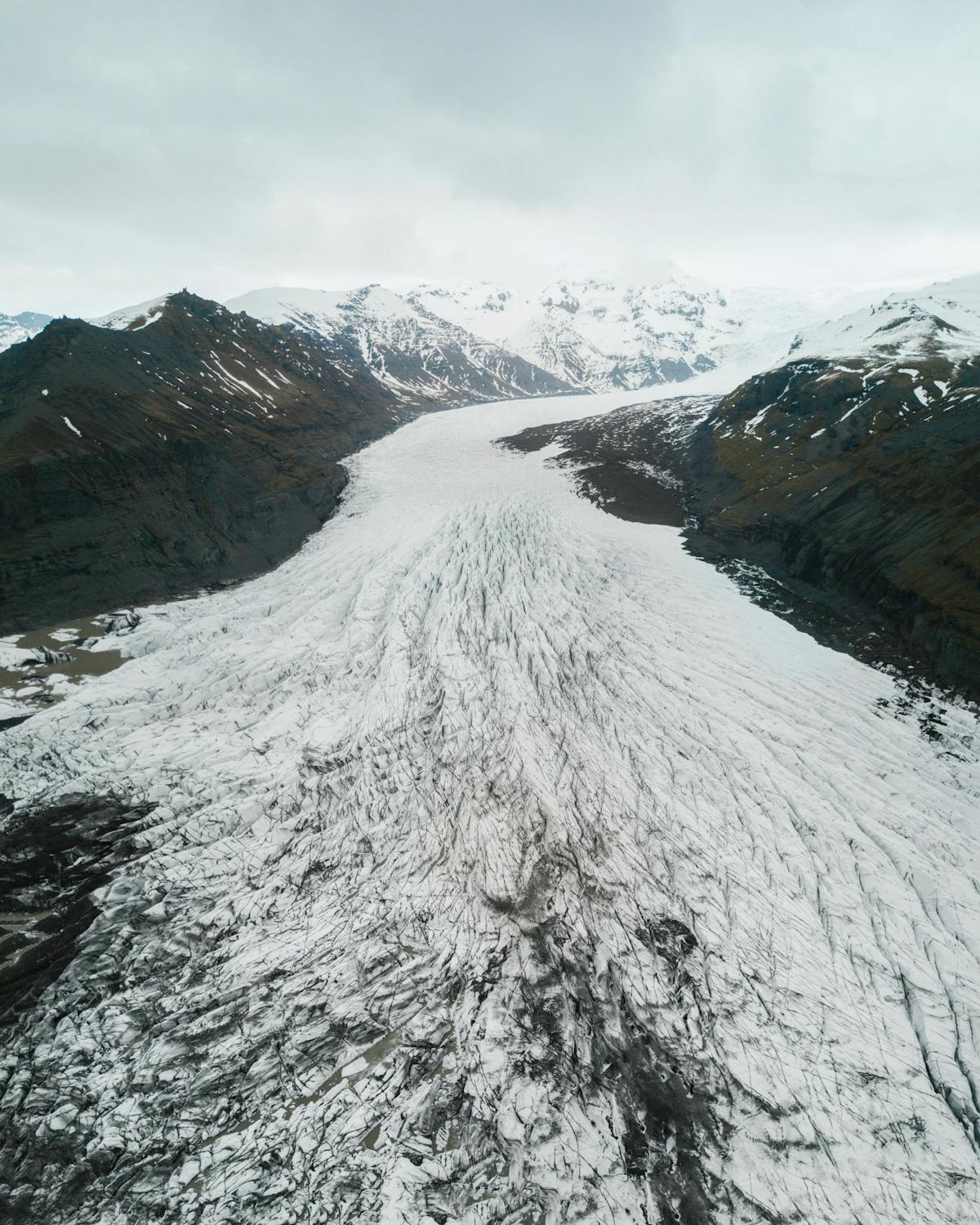
Icelandic is spoken by approximately 370,000 people, the vast majority living in Iceland (population roughly 399,000 as of 2025). Small diaspora communities exist in Denmark, Canada (particularly Gimli, Manitoba — a historic Icelandic settlement), and the United States (North Dakota and Washington state).
Despite being one of the world’s smallest nation-state languages, Icelandic enjoys full official status in Iceland and is one of the working languages of the Nordic Council. It is the language of government, education, media, and daily life — though English has made significant inroads in all these domains in recent years.
Icelandic is virtually dialect-free. A fisherman from the Westfjords speaks essentially the same language as a banker in Reykjavík — a striking contrast to languages like Norwegian or Italian, where regional dialects can be mutually unintelligible. This uniformity is partly a function of small population size, partly of geographic mobility, and partly of the unifying influence of the medieval literary tradition.
What Makes Icelandic Unique
Icelandic stands apart from other European languages in several dramatic ways. These are not superficial differences — they go to the core of how the language structures reality.
Linguistic Purism: The War on Loanwords
If there is one feature that defines modern Icelandic more than any other, it is linguistic purism. Icelanders systematically refuse to borrow foreign words. Instead, they coin new terms from native roots, often drawing on Old Norse vocabulary for inspiration. The result is a language that tackles the modern world entirely on its own terms.
Consider these examples:
| Modern Word | Icelandic Neologism | Literal Meaning |
|---|---|---|
| Computer | tölva | “number seeress” (portmanteau of tala “number” + völva “prophetess”) |
| Telephone | sími | “long thread” (an Old Norse word revived) |
| Helicopter | þyrla | “whirl-er” |
| Electricity | rafmagn | “amber power” |
| Telescope | sjónauki | “sight-enhancer” |
| Gravity | aðdráttarafl | “drawing-power” |
| AIDS | eyðni | from eyða “to destroy” — phonetically echoing the English acronym |
This is not merely a quirk of academics and government committees. Linguistic purism enjoys broad public consensus in Iceland. Surveys consistently show that ordinary Icelanders, not just elites, support the creation of native words over borrowing foreign ones.
A particularly clever technique Icelandic word-coiners use is phono-semantic matching — creating native-sounding words that phonetically resemble international terms. The word tækni (“technology”), from tæki (“tool”) plus the suffix -ni, echoes both Danish teknik and international technology while being entirely native in construction.
The Four-Case Grammar System
Icelandic has preserved the full four-case Indo-European noun declension system that English lost centuries ago:
- Nominative (nefnifall) — the subject: Hesturinn er stór (“The horse is big”)
- Accusative (þolfall) — the direct object: Ég sé hestinn (“I see the horse”)
- Dative (þágufall) — the indirect object: Ég gaf hestinum hey (“I gave the horse hay”)
- Genitive (eignarfall) — possession: Húsið hestsins (“The horse’s house”)
Multiply four cases by three genders (masculine, feminine, neuter), two numbers (singular, plural), and strong vs. weak declension patterns — and you get 24 possible forms for any given noun. Adjectives must agree with nouns in case, gender, and number, creating a combinatorial explosion of forms.
Verbs are similarly complex. Icelandic retains distinct indicative and subjunctive moods, active and middle voices, and conjugations for person and number. The “quirky subject” phenomenon — where certain verbs require their subject in an oblique case — adds another layer of complexity:
- Mér líkar (“I like” — literally “to-me pleases,” subject in dative)
- Mig vantar (“I need” — literally “me needs,” subject in accusative)
The Special Letters: Þ and Ð
Icelandic is the only living language that still uses the letter Þ/þ (thorn), which represents the voiceless “th” sound in English thin, think, thank. The letter Ð/ð (eth) represents the voiced “th” sound in the, this, gather.
Both letters were once common across Germanic languages, including Old English. If you have ever wondered why “Ye Olde Tea Shoppe” uses a Y instead of “The,” the answer leads directly to þ: medieval English scribes wrote “þe,” and early printing presses — lacking the þ character — substituted y, which looked vaguely similar.
Icelandic is the language that never let go. Þ and ð remain fully productive letters in the modern alphabet, appearing everywhere from news headlines to text messages.
The Patronymic Naming System
Perhaps the most visible sign of Icelandic cultural distinctiveness is the naming system. Icelanders do not have family surnames in the Western sense. Instead, a child’s last name is the father’s (or mother’s) first name in the genitive case, plus -son (“son”) or -dóttir (“daughter”):
- If Jón has a son named Ólafur, the son is Ólafur Jónsson
- If Jón has a daughter named Sigríður, she is Sigríður Jónsdóttir
This means that a family of four — father, mother, son, daughter — will typically have four different “last names.” Icelandic phone books are alphabetized by first name for exactly this reason.
The traditional suffix -son for men and -dóttir for women has been joined by -bur (“child of”) since 2019, when Iceland passed a Gender Autonomy Act allowing non-binary individuals an alternative to the gendered suffixes.
An official Naming Committee (Mannanafnanefnd) must pre-approve any new first name introduced into the country. The rules are strict: the name must use only letters from the Icelandic alphabet, and it must be grammatically declinable according to Icelandic case rules. A 2013 court case made international headlines when a girl named Blær (“light breeze”) had to sue the committee — and won — after it was rejected because the noun blær is grammatically masculine.
Icelandic Grammar at a Glance
For the linguistically curious, here is a compressed tour of Icelandic grammar — enough to appreciate both its elegance and its challenges.
Nouns and Articles
Icelandic nouns carry three pieces of information simultaneously: case, gender, and number. The definite article is suffixed to the noun, as in other North Germanic languages:
- Hestur — “a horse”
- Hesturinn — “the horse”
- Hestarnir — “the horses”
This suffix changes with every case-and-number combination, meaning that even the word “the” has dozens of realizations.
Word Order
Icelandic is a V2 language: the finite verb must be the second constituent in a main clause. However, because the heavy inflectional system already marks grammatical roles, word order is otherwise highly flexible. In poetry, all six possible orders of subject, verb, and object (SVO, SOV, VSO, VOS, OSV, OVS) can appear — a freedom English can only dream of.
The Middle Voice
One of Icelandic’s most distinctive verb features is the middle voice (miðmynd), formed by adding the suffix -st to the active verb. The middle voice typically expresses reflexive, reciprocal, or passive meaning, but it often develops entirely unpredictable semantic shifts:
- Drepa (“kill”) → Drepast (“perish ignominiously”)
- Taka (“take”) → Takast (“manage to succeed”)
- Kalla (“call”) → Kallast (“be named”)
This is one of the most challenging aspects of Icelandic for adult learners, and one of the most satisfying to master.
AI Translation and Icelandic: The Challenges
Translating Icelandic accurately with AI is one of the harder problems in machine translation today. The challenges stack up quickly.
The data problem. With only 370,000 speakers, high-quality parallel corpora — the paired bilingual texts that train neural machine translation systems — are extremely scarce. Researchers at the Árni Magnússon Institute found that of roughly 21 million raw sentence pairs scraped from public sources, only about 2 million (9.7%) were usable after cleaning. Garbage in, garbage out remains an iron law of machine learning.
The morphology problem. Standard subword tokenization — the technique that lets neural models handle unknown words by breaking them into fragments — struggles with Icelandic’s intricate inflection. A single Icelandic noun can have two dozen forms; a single verb can have over a hundred. When the model splits these into subword pieces, it often loses track of the grammatical relationships between them.
The neologism problem. Icelandic’s aggressive purism means new words appear constantly, coined from native roots. Translation models trained on data even a few years old will not have seen recent coinages, and generic models that lean on shared international vocabulary find Icelandic opaque.
The domain problem. Specialized Icelandic texts expose the limits of generic MT especially harshly. One translator reported that an electrical engineering document rendered “insulator” as “lonely monastery” and “ground fault” as “misfortune on the ground” — errors that are simultaneously comical and catastrophic for professional use.
What Works
Despite these challenges, significant progress is being made. The most successful approaches today are hybrid systems that combine neural machine translation with structured linguistic knowledge:
- Erlendur, developed by the Icelandic company Miðeind, uses a multi-stage pipeline that combines an LLM with bilingual dictionary lookup, glossary integration, and a grammar correction model. At the WMT25 Conference on Machine Translation, Erlendur ranked 3rd–4th overall for English-to-Icelandic — the highest among all participating systems — and took first place in the Terminology Translation Task’s Track 2.1
- The City of Reykjavík runs its municipal website (reykjavik.is) through an NMT system augmented with retrieval-augmented translation (RAT), using custom terminology databases and inflection lookups to ensure accurate and consistent translation of municipal content into English.2
- Byte-level models like ByT5 have been found to outperform subword models for Icelandic grammatical error correction, handling complex semantic and morphological issues in a single unified pipeline.3
OpenL supports Icelandic translation as part of its 100+ language coverage, combining neural machine translation with post-editing tools that help users refine the output — particularly valuable for a morphologically complex language like Icelandic where machine suggestions almost always benefit from human review.
The Fight Against “Digital Death”
For all its historical resilience, Icelandic faces an existential challenge in the 21st century — what linguists call digital death or digital minoritization. A language can have legal status, a healthy speaker population, and centuries of literature, yet still be marginalized into irrelevance if it is absent from the digital spaces where modern life happens.
The numbers are stark. Siri, Google Assistant, Alexa, and Cortana do not speak Icelandic. Of the roughly 7,000 languages spoken worldwide, all four major voice assistants combined support only about 22. When Icelandic children talk to their devices, they do so in English. When Icelandic teenagers game, stream, and scroll, they do so overwhelmingly in English. A 2024 study found that 11.5% of all words in Icelandic youth podcasts were pronounced with an American accent4 — not because the speakers lacked Icelandic equivalents, but because English had become the default register for those domains.
The consequences are becoming measurable:
- Icelandic children increasingly converse among themselves in English
- PISA 2022 data showed 63% of immigrant students in Iceland did not reach minimum reading literacy in Icelandic
- A University of Iceland doctoral study found that English is “no longer treated as a foreign language” in Icelandic classrooms but used as a language of instruction
- Some young children, when shown Icelandic word cards, process the images directly through English rather than Icelandic
In November 2025, former Prime Minister Katrín Jakobsdóttir made headlines when she warned that Icelandic could be “wiped out in as little as a generation.” Speaking ahead of the Iceland Noir crime fiction festival in Reykjavík, she and co-author Ragnar Jónasson described a generation “absolutely surrounded by material in English,” reading less in Icelandic, and increasingly defaulting to English even in face-to-face conversation.5
The Counteroffensive
Iceland is not standing still. The government has invested over ISK 4.2 billion (roughly $30 million) in two phases of a national Language Technology Programme.6 The Almannarómur (“Voice of the Public”) Centre has built a crowdsourced speech database containing over 2,300 hours of Icelandic voice recordings and more than 3 million sentences.7
In 2020, Miðeind launched Embla, the world’s first Icelandic-speaking voice assistant. Available as a mobile app, Embla can answer questions about weather, transit, local businesses, and Wikipedia — and even tell jokes in Icelandic. While it cannot match the scope of Siri or Google Assistant, it proves that small-language voice technology is viable.
President Guðni Th. Jóhannesson undertook a diplomatic tour of U.S. tech hubs, meeting with Apple, Meta, Microsoft, and Amazon to make the case for Icelandic language support. Iceland’s Minister of Culture successfully pressured Disney+ to add Icelandic dubbing and subtitles, securing over 600 titles.
Anthropic partnered with Iceland’s Ministry of Education in 2025 for a nationwide AI education pilot — one of the world’s first — recognizing that language survival in the AI era requires not just defensive preservation but active technological participation.8
Tips for Learning Icelandic
Icelandic is not for the faint of heart. The U.S. Foreign Service Institute estimates roughly 1,100 class hours for English speakers to reach professional working proficiency — comparable to Russian or Hindi, and significantly harder than French or Spanish. But for the right kind of learner, it is among the most rewarding languages in the world.
Where to Start
Master the sounds first. Icelandic has several phonemes that do not exist in English, including the notorious ll cluster (which sounds like “tl”) and the distinction between þ and ð. Spend your first week on pronunciation alone — Icelandic spelling is largely phonetic, so if you can say it, you can read it.
Embrace the grammar early. You cannot “pick up” Icelandic grammar through casual exposure the way you might with Spanish. The four-case system and three-gender noun classification shape every sentence. Spend structured time with declension tables, especially in the first three months. The payoff is real: once the patterns click, the language’s internal logic becomes elegant rather than intimidating.
Use spaced repetition for vocabulary. Apps like Muninn (built specifically for Icelandic) and Memrise support spaced repetition — the most scientifically validated method for long-term vocabulary retention. Given the complexity of Icelandic word forms, focus on learning whole phrases rather than isolated words.
Recommended Resources
| Resource | Best For | Notes |
|---|---|---|
| Icelandic Online | Structured courses | Created by the University of Iceland; free access to high-quality materials |
| Pimsleur Icelandic | Pronunciation and listening | Audio-based, 30-minute daily lessons |
| Preply / italki | 1-on-1 tutoring | Native speaker tutors from roughly $20/hr |
| Íslendingasögur (The Sagas) | Advanced reading | Start with simplified modern editions; see sagadb.org |
| RÚV (Icelandic National Broadcasting) | Listening immersion | News, TV, and radio online for free |
| Muninn | Smart flashcards | Converts any Icelandic text into SRS flashcards; available on iOS and Android |
Set Realistic Expectations
With consistent daily practice (30–60 minutes), you can expect:
- 3–6 months: Basic conversation, reading simple texts, understanding slow speech
- 6–12 months: Intermediate conversation, reading news with dictionary help
- 12–24 months: Fluent conversation, reading literature, watching TV without subtitles
- 2+ years: Near-native fluency (with immersion)
The single most important factor is motivation. The learners who succeed with Icelandic are not necessarily the most talented — they are the ones who fall in love with the sagas, the landscape, the music, or the sheer otherness of the language.
A Language Worth Preserving
Icelandic is not just a language — it is a living museum of Germanic linguistic history. Every time an Icelander conjugates a noun through four cases, they are performing a grammatical operation that their ancestors performed a thousand years ago and that speakers of English, Swedish, and Dutch have long since abandoned. Every time an Icelander coins a native word rather than borrowing an English one, they are making a quiet statement about cultural sovereignty.
But the value of Icelandic goes beyond history. It is a test case for one of the most important questions of the 21st century: can a small language survive in a digital world dominated by a handful of mega-languages? If the answer is yes, it will be because small-language communities — with government support, smart technology investment, and stubborn cultural pride — refused to accept digital extinction as inevitable.
If the answer is no, we may lose more than a language. We will lose a way of seeing the world that no other language precisely encodes. The Icelandic word gluggaveður — literally “window weather,” describing weather that looks beautiful through a window but is unpleasant to be in — has no direct English equivalent. These gaps are not deficiencies. They are evidence that each language is a unique lens on human experience.
The sagas close with the words lýkur hér þessari sögu — “here ends this saga.” The story of Icelandic is far from over. The next chapter depends on what Icelanders — and the tech platforms that shape modern communication — choose to do in the years ahead.
If you are working with Icelandic content and need accurate, context-aware translation, OpenL supports Icelandic in over 100 languages, with an AI-powered engine optimized for morphologically rich languages. Try it on your next translation project.
Explore more: How to Learn a New Language in 30 Days · 50 Untranslatable Words · Finnish: A Complete Guide
Footnotes
-
Ingólfsdóttir et al., “Miðeind at WMT25 General Machine Translation Task and Terminology Translation Task,” Proceedings of the Tenth Conference on Machine Translation (WMT), 2025, pp. 577–582. ↩
-
City of Reykjavík, “Automated translation” — project description of the RAT-based translation system, in operation since 2020. ↩
-
Ingólfsdóttir et al., “Byte-Level Grammatical Error Correction Using Synthetic and Curated Corpora,” Proceedings of the 61st Annual Meeting of the ACL, 2023. ↩
-
Hilmisdóttir, “Gamers, influencers and language contact: An empirical study of Anglicisms in Icelandic conversation,” Sociolinguistica 38(2), 2024, pp. 193–236. ↩
-
The Guardian, “Icelandic is in danger of dying out because of AI and English-language media, says former PM,” 15 November 2025. ↩
-
Ministry of Culture and Business Affairs, “Language Technology Programme for Icelandic 2024–2026,” March 2024. ↩
-
Amazon Science, “Amazon scientists welcome Iceland’s presidential delegation” — overview of the Language Technology Programme artifacts including the Samrómur speech database. ↩
-
Anthropic, “Anthropic and Iceland announce one of the world’s first national AI education pilots,” 4 November 2025. ↩