Albanian: Europe's Language Branch of Its Own
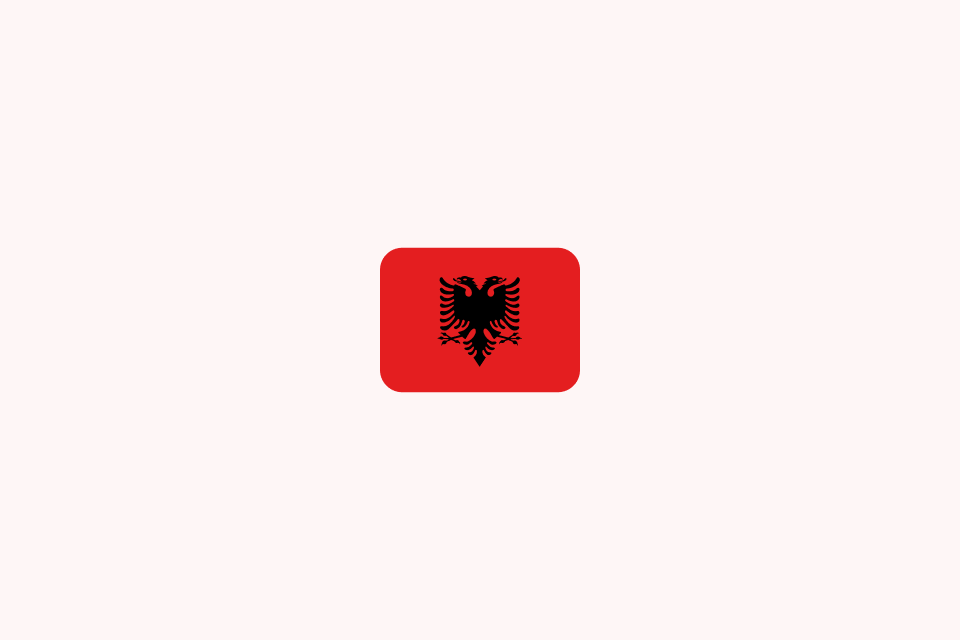
TABLE OF CONTENTS
Albanian is not a Slavic, Greek, or Romance language hiding in the Balkans. It is the sole modern member of its own Indo-European branch, shaped by centuries of contact with all three.
Albanian at a Glance
| Question | Answer |
|---|---|
| Native name | shqip or gjuha shqipe |
| Language family | Indo-European; Albanian branch |
| Main locations | Albania, Kosovo, North Macedonia, Montenegro, southern Italy, and Greece |
| Speakers | Common estimates are about 7.5-7.6 million worldwide; totals vary by census definition |
| Main dialects | Gheg (Geg) and Tosk |
| Standard variety | Standard Albanian, based mainly on Tosk |
| Writing system | Latin alphabet with 36 letters |
| Memorable feature | A postposed definite article, attached to the noun |
Albanian is written shqip by its speakers. The name Albanian comes through older forms used by neighboring peoples, while shqip is the everyday native name. The two labels refer to the same language, not to separate formal and informal varieties.
Speaker counts should be treated as estimates rather than a single exact 2026 statistic. Albania and Kosovo count residents in different ways, while long-established communities in Italy, Greece, North Macedonia, Montenegro, and Serbia may identify with Albanian without appearing in one global language census.
A Branch of Its Own
Most European languages fit into a familiar branch: Spanish and French are Romance, German and English are Germanic, and Russian and Polish are Slavic. Albanian does not sit inside any of those groups. Historical linguists classify it as its own branch of the Indo-European family, alongside the larger branches but not descended from any living neighboring language.
Glottolog’s Albanian classification places Albanian directly under Indo-European and records Gheg and Tosk as its principal varieties. That classification says what scholars can defend about its family position; it does not settle every question about its prehistoric ancestor.
Some scholars connect Albanian with ancient Illyrian, while others have proposed links with Thracian or Dacian. The surviving evidence is too limited to present one of these proposals as proven. What is clearer is the language’s contact history: Albanian contains layers of Latin, Greek, Slavic, Romance, and Ottoman Turkish influence while retaining a distinct grammatical core.
The result is a useful linguistic memory point: Albanian can share a borrowed word with its neighbors without being a branch of their language family.
Where Albanian Is Spoken
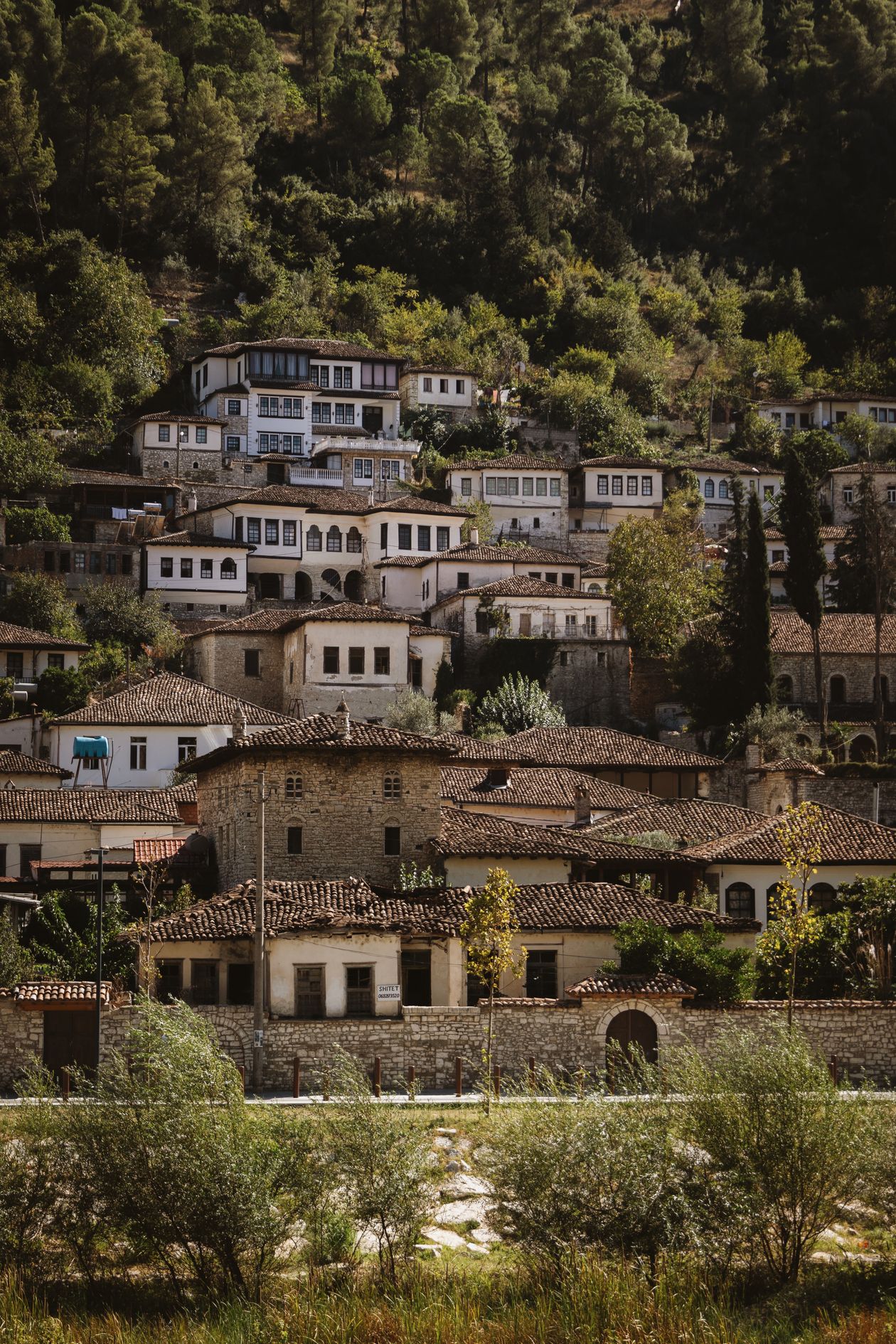
Albanian is the principal language of Albania and one of the main languages of Kosovo. It is also used by Albanian communities in North Macedonia, Montenegro, southern Serbia, Greece, and southern Italy. The Italian varieties are often called Arbëresh, while older Albanian-speaking communities in Greece are associated with Arvanitika.
The geography explains why Albanian has both a national standard and a wide dialect map. Mountain ranges and historical borders kept communities apart, while migration carried Albanian across the Adriatic and into neighboring Balkan states. A text written in Standard Albanian may therefore be read by communities with different local speech traditions.
Gheg, Tosk, and Standard Albanian
The traditional dialect boundary follows the Shkumbin River in central Albania:
| Variety | Traditional area | Features often used to identify it |
|---|---|---|
| Gheg (Geg) | Northern Albania, Kosovo, parts of Montenegro and North Macedonia | More complex vowel patterns, including nasal vowels in many varieties; distinctive northern morphology |
| Tosk | Southern Albania and several diaspora communities | The main base of the modern national standard; different vowel and consonant developments |
| Transitional varieties | Central Albania | Features shared by both major groups |
Gheg and Tosk are not two unrelated languages. They share enough structure for substantial mutual understanding, but a learner should expect differences in pronunciation, vocabulary, verb forms, and spelling. The standard used in schools and national institutions is based mainly on Tosk, while many people speak Gheg varieties at home.
Do not treat “standard” as a synonym for “more correct.” It is a common written norm. A northern speaker using Gheg is using a living regional variety, not a damaged version of Standard Albanian.
From Early Records to a Unified Alphabet
Albanian was written in different scripts and local spelling traditions for centuries. The earliest surviving Albanian texts date from the 15th century, but there was no single alphabet used by all Albanian-speaking communities. Greek, Latin, and Arabic-based systems appeared alongside locally designed alphabets such as Elbasan and Todhri.
This practical problem became a national question in the late 19th and early 20th centuries. Writers, teachers, and political organizers needed books and newspapers that readers from different regions could share. The Congress of Manastir in 1908 helped establish a Latin-based direction, and the alphabet was standardized in 1909. A unified literary norm based mainly on Tosk followed in 1972.
The late standardization matters today. Albanian’s modern Latin spelling is stable, but historical documents may use a different alphabet or an older orthography. OCR and translation workflows should identify the script and date before assuming that every Albanian page uses the current standard.
The 36-Letter Albanian Alphabet
Albanian uses Latin letters, but it is not an English alphabet with a few accents added. Its 36-letter inventory includes digraphs that count as individual letters:
| Letter or digraph | Approximate value | Example |
|---|---|---|
ë | a central vowel, often reduced in unstressed positions | është (is) |
ç | “ch” in chair | çfarë (what) |
xh | “j” in jam | xhaxha (uncle) |
gj | a palatal sound, roughly like the sound in “during” for some speakers | gjuhë (language) |
ll | a clear or “hard” l sound | mall (longing) |
rr | a strongly trilled or tapped r | rrugë (road) |
sh | “sh” in ship | shqip (Albanian) |
th | “th” in thin | thotë (says) |
dh | “th” in this | dhe (and) |
nj | similar to “ny” in canyon | një (one) |
zh | the sound in measure | zhurmë (noise) |
The digraph rule is important for dictionaries, alphabetizing, and text processing. A program that sorts dh, gj, or sh as two unrelated English letters can produce an incorrect order or break a word when it segments text.
Grammar: Articles, Cases, and Clitics
Albanian grammar has several features that feel unfamiliar even to learners who know another European language.
Attach the Definite Article to the Noun
The indefinite article appears before the noun, but the definite article is generally a suffix. The exact ending depends on gender, number, and case:
| English | Indefinite | Definite |
|---|---|---|
| a book / the book | një libër | libri |
| a girl / the girl | një vajzë | vajza |
| a house / the house | një shtëpi | shtëpia |
This is not just a vocabulary detail. When a translator moves an Albanian noun into English, the information carried by the suffix must be represented elsewhere by a, the, word order, or context.
Keep Case and Gender Visible
Standard Albanian has five traditional cases: nominative, accusative, genitive, dative, and ablative. The genitive and dative often share forms, but they remain distinct grammatical functions. Nouns and articles can change according to their grammatical role, and adjectives agree with nouns in gender, number, and case.
It also has grammatical gender, including masculine and feminine nouns, and a neuter category in parts of the system. A translation that ignores agreement may still look understandable while sounding visibly non-native.
Watch Short Clitic Words
Short unstressed pronouns and particles can sit close to the verb and carry information that English usually expresses with a separate object or possessive phrase. In a long Albanian sentence, those small words are easy to overlook, especially when the source uses a regional variety.
For translation, the safe unit is the complete clause. Translating an isolated Albanian noun or clitic often removes the case, definiteness, or pronoun reference that makes the sentence precise.
Common Albanian Phrases
| English | Albanian | Approximate pronunciation |
|---|---|---|
| Hello | Përshëndetje | puhr-shuhn-DEH-tyeh |
| How are you? | Si jeni? | see YEH-nee |
| Thank you | Faleminderit | fah-leh-min-DEH-reet |
| Please | Ju lutem | yoo LOO-tem |
| Yes / No | Po / Jo | poh / yoh |
| I don’t understand | Nuk kuptoj | nook koop-TOY |
| Do you speak English? | A flisni anglisht? | ah FLEES-nee ang-LEESHT |
| Goodbye | Mirupafshim | mee-roo-paf-SHEEM |
Pronunciation varies by region, especially between Gheg and Tosk speech. The table is a starting point for recognition, not a replacement for listening to a local speaker.
Is Albanian Hard to Learn?
For an English speaker, Albanian is usually harder than a closely related Germanic or Romance language because the vocabulary offers fewer obvious cognates and the grammar has more inflection. The Latin alphabet keeps reading accessible, but it does not remove the work of learning ë, ç, digraphs, noun gender, cases, and dialect variation.
The most manageable path is to separate the tasks:
- learn Standard Albanian spelling and basic Tosk-based grammar for reading;
- add Gheg listening if you will use Albanian in Kosovo or northern communities;
- memorize nouns with their article and plural, not as bare dictionary forms;
- read short sentences aloud to connect digraphs with sounds;
- use complete examples instead of translating isolated words.
Learners who already know Greek, Italian, Romanian, Turkish, or a South Slavic language may recognize borrowed vocabulary or regional contact effects. That helps with individual words, but it does not turn Albanian into a predictable Romance or Slavic language.
Translating Albanian with AI
Albanian translation needs context for three reasons: Gheg and Tosk may differ, short grammatical words carry substantial information, and the same modern standard appears alongside dialect speech in real-world material.
OpenL’s Albanian translator supports Albanian text and multi-format workflows. For a reliable first draft, paste a complete paragraph, state whether the source is Standard Albanian or a regional variety when known, and keep names and numbers visible for review. For editable files, the checks in How to Translate a Word Document help you compare headings, tables, and paragraph structure after translation.
Use the result as a draft for legal, medical, immigration, academic, or government documents. A proficient Albanian reviewer should confirm dialect normalization, names, dates, case relationships, and terminology before the text is published or submitted. The same principle applies to other languages with strong regional variation, including the two written standards discussed in our Norwegian language guide.
What Makes Albanian Memorable
Albanian’s unusual status is not a slogan but a classification: it is the only surviving modern language in its Indo-European branch. Its history is visible in the language itself, where Latin, Greek, Slavic, Romance, and Ottoman layers meet a grammar that remains distinctly Albanian.
For learners, the practical lesson is simple. Start with the standardized Latin spelling, learn nouns with their articles, and decide whether your listening target is Tosk-based standard speech or a Gheg variety. Translation becomes more reliable when that choice is made explicit instead of hidden behind the single label “Albanian.”
Sources
- Glottolog: Albanian — classification, ISO code, dialect branches, and bibliographic references.
- Albanian language and alphabets — speaker estimate, locations, dialect boundary, writing history, alphabet, and sample texts.
- Albanian language — reference overview of classification, history, and dialects.
- Census of Population and Housing — Albania’s official statistical source for population and demographic data.
- OpenL Albanian Translator — official OpenL page confirming Albanian support and text, image, document, and speech workflows.