Happy Diwali in 20 Languages
TABLE OF CONTENTS
Diwali is a festival of lights with many names — Diwali, Deepavali, Tihar — and greetings that usually mean “good wishes of the festival,” not a word-for-word “happy.”
Happy Diwali in 20 Languages
Capital letters mark the stressed part of each rough pronunciation. These English-style guides cannot show tones, vowel length, or every regional accent, so treat them as a starting point.
In 2026, India’s gazetted Diwali / Deepavali holiday falls on Sunday, 8 November. The wider festival often spans several days (from Dhanteras through Bhai Dooj), and southern calendars may emphasize Naraka Chaturdashi the morning before northern Lakshmi Puja evening. Diaspora communities follow local school and temple calendars — check the date your recipient actually observes.
| Language | Phrase (native) | Romanization / rough pronunciation | Useful note |
|---|---|---|---|
| Hindi | दिवाली की शुभकामनाएँ | divālī kī śubhkāmnāẽ — di-VAA-lee kee shoobh-KAA-mnaa-en | Wiktionary’s example greeting; शुभ दीपावली is a shorter card line |
| Urdu | دیوالی مبارک | dīwālī mubārak — dee-WAA-lee mu-BAA-rak | Same festival name; مبارک is the familiar “blessed / congratulations” pattern |
| Tamil | தீபாவளி நல்வாழ்த்துகள் | tīpāvaḷi nalvāḻttukaḷ — tee-PAA-va-li nal-VAAZH-thu-gal | Add இனிய in front for a warmer line; many Tamil households greet on Naraka Chaturdashi morning |
| Telugu | దీపావళి శుభాకాంక్షలు | dīpāvaḷi śubhākāṅkṣalu — dee-PAA-va-li shu-bhaa-KAANK-sha-lu | Keeps the Sanskrit Deepavali form with the p that Hindi lost |
| Marathi | दिवाळीच्या हार्दिक शुभेच्छा | divāḷīcyā hārdik śubhecchā — di-VAA-lee-chyaa HAAR-dik shu-bhe-CHHA | “Heartfelt good wishes of Diwali”; works across the multi-day Marathi festival window |
| Gujarati | દિવાળીની શુભકામનાઓ | divāḷīnī śubhkāmnāo — di-VAA-lee-nee shoobh-KAA-mnaa-o | The next morning’s Gujarati new year is often સાલ મુબારક, a different wish |
| Punjabi | ਦਿਵਾਲੀ ਦੀਆਂ ਵਧਾਈਆਂ | divālī dīā̃ vadhāīā̃ — di-VAA-lee dee-aan va-DHAA-ee-aan | Literally “congratulations of Diwali”; also common around Bandi Chhor Divas |
| Bengali | শুভ দীপাবলি | śubhô dipabôli — shu-bho dee-PA-bo-li | Short auspicious form; West Bengal also observes Kali Puja on the new-moon night |
| Kannada | ದೀಪಾವಳಿ ಹಬ್ಬದ ಶುಭಾಶಯಗಳು | dīpāvaḷi habbada śubhāśayagaḷu — dee-PAA-va-li HAB-ba-da shu-bhaa-SHAYA-ga-lu | Watch the doubled ಬ್ಬ in ಹಬ್ಬದ (“of the festival”) |
| Malayalam | ദീപാവലി ആശംസകൾ | dīpāvali āśaṁsakaḷ — dee-PAA-va-li aa-SHAM-sa-kal | Compact “Deepavali wishes”; southern Deepavali spelling |
| Nepali | तिहारको शुभकामना | tihārko śubhakāmanā — ti-HAAR-ko shu-bha-KAA-ma-naa | Nepal’s festival name is तिहार (Tihar); Deepavali is a synonym |
| Odia | ଦୀପାବଳିର ଶୁଭେଚ୍ଛା | dīpābaḷira śubhecchā — dee-PAA-ba-li-ra shu-bhe-CHHA | “Deepavali’s good wish”; Odisha also links the night with Kali Puja traditions |
| Spanish | ¡Feliz Diwali! | feh-LEES di-WAA-lee | Clear diaspora calque; English Happy Diwali also appears on cards |
| French | Joyeux Diwali ! | zhwah-YUH di-wa-lee | Same pattern as other holiday wishes that keep a borrowed festival name |
| German | Frohes Diwali! | FROH-es di-VAA-lee | Frohes Diwali-Fest! is a slightly fuller written option |
| Mandarin Chinese | 排灯节快乐 | Páidēngjié kuàilè — pai-dung-jyeh kwai-luh | Mainland name “row-of-lamps festival”; Singapore Chinese often uses 屠妖节 |
| Japanese | ハッピーディワリ | happī diwari — hap-PEE di-wa-ri | Katakana loan of the English greeting, parallel to Halloween cards |
| Malay | Selamat Hari Deepavali | suh-LAH-mat HA-ree dee-PAH-va-lee | Official name in Malaysia and Singapore is usually Deepavali, not Diwali |
| Arabic | ديوالي سعيد | Dīwālī saʿīd — dee-WAA-lee sa-EED | Modern written form; everyday speech may keep English Happy Diwali |
| Portuguese | Feliz Diwali! | feh-LEES di-VAA-lee | Straightforward Romance calque used in diaspora messages |
The table gives one useful default per language. It does not cover every dialect, emoji-heavy chat caption, or English-only office email.
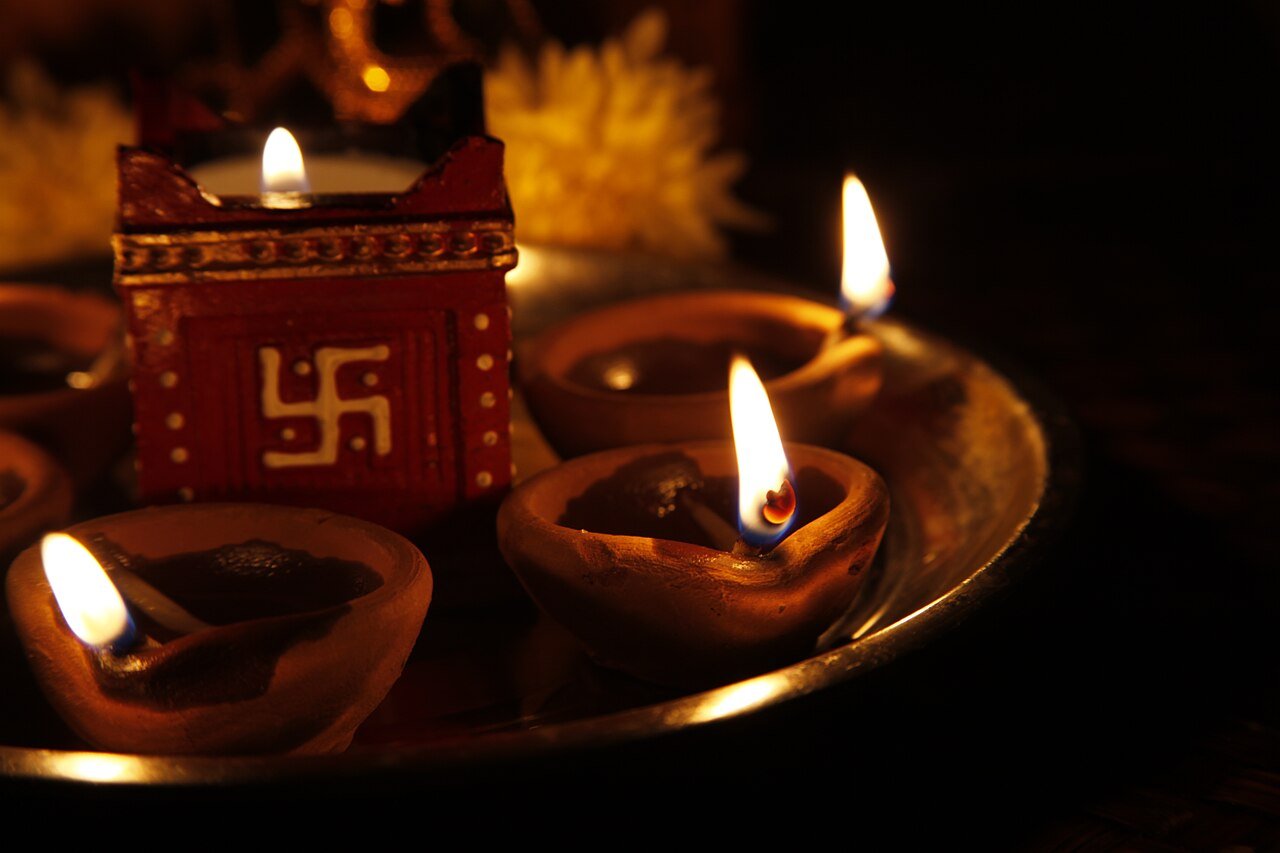
Diwali, Deepavali, or Tihar?
The festival traveled with more than one name, and the greeting follows the name.
Two branches of the same Sanskrit root
Sanskrit दीपावलि (dīpāvali) means “row of lamps.” North Indian speech often shortened it to Diwali / दिवाली. South Indian languages and formal Bengali kept Deepavali / Deepawali with the p. Malaysia and Singapore public calendars usually print Deepavali.
Local festival names that are not calques
- Nepali speakers often say तिहार (Tihar) — so the greeting names Tihar, not Diwali.
- Gujarati new year (Bestu Varas / નૂતન વર્ષ) follows Diwali night; સાલ મુબારક is a new-year wish, not a substitute for the Diwali line.
- Bengali and parts of eastern India may foreground Kali Puja on the same new-moon night while still exchanging Deepavali wishes.
Shared calendar, different stories
Hindus may mark Rama’s return to Ayodhya or Krishna’s defeat of Narakasura, depending on region. Many Jains mark Mahavira’s nirvana. Sikhs often observe Bandi Chhor Divas on the same night, remembering Guru Hargobind’s release from Gwalior Fort. Time and Date notes Buddhist commemorations around Ashoka’s conversion in some Indian communities. One greeting can cover a workplace mix; a longer note should name the observance your friend actually keeps.
Cards, Sweets, and What to Write
A two-word greeting opens the message. The line after it does the real work.
| Situation | What to write |
|---|---|
| Text / social post | Use the short phrase from the main table |
| Card to one Hindi speaker | दिवाली की शुभकामनाएँ or शुभ दीपावली, then one warm sentence |
| Tamil friend greeting at dawn | Prefer the Tamil line on Naraka Chaturdashi morning, not only the northern evening |
| Malaysia / Singapore colleague | Selamat Hari Deepavali matches the local official name |
| Nepali friend | Prefer the Tihar greeting over a Hindi Diwali line |
| Formal workplace note | Add a full sentence; do not send only the two-word calque |
| Multilingual family chat | Native script first; Romanization is only a reading aid |
When you are drafting a longer wish in Hindi, Tamil, or another language you do not write every day, OpenL can help you check the full sentence — then re-read names, dates, and tone before you send it.
Which Greeting Should You Use?
| Situation | Best approach |
|---|---|
| North Indian Hindi / Urdu context | Hindi or Urdu line from the table |
| South Indian context | Tamil, Telugu, Kannada, or Malayalam Deepavali forms |
| Nepal | तिहारको शुभकामना |
| Spanish-, French-, German-, or Portuguese-speaking diaspora | Local “happy / merry” + Diwali |
| East / Southeast Asian cards | Mandarin 排灯节快乐, Japanese katakana loan, or Malay Selamat Hari Deepavali |
| Unsure of the calendar | Ask which day they celebrate before scheduling the message |
For more holiday wording patterns, see holiday translation fun and the sibling guide Happy Halloween in 20 Languages. The same “one safe default + pronunciation + local note” pattern appears in congratulations in 20 languages.
FAQ
Is Diwali the same date everywhere in 2026?
India’s gazetted Diwali / Deepavali holiday is Sunday, 8 November 2026. Regional ritual days (Naraka Chaturdashi morning, Lakshmi Puja evening, Govardhan Puja, Bhai Dooj) can shift by a day depending on the lunar calendar and local sunrise or sunset. Always confirm with a local panchang or temple notice.
Should I write Diwali or Deepavali?
Match the recipient. North Indian Hindi and many diaspora English cards say Diwali. South Indian languages, Malaysia, and Singapore usually prefer Deepavali. Either is understood in English; native-script greetings already choose for you.
Do most languages invent a brand-new Diwali greeting?
Usually not. Indian languages typically build “good wishes of Diwali / Deepavali” from Sanskrit śubha (“auspicious”). European and East Asian diaspora messages often keep the English festival name and add a local “happy / merry / selamat.”
Are the pronunciation guides exact?
No. They are rough cues for English speakers. Tamil retroflex consonants, Mandarin tones, Arabic emphatics, and several Indic vowel lengths need native audio or IPA for accuracy.
Sources
- Time and Date: Diwali/Deepavali 2026 in India — gazetted holiday date (Sun, 8 Nov 2026) and multi-faith notes.
- Incredible India: Diwali — official tourism page listing 8 Nov 2026 and the five-day festival frame.
- Wiktionary: दिवाली — Hindi festival name with example greeting दिवाली की शुभकामनाएँ.
- Wiktionary: Diwali — etymology from Sanskrit dīpāvali and multilingual festival names (including Mandarin 排灯节 / 屠妖节, Nepali तिहार, Malay Deepavali).
- SubhSandesh: Happy Diwali in different languages — dictionary-checked Indian-language greetings (Tamil Lexicon, Kittel, Molesworth, Platts, and others via DSAL).
- Wikimedia Commons: Diwali Diyas Lamps — inline diya photo (humdingor, CC BY-SA 2.0).
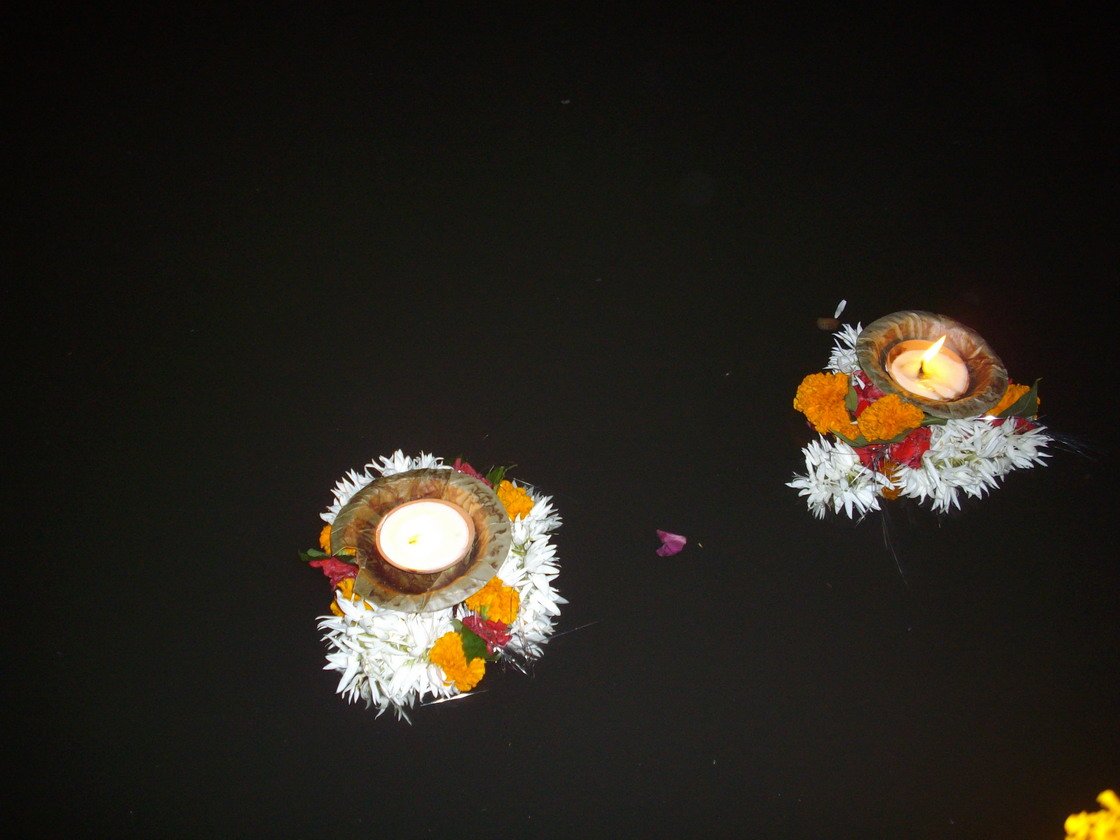
- Wikimedia Commons: Diyas on the Ganges — floating lamps on Dev Deepavali (Rudolph.A.furtado, CC0).