Bulgarian: Cyrillic’s Close Cousin to Russian
TABLE OF CONTENTS
Bulgarian looks like Russian on the page — same Cyrillic shapes, familiar Slavic roots — but it dropped noun cases, stuck a definite article on the end of words, and helped carry the alphabet that now sits on euro banknotes.
Bulgarian at a Glance
| Native name | български език (bŭlgarski ezik) |
| Family | Indo-European → Slavic → South Slavic → Eastern South Slavic |
| Speakers | About 6.8 million first-language speakers; about 7.9 million total including L2 (Ethnologue / Wikipedia, 2019–2023) |
| Official in | Bulgaria; one of 24 official EU languages since 2007 |
| Script | Cyrillic — 30 letters (modern standard) |
| Regulated by | Institute for Bulgarian Language, Bulgarian Academy of Sciences |
| ISO codes | bg / bul |
| Closest relative | Macedonian (shared Balkan innovations) |
Classification: South Slavic, Not East Slavic
Bulgarian is a South Slavic language. Russian, Ukrainian, and Belarusian sit on the East Slavic branch. That is why the writing systems look close while the grammars do not.
Bulgarian and Russian share a large inherited Slavic vocabulary and the Cyrillic script. A Russian speaker can often guess street signs and newspaper headlines in Sofia. Conversation is harder: Bulgarian has reshaped its grammar under Balkan contact, while Russian kept a full case system.
The closest living relative is Macedonian. Together they form the Eastern South Slavic group. Both lost most noun cases, developed a postposed definite article, and largely replaced the infinitive with да + finite verb. Linguists treat them as closely related standards on a dialect continuum; how you label that continuum is partly a political question as well as a linguistic one.
Other neighbors in the region — Greek, Albanian, Romanian — are not Slavic, but they share Balkan features with Bulgarian (the so-called Balkan sprachbund). That contact history explains much of what makes Bulgarian feel “un-Slavic” to learners who arrive from Russian or Polish.
Where Bulgarian Is Spoken
Bulgaria is the core. In the 2021 census, Bulgarian was the first language of about 77% of residents — roughly 5.04 million people inside the country. Bulgaria’s population is smaller than that (about 6.4 million in recent Eurostat figures), so the diaspora and minority languages matter for the full picture.
Outside Bulgaria, historically rooted communities live in Ukraine and Moldova (Bessarabian Bulgarians), Serbia’s border regions, Romania, Turkey, Albania, and Greece. Since the 1990s, large communities have grown in Germany, Spain, Italy, the United Kingdom, France, the United States, and Canada. Cyprus counted about 14,700 Bulgarian speakers in 2021.
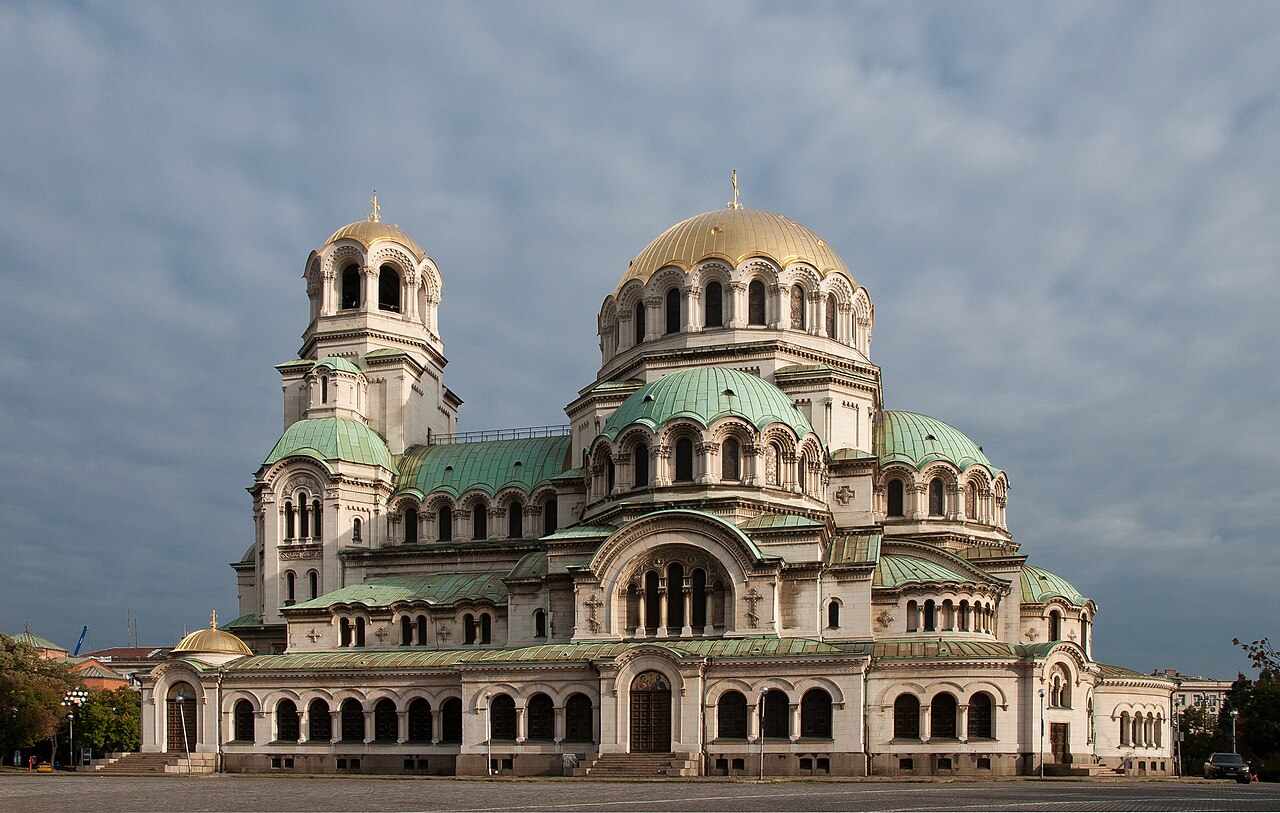
Since 1 January 2007, Bulgarian has been an official language of the European Union. When Bulgaria joined, Cyrillic became the EU’s third official script after Latin and Greek — a quiet but permanent place for Bulgarian letters on EU institutions and, later, on euro notes.
How many people speak Bulgarian?
About 6.8 million people speak it as a first language, and roughly 7.9 million in total when second-language speakers are included (Ethnologue figures summarized for 2019–2023). That puts Bulgarian in the mid range of EU languages: smaller than Polish or Romanian, larger than many Baltic or Nordic official languages.
A Short History
Bulgarian’s written story is older than many people expect.
- Prehistoric Slavic — Slavic speakers settled the eastern Balkans from about the 6th century.
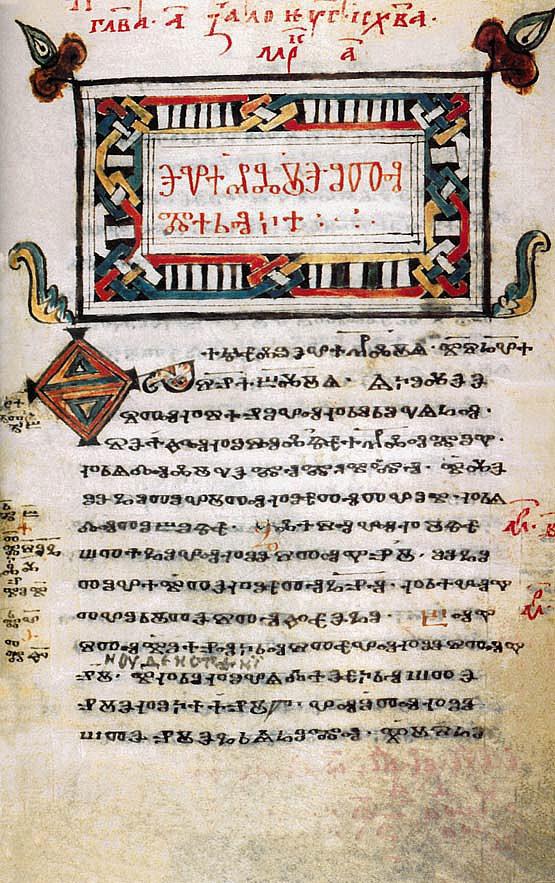
- Old Bulgarian / Old Church Slavonic (9th–11th centuries) — Saints Cyril and Methodius created the Glagolitic alphabet around the 860s for Slavic liturgy. Their disciples brought that tradition into the First Bulgarian Empire. Soon after, scholars at the Preslav Literary School developed Cyrillic, named in honor of Cyril. Early manuscripts such as the Codex Zographensis preserve that literary language.
- Middle Bulgarian (12th–15th centuries) — The language of the Second Bulgarian Empire. Major grammatical shifts begin: case endings erode; analytic structures grow.
- Modern Bulgarian (from the 16th century; standardized in the 19th) — Under Ottoman rule the spoken language kept changing. The national revival produced competing spelling proposals; a standard based largely on eastern dialects was codified around the turn of the 20th century. The 1945 orthographic reform removed the letters yat (ѣ) and big yus (ѫ), leaving today’s 30-letter alphabet.
Bulgarians mark 24 May as the Day of Bulgarian Education and Culture and of Slavonic Literature — a national holiday for the alphabet and the literary tradition.
Writing System: Cyrillic That Started Closer to Home
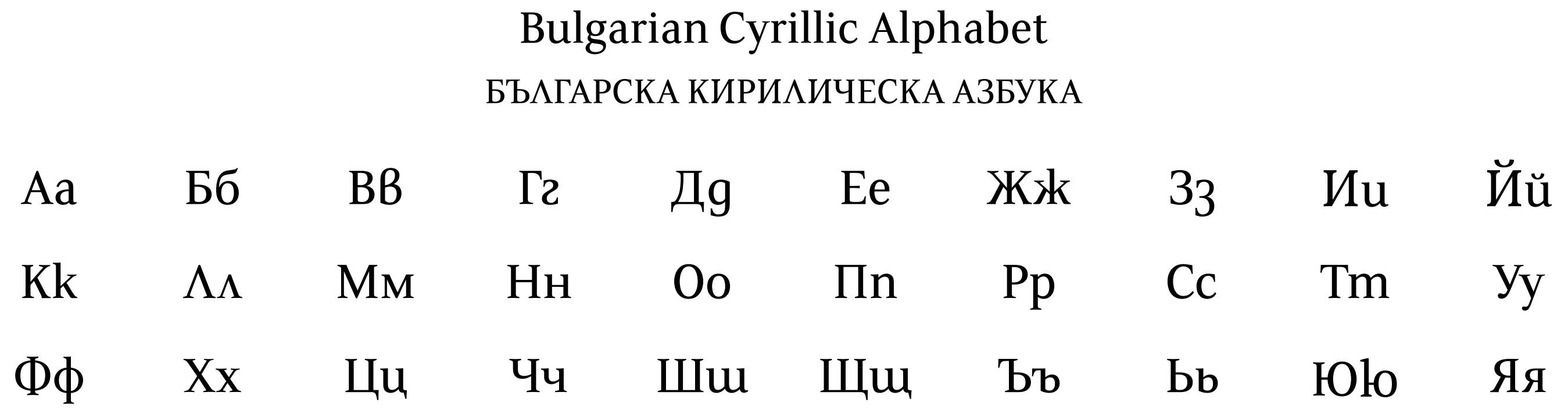
If you already read Russian Cyrillic, Bulgarian looks familiar at first. The important differences sit in three places: letter inventory, a few shared letters with different jobs, and typeface style.
30 letters, not 33
Modern Bulgarian uses 30 letters. Russian uses 33. Bulgarian has no Ё, Ы, or Э. Every Bulgarian letter also exists in Russian; the reverse is not true.
| Feature | Bulgarian | Russian |
|---|---|---|
| Letter count | 30 | 33 |
| Extra letters | — | Ё, Ы, Э |
| Ъ | A real vowel /ɤ/ (roughly the u in but) | Silent hard sign |
| Щ | /ʃt/ (“sht”) | Long soft “sh” /ɕː/ (often romanized shch) |
| Ь | Mainly before о | Soft sign used widely |
The letter ъ is the biggest trap. In Bulgarian it is a full vowel — you hear it in път (road), ъгъл (corner), and in България itself. Russian readers often skip it because Russian ъ makes no sound. Misreading ъ is one of the fastest ways to turn a Bulgarian word into gibberish.
Bulgarian щ is simply “sht,” as in още (oshte, more) and щастие (shtastie, happiness). Russian щ is a different sound.
Is Bulgarian Cyrillic the same as Russian Cyrillic?
Almost — but not quite. Beyond the letter differences above, Bulgarian typography often prefers more “handwritten” lowercase shapes (б, д, п, т and others) than the Latinized Russian print style that spread after Peter the Great’s reforms. In plain text online the letters are the same Unicode characters; in carefully set books and official designs, Bulgarian Cyrillic can look rounder and more distinct.
When Bulgaria joined the EU, those letters stopped being “only Eastern European.” Cyrillic is now an official EU script, and Bulgarian is the language that put it there.
Grammar: The Slavic Language That Dropped Most Cases
For learners coming from Russian, Polish, or Czech, Bulgarian grammar is the surprise.
Almost no noun cases
Old Bulgarian had a full Slavic case system. Modern Bulgarian nouns keep gender (masculine, feminine, neuter) and number, plus a limited vocative, but everyday case endings are gone. Pronouns still show case (nominative / accusative / dative). Word order and prepositions do the work that endings do in Russian.
A definite article stuck on the end
Bulgarian builds “the” as a suffix:
| Indefinite | Definite | Meaning |
|---|---|---|
| маса | масата | table / the table |
| град | градът | city / the city (subject form) |
| жена | жената | woman / the woman |
| дете | детето | child / the child |
Masculine nouns even distinguish a longer subject article (-ът / -ят) from a shorter object form (-а / -я) in the literary norm — a remnant of case thinking attached to the article.
This postposed article is a Balkan feature shared with Macedonian, Albanian, and Romanian, not with Russian.
No infinitive
Instead of an infinitive (“to go”), Bulgarian uses да + a conjugated verb: искам да отида — “I want that I go” → “I want to go.” Greek, Albanian, and Romanian show related patterns.
Verbs stay complex
What Bulgarian lost in nouns, it kept — and expanded — in verbs. Aspect (perfective vs imperfective) still matters. Past forms distinguish aorist and imperfect. Bulgarian also has evidential forms that mark whether the speaker witnessed something, inferred it, or heard it reported — a nuance English usually handles with adverbs (“apparently,” “they say”).
Is Bulgarian similar to Russian?
In vocabulary and script: partly. In grammar: less than it looks. Cognates are common (вода / вода “water”, книга / книга “book”), and Cyrillic transfer helps reading. But if you expect six noun cases, free word-order case marking, and Russian-style soft-sign habits, Bulgarian will feel like a different language — because it is.
Vocabulary and Loanwords
Most everyday Bulgarian is inherited Slavic stock. Layered on top:
- Church Slavonic / Old Bulgarian literary words
- Turkish (and Arabic via Ottoman Turkish) from centuries of Ottoman rule — many everyday items and food words
- Greek from Orthodox and Balkan contact
- Russian bookish and technical loans during the 19th–20th centuries
- French, German, English for modern culture, science, and tech
One practical tip: cognates can mislead. Shared Slavic roots do not always keep the same meaning, and Russian loan spelling can look “almost right” while the Bulgarian everyday word is different.
Common Phrases
Pronunciations below are approximate English-friendly transliterations, not full IPA.
| English | Bulgarian | Pronunciation |
|---|---|---|
| Hello (informal) | Здравей | zdravey |
| Hello (formal / plural) | Здравейте | zdraveyte |
| Good morning | Добро утро | dobro utro |
| Good day | Добър ден | dobŭr den |
| Good evening | Добър вечер | dobŭr vecher |
| Goodbye | Довиждане | dovizhdane |
| Please | Моля | molya |
| Thank you | Благодаря | blagodarya |
| You’re welcome | Моля / Няма защо | molya / nyama zashto |
| Yes / No | Да / Не | da / ne |
| Excuse me / Sorry | Извинете | izvinete |
| Do you speak English? | Говорите ли английски? | govorite li angliyski? |
| I don’t understand | Не разбирам | ne razbiram |
| How much is it? | Колко струва? | kolko struva? |
| The bill, please | Сметката, моля | smetkata, molya |
| Cheers! | Наздраве! | nazdrave! |
A cultural note often repeated in travel guides: in Bulgaria, a head shake and nod can mean the opposite of what many Western travelers expect. Confirm with words when it matters — да and не are safer than gestures alone.
Is Bulgarian Hard to Learn?
For English speakers: medium. The Foreign Service Institute groups Bulgarian with other Slavic languages that usually take serious classroom time, but Bulgarian is often described as more approachable than Russian or Polish once the alphabet is learned, because you are not wrestling with a full case paradigm for every noun.
What helps
- Phonetic spelling: after you know the letters, reading is relatively regular
- No noun-case tables like Russian’s
- Shared international vocabulary in tech, business, and tourism
What slows people down
- Cyrillic (if you are starting from Latin only)
- Verb aspect and tense pairs
- The definite article suffixes and gender
- Evidential verb forms (advanced, but visible in news and storytelling)
- False friends with Russian
For Russian speakers: reading comes fast; listening and speaking take longer than the alphabet suggests. Treat Bulgarian as a sister language, not as “easy Russian.”
Tips for Learning Bulgarian
- Learn the 30 letters in a weekend. Prioritize ъ, щ, and the missing Russian letters so you do not import Russian habits.
- Read out loud early. Bulgarian spelling is a gift — use it.
- Master the article suffixes with gender. Drill pairs like маса / масата, град / градът.
- Learn да + verb instead of hunting for infinitives.
- Pair listening with reading. News sites and subtitled interviews train the evidential and everyday word order.
- Keep a false-friend list if you know Russian. Write the Bulgarian form you actually hear in Sofia, not the cognate you expect.
- Use short translation drills. Paste menus, signs, and chat messages into a translator, then check the grammar against a phrasebook — especially articles and verbs.
AI Translation for Bulgarian
Bulgarian is a mid-resource language: better supported than many minority languages, thinner than English–Spanish or English–German for some specialized domains. Cyrillic usually transfers cleanly in modern tools, but machine translation still stumbles on:
- Definite-article suffixes and short vs long masculine forms
- Aspect pairs and evidential pasts
- Informal ти vs formal Вие
- Legal, medical, and literary style
For everyday text, menus, travel phrases, and email drafts, OpenL’s Bulgarian translator is a practical starting point — especially when you need to move quickly between Bulgarian and English (or other languages) without leaving the browser. For contracts, certificates, or anything that must be exact, treat the model output as a draft and have a human who knows Bulgarian review numbers, names, and legal wording.
If your documents are already in PDF or Word and layout matters, use a document translator that keeps structure instead of pasting everything into a plain text box — then still have a person check names and numbers.
Sources
- Bulgarian language — Wikipedia — speakers, classification, history, alphabet, grammar overview
- Bulgarian grammar — Wikipedia — cases, articles, verbs, evidentiality
- Britannica: Bulgarian language — South Slavic profile; loss of cases; Balkan features
- European Commission — Linguistic diversity in the EU — official EU languages and scripts (accessed Nov 2026)
- European Union — Bulgaria country profile — official language; membership since 2007
- Institute for Bulgarian Language (BAS) — Bulgarian alphabets — Cyrillic development at Preslav
- Bulgarian vs Russian alphabet — bulgarianalphabet.com — Ъ, Щ, and missing letters compared
- Ethnologue: Bulgarian — speaker estimates referenced via secondary summaries