Azerbaijani: A Turkic Language Written in Latin, Arabic, and Cyrillic
 Add to Chrome
TABLE OF CONTENTS
Azerbaijani is easiest to place on a map and hardest to pin to one script: the same language appears in Latin letters in Baku, Arabic script in Tabriz, and Cyrillic in a few corners of the former Soviet world.
What Azerbaijani Is
Azerbaijani is an Oghuz Turkic language. Its closest widely known relative is Turkish, and the two can often handle simple conversation because they share a lot of core grammar and vocabulary. Azerbaijani is also closely related to Turkmen and Gagauz.
The language has two major modern standards:
- North Azerbaijani in the Republic of Azerbaijan and parts of the former Soviet space
- South Azerbaijani in northwestern Iran and nearby communities
That split matters more than most learners expect. If you pick the wrong standard, you may still recognize the language, but you will hear different spelling habits, different loanwords, and some different grammar choices.
Where Azerbaijani Is Spoken
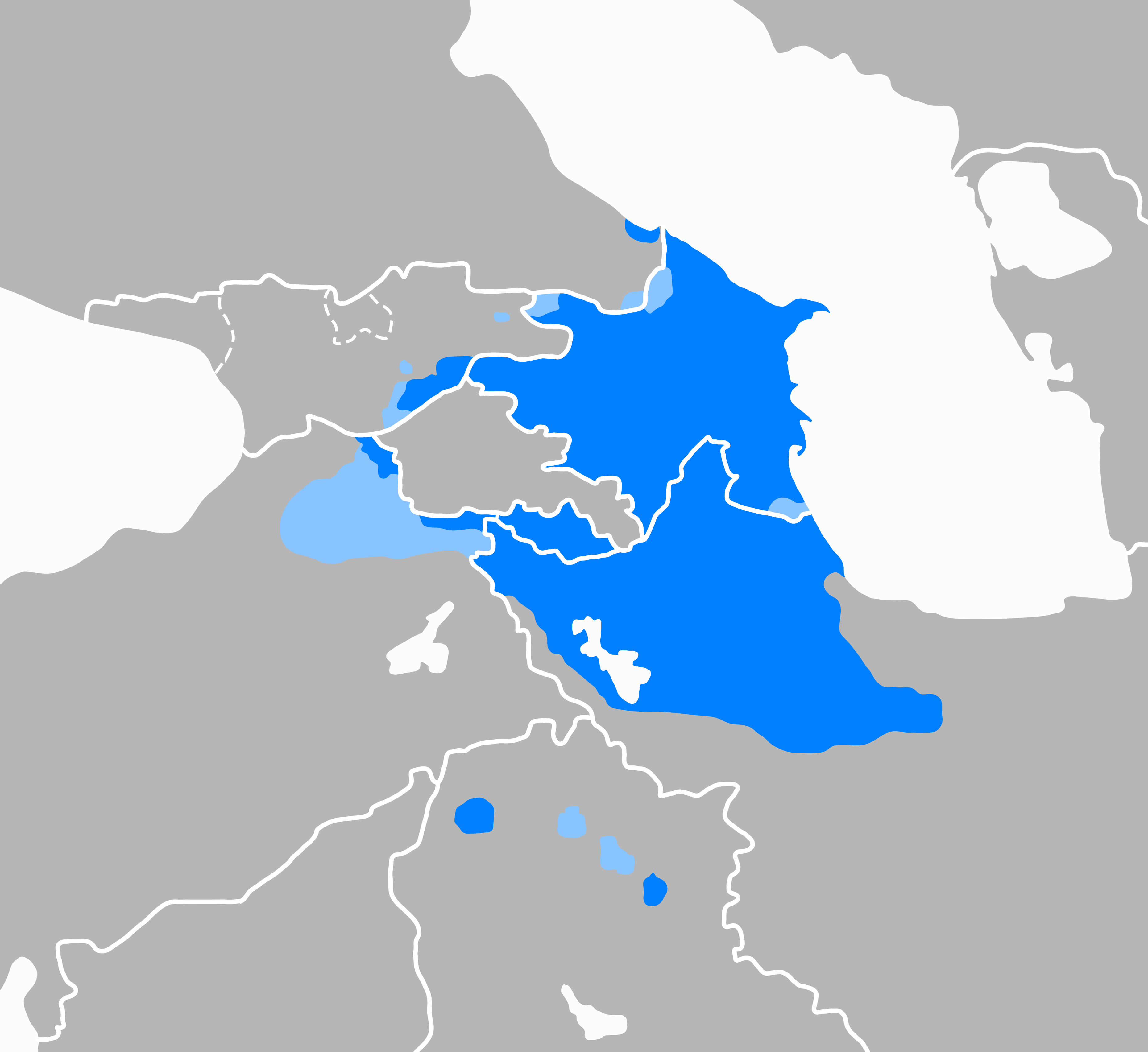
The Republic of Azerbaijan gives Azerbaijani official status in its constitution, and the country’s statistical office still points users to the 2019 census for native-language tables. That makes the 2019 census the safest official baseline for homeland language data.
| Region | What to know |
|---|---|
| Republic of Azerbaijan | Official state language; standard North Azerbaijani is used in government, schools, media, and public life |
| Iran | South Azerbaijani is widely spoken in the northwest, especially around Tabriz and nearby areas; no official state status |
| Dagestan, Russia | Azerbaijani still appears in Cyrillic in some communities |
| Georgia and Turkey | Smaller communities and cross-border family networks keep the language active |
| Diaspora | Communities in Europe, North America, and the Middle East keep both standards alive, often through family and cultural institutions |
If you already know Turkish, this section is the short version: Azerbaijani will feel familiar faster than most languages in the region.
The Script Story
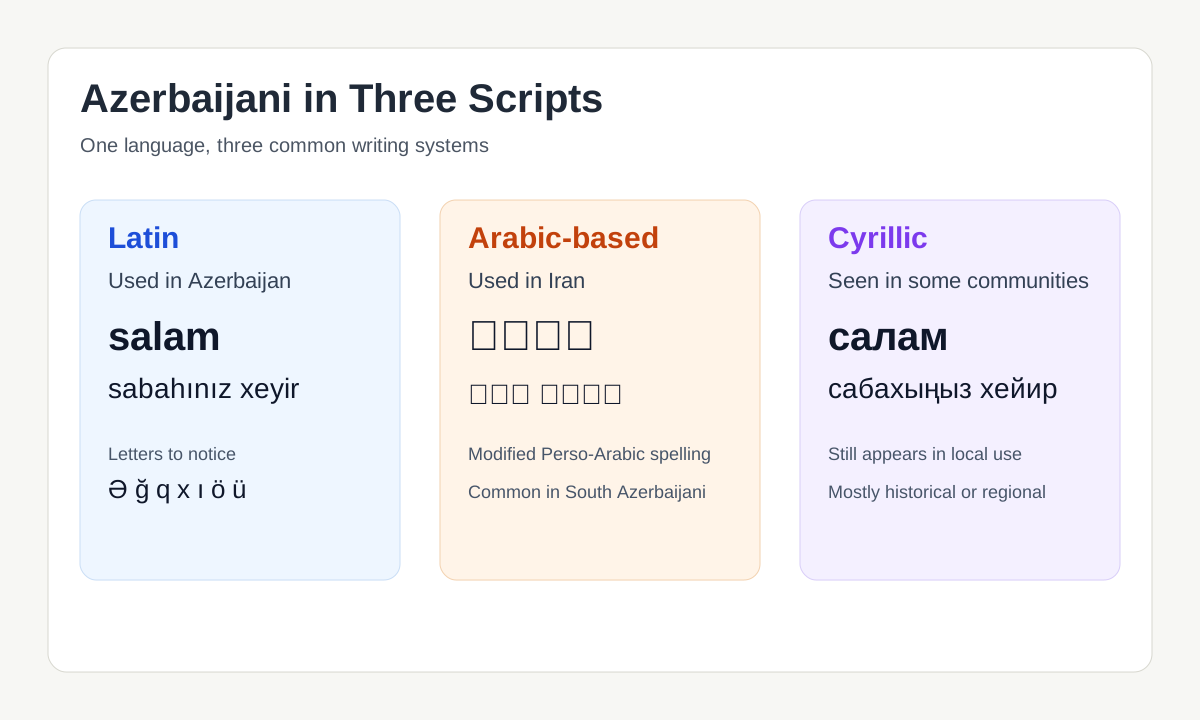
Azerbaijani is a script-switcher. That is the memory point.
| Place | Main script today | Note |
|---|---|---|
| Azerbaijan | Latin | The current Latin alphabet uses 32 letters |
| Iran | Arabic-based | South Azerbaijani is usually written in a modified Perso-Arabic script |
| Dagestan | Cyrillic | Cyrillic still survives in local use |
The modern Latin alphabet is phonetic and very readable once you learn a few special letters: Ə ə, Ğ ğ, Q q, X x, I ı, İ i, Ö ö, and Ü ü. If you know Turkish spelling, some of this will look familiar, but not identical.
Azerbaijani’s 20th-century script history is unusually bumpy:
- It was written in Arabic script for centuries.
- Soviet reforms pushed Latin, then Cyrillic.
- After independence, Azerbaijan returned to Latin.
That history is why Azerbaijani text can look like three different languages at first glance even when the words are the same.
Grammar in Plain Terms
Azerbaijani is one of those languages where endings do the heavy lifting.
| Feature | What it means |
|---|---|
| No grammatical gender | No masculine/feminine noun classes |
| Vowel harmony | Suffixes change shape to fit the word |
| Case endings | Nouns show direction, location, and possession through endings |
| Flexible word order | The sentence can move around more than English allows |
A quick look at endings says most of what you need:
| Form | Example | Meaning |
|---|---|---|
ev | house | base form |
evdə | in the house | location |
evə | to the house | direction |
evdən | from the house | source |
If that feels Turkish, that is because the languages are cousins. The main difference is not the logic; it is the surface form of the words and the preferred vocabulary in each community.
North vs South Azerbaijani
The biggest practical divide is not literary and not political. It is daily use.
| Standard | Common setting | What changes |
|---|---|---|
| North Azerbaijani | Republic of Azerbaijan | More Latin-script material, more state media, more modern digital content |
| South Azerbaijani | Iran | More Arabic-script material, more Persian contact, different local vocabulary |
The two standards are close enough that speakers can often follow each other, but not identical enough to ignore. If you are translating for family, media, or school, choose the standard first and keep it consistent.
Compared with Armenian, Azerbaijani has a much newer official script story and a Turkic grammar base instead of an independent Indo-European one. Compared with Georgian, it is also a better example of a language whose modern identity is tied more to script reform than to a single ancient alphabet.
Common Phrases
| English | Azerbaijani | Notes |
|---|---|---|
| Hello | salam | very common greeting |
| Good morning | sabahınız xeyir | polite form |
| Thank you | təşəkkür edirəm | formal and safe |
| Yes | bəli | standard yes |
| No | yox | standard no |
| Please | zəhmət olmasa | polite request |
| How are you? | necəsiniz? | formal |
| Goodbye | sağ olun | polite farewell |
The phrase to remember is sabahınız xeyir. Literally, it means “your morning be good.”
Is Azerbaijani Hard To Learn?
For English speakers, Azerbaijani is usually medium-hard.
| Part | Difficulty | Why |
|---|---|---|
| Alphabet | Medium | New letters, but a clean system |
| Pronunciation | Medium-hard | ə, ı, q, x, and vowel harmony need practice |
| Grammar | Medium | Endings do the work instead of helper words |
| Vocabulary | Hard | Not much shared basic vocabulary with English |
| Resources | Medium | Better for North Azerbaijani than South Azerbaijani |
The good news is that the spelling is pretty honest. Once you know the alphabet, the text usually says what it means on the page.
Tips For Learning
- Pick North or South Azerbaijani first. Switching later is possible, but it slows everything down.
- Learn the special letters early. Ə, ı, q, x, and ğ are where many beginners wobble.
- Read real text, not just romanization. The script is part of the language, not decoration.
- Use Turkish as a support language if you know it. It will not solve everything, but it gives you a head start.
AI Translation And Azerbaijani
Azerbaijani is a good case for translation tools that handle both script and morphology well. Clean modern text usually translates more smoothly than scans, handwritten notes, or mixed-script documents.
OpenL can help here, especially when you need a fast first draft for multi-script or morphology-heavy Azerbaijani text and then a human check for names, endings, and regional vocabulary. For OCR-heavy workflows, pair it with how to translate text from images and photos. For editable office files, how to translate a Word document is the cleaner route.
| What to check | Why it matters |
|---|---|
| North vs South standard | The wrong standard can sound odd or wrong for the audience |
| Script | Latin, Arabic, and Cyrillic should not be mixed casually |
| Names and places | Proper nouns should stay consistent |
| Case endings | Endings carry meaning that word-for-word translation can flatten |
| Loanwords | Persian, Russian, and Turkish influence can change meaning by region |
Recent research on open Azerbaijani language models also makes the same point: Azerbaijani is a real test case for low-resource support, script handling, and morphosyntactic variation.
If you can pick the right standard and read the script without guessing, Azerbaijani stops looking exotic and starts looking logical.
Sources
- Constitution of the Republic of Azerbaijan — official source for Azerbaijani as the state language.
- State Statistical Committee of the Republic of Azerbaijan: Population — official statistics portal that points to the 2019 census and native-language tables.
- Map of the Azerbaijani language — free map used to show where the language is concentrated.
- Demographics of Azerbaijan — used for the 2024 population estimate referenced in the speaker-count inference.
- Azerbaijani language — used for classification, regional distribution, and script overview.
- Azerbaijani alphabet — used for the Latin, Arabic, and Cyrillic script summary.
- Receptive intelligibility of Turkish to Iranian-Azerbaijani speakers — used for the Turkish/Azerbaijani closeness note.
- Open foundation models for Azerbaijani language — used for the AI translation note on Azerbaijani support and evaluation.