How Football Clubs Got Their Names
 Add to Chrome
TABLE OF CONTENTS
You’re watching the World Cup. The commentators say “Juventus” and you wonder — what does that even mean? Why are some clubs “United” and others “Rovers”? Football club names are a map of history, written in a dozen languages. If you’re catching up on World Cup vocabulary too, this is your next read.
The Suffix Code: What United, City, Rovers & Albion Actually Mean
English football clubs follow a simple pattern: [Place] + [Suffix] + FC. But each suffix tells a specific story about how the club was born.
United
United usually signals a merger. Newcastle United formed in 1892 when Newcastle East End absorbed the bankrupt Newcastle West End — genuine consolidation. Leeds United chose the name after Leeds City was dissolved for illegal wartime payments; fans reformed the club in 1919 with “United” to symbolise opposition to the injustice.
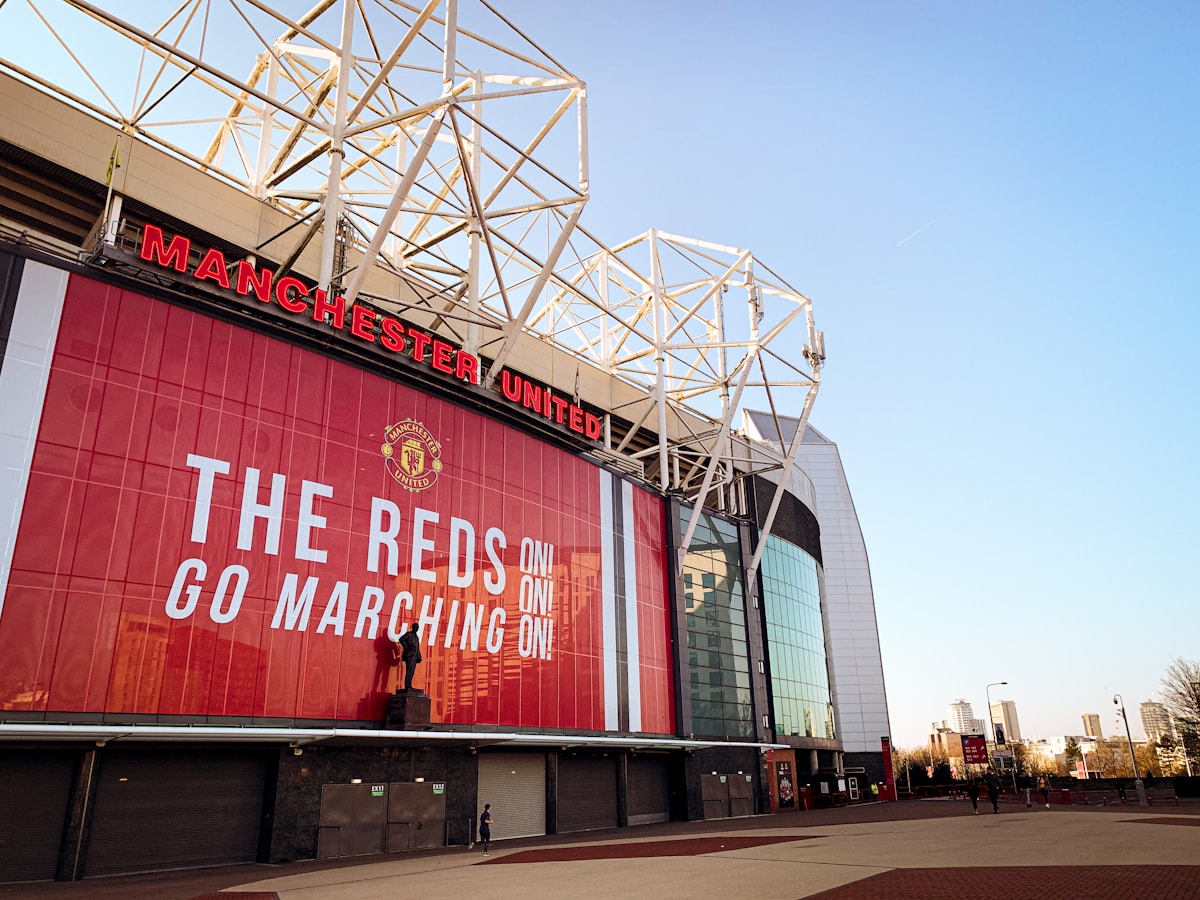
Then there’s Manchester United. Originally Newton Heath FC (a railway workers’ team), they went bankrupt in 1902. A group of local businessmen rescued the club and renamed it. No merger — just a rebrand. “United” sounded more professional and forward-looking than the old works-team name.
| Club | Merger? |
|---|---|
| Newcastle United | ✅ East End + West End |
| Leeds United | ❌ Replaced dissolved Leeds City |
| Manchester United | ❌ Rebranded from Newton Heath |
| Sheffield United | ✅ First football club of Sheffield United Cricket Club |
City vs Town vs County
City clubs represent a settlement with official city status — defined historically by having a cathedral or a Royal Charter. Only two City-named clubs have ever been English champions: Leicester City (2015–16) and Manchester City. Fourteen clubs in the English Football League carry this suffix, making it the most common.
Town is the humbler counterpart — Ipswich Town, Luton Town, Huddersfield Town. The distinction matters: clubs wear it as a badge of either metropolitan ambition or local pride.
County clubs claim to represent an entire county, not just one settlement. Derby County started as an offshoot of Derbyshire County Cricket Club; Notts County (founded 1862) is the oldest professional football club in the world.
Rovers & Wanderers
Both mean the same thing: the club had no fixed home ground in its early days. Blackburn Rovers, Doncaster Rovers, Bolton Wanderers, and Wolverhampton Wanderers all started as teams that literally roved or wandered from field to field.
Albion
Albion is the most ancient name for the island of Great Britain — from the Latin albus (“white”), referring to the White Cliffs of Dover. The name was used by Greek geographers as early as the 4th century BC.
Why would a football club adopt it? West Bromwich Albion (founded 1878) were originally “West Bromwich Strollers” — they changed it partly because many early players came from the Albion district of West Bromwich. Brighton & Hove Albion (1901) likely chose it to emulate West Brom’s FA Cup success, though Brighton’s own chalk cliffs give the name local resonance too.
Athletic
Athletic clubs were offshoots of existing athletics or multi-sport organisations. Charlton Athletic, Oldham Athletic, and Wigan Athletic all began this way — the name emphasised that members were all-round sportsmen, not just footballers.
Where They Worked: Clubs Named After Factories & Professions
Sheffield Wednesday — The Half-Day Club
The most unusual name in English football. The club started as The Wednesday Cricket Club, founded in 1820 by six tradesmen who had a half-day off on Wednesdays. Football was added in winter to keep the cricketers fit. The club didn’t officially become “Sheffield Wednesday” until 1929 — over a century after those first Wednesday cricket matches.
Arsenal — The Gunners
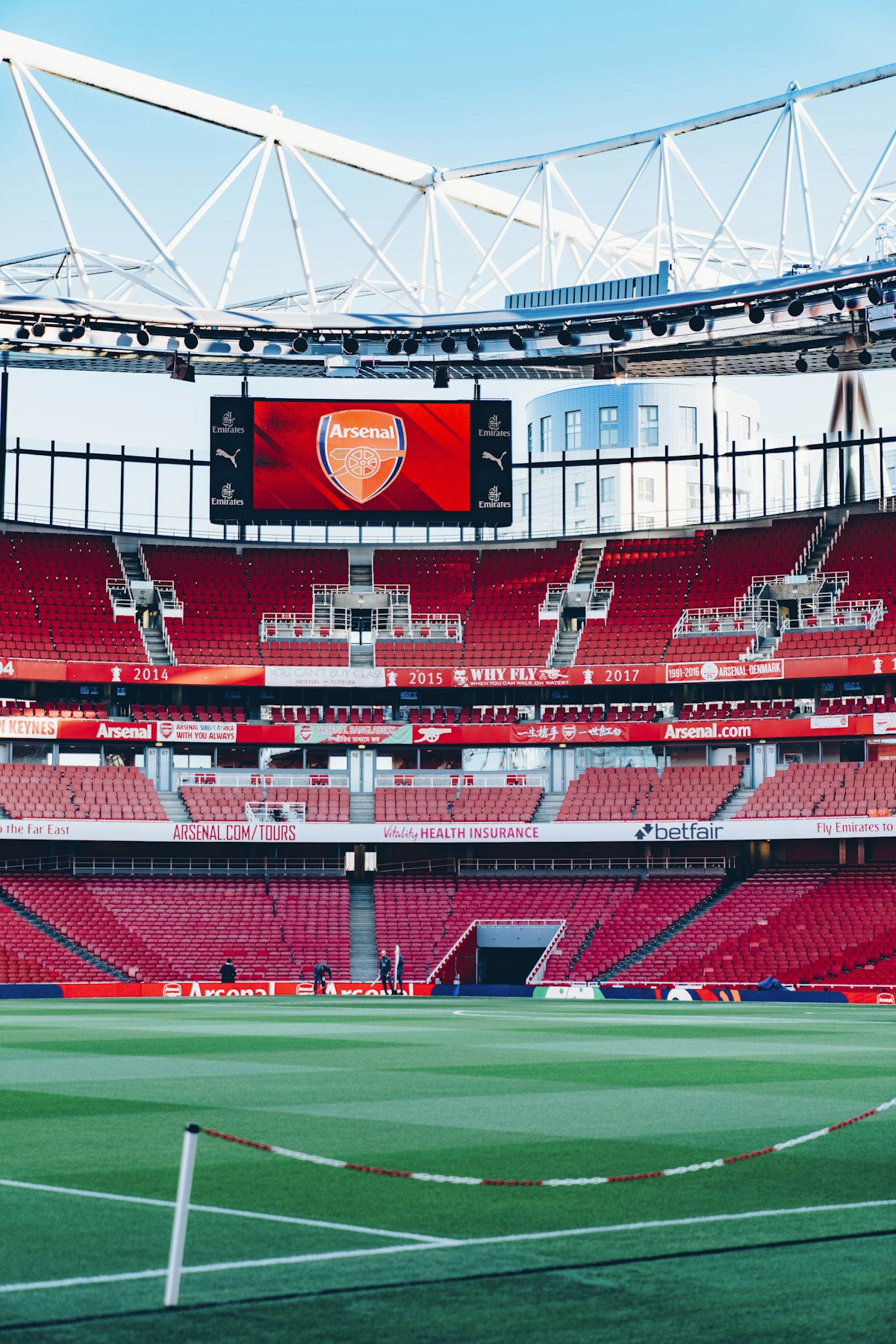
Workers at the Royal Arsenal munitions factory in Woolwich formed a football team in 1886. Their first name was Dial Square FC, named after a sundial in their workshop. This became Royal Arsenal, later Woolwich Arsenal, and finally just Arsenal when the club moved across the river to Highbury in 1913.
The nickname “The Gunners” is a direct nod to the armaments factory. The club’s cannon crest makes the connection visible.
West Ham United — The Hammers & The Irons
Originated as Thames Ironworks FC in 1895, a team for workers at the Thames Ironworks and Shipbuilding Company. The nicknames — “The Hammers” and “The Irons” — reflect that industrial heritage. The crossed hammers on the club badge tell the same story.
Gods, Heroes & History
Ajax & the Dutch Greek Revival
Ajax is named after the Greek hero Ajax (Aias), the towering warrior from Homer’s Iliad. But why a Dutch club?
In the late 19th century, European elites were obsessed with classical antiquity. Multiple Dutch clubs chose Greek mythological names — Heracles, Sparta Rotterdam, Excelsior (Latin for “ever upward”). Ajax, founded in 1900, took its place in this tradition and became its most famous representative.
Borussia — Latin for Prussia, Chosen in a Pub
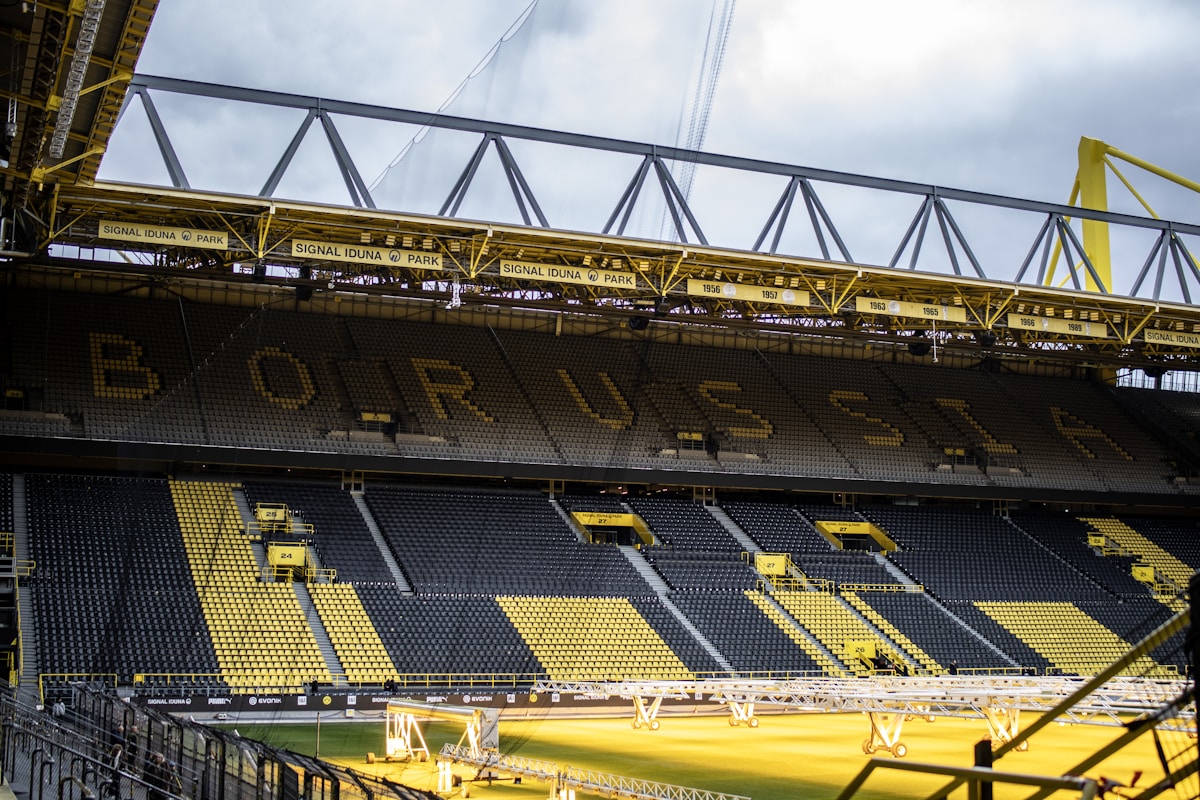
Borussia is the Latin name for Prussia. Borussia Dortmund got the name in a surprisingly casual way: the club’s founding meeting in 1909 took place at a bar called Zum Wildschütz, which had a Borussia Brewery sign hanging on the wall. The founders liked the sign and adopted the name.
Borussia Mönchengladbach (founded 1900) chose it more deliberately, reflecting the city’s Prussian heritage.
Juventus — “Youth”
Juventus is Latin for “youth”. The club was founded in 1897 by a group of secondary school students in Turin — the name reflected their age.
The irony: a century later, Italy’s football “youth” is universally known as “La Vecchia Signora” (“The Old Lady”). When the Agnelli family (founders of Fiat) bought the club in the 1920s, they elevated it from a local team to a national institution. Italy’s “girlfriend” became a “lady.”
Spartak & Sparta
Spartak Moscow is named after Spartacus, the gladiator who led a slave rebellion against Rome. The name resonated with Soviet ideology — Spartacus was recast as a symbol of proletarian revolution.
Sparta Prague and Sparta Rotterdam both reference the ancient Greek city-state of Sparta, known for its military discipline and rigour. Same classical trend as Ajax, different country.
Tottenham Hotspur — The Knight in Shakespeare
Tottenham Hotspur is named after Sir Henry Percy (1364–1403), a medieval English knight whose reckless courage in battle earned him the nickname “Harry Hotspur” — a man so impatient for combat he forgot to wear his spurs. Shakespeare immortalised him as a hot-headed warrior in Henry IV.
The club started as Hotspur Cricket Club in 1880. The founders, schoolboys from a local Bible class, picked the name because they lived near Tottenham Marshes — where Harry Hotspur once owned land. Football followed in 1882.
Celtic & Rangers — Faith on the Pitch
No two club names carry more historical weight than these.
Celtic was founded in 1887 by Brother Walfrid, an Irish Marist priest, to raise money for poor Irish immigrants in Glasgow’s East End. The name “Celtic” was chosen to reflect the club’s Irish and Scottish Gaelic heritage — a unified Celtic identity. The club became a symbol of the Catholic Irish diaspora.
Rangers, founded in 1872 by four teenagers on Glasgow’s more affluent west side, grew into the club of Scotland’s Protestant and Unionist establishment. The name itself is simply descriptive — “rangers” in the sense of a roving football team — but over time, the Old Firm rivalry came to embody one of football’s deepest cultural divides: Catholic vs Protestant, Irish immigrant vs native Scot, nationalist vs unionist.
Together, they represent the most famous example of football club names shaped not by geography or work, but by faith, migration, and identity.
Across Languages: Foreign Club Names Translated
Many club names are words you already know — just in a language you don’t speak. Here’s what they actually mean.
Real — “Royal”
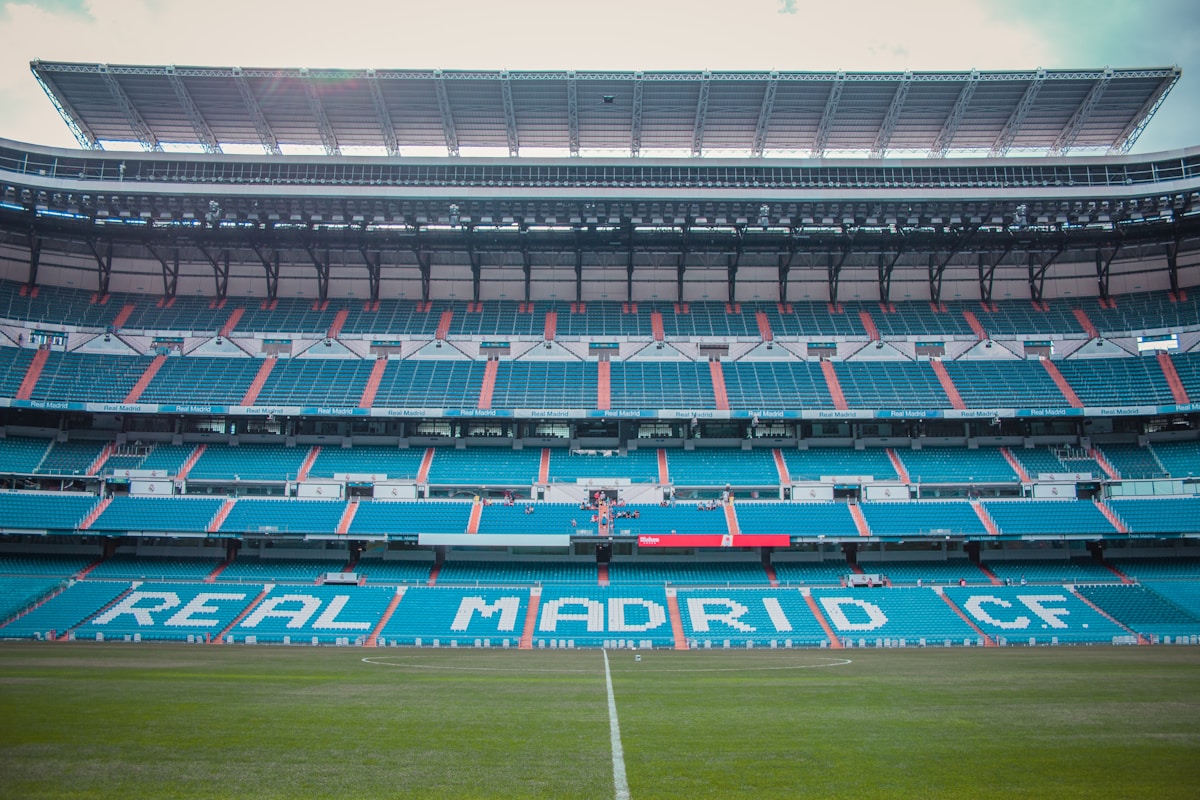
Real means “Royal” in Spanish. It’s a crown granted by the Spanish monarch. Real Madrid received the title from King Alfonso XIII in 1920. Real Sociedad, Real Betis, and Real Zaragoza all carry the same royal endorsement. The prefix is not decorative — it signals direct patronage from the Crown and remains a mark of prestige.
Inter — “International”
Internazionale means “International” in Italian. The name was a political statement.
In 1908, AC Milan’s board split over whether to restrict the club to Italian players only. A breakaway group — led by Giorgio Muggiani — walked out and formed FC Internazionale Milano. Muggiani declared: “We are brothers of the world.” The club would welcome players of any nationality.
The irony: Inter, founded to protest too many foreign restrictions, has an entirely Italian name. AC Milan, which wanted to limit foreign players, kept the English spelling “Milan” (not “Milano”) in honour of its English founders.
AC & Sporting — “Football Club”
AC stands for Associazione Calcio — “Football Association.” AC Milan was originally founded in 1899 by English expatriate Herbert Kilpin as the “Milan Foot-Ball and Cricket Club.”
Sporting (as in Sporting CP, Sporting Braga) comes directly from the English “Sporting Club” — a common naming pattern borrowed from the English clubs that inspired football across Europe. The same logic produced FC (Football Club) across dozens of countries.
Olympique — The French “Athletic”
Olympique Marseille, Olympique Lyonnais, and Olympiacos (Greece) all trace their names to the same idea as English “Athletic” clubs: they were founded as multi-sport organisations. “Olympic” signalled broad sporting ambition — not just football, but track, cycling, gymnastics. The name is less about ancient Olympia and more about the modern Olympic ideals revived in the late 19th century.
River Plate — English in Argentina
River Plate is the direct English translation of the Río de la Plata, the river estuary on which Buenos Aires sits. English expatriates founded the club in 1901. The name is pure geography — a river — but rendered in the language of the British merchants who brought football to Argentina.
Barcelona & Bayern — Geography in the Local Language
FC Barcelona was founded in 1899 by Joan Gamper, a Swiss accountant who had moved to Barcelona for work. He placed an ad in a local sports magazine looking for football players — and within a month, the club was born. The name itself is simply the city. Barcelona’s blue-and-maroon colours may trace back to Gamper’s former Swiss club, FC Basel.
Bayern München literally means “Bavaria Munich” — Bayern is the German name for the state of Bavaria. The equivalent in English would be “Bavaria Munich FC.”
The Nickname Hall of Fame
Some nicknames are obvious (The Reds, The Blues). These are not. Each has a story worth telling.
Barcelona: “Blaugrana” — and “Culés”
Blaugrana is Catalan: blau (blue) + grana (deep red). It describes the club’s striped shirts.
But the better story is Culés (Catalan for “arses” or “bottoms”). Before the Camp Nou opened in 1957, Barcelona played at a smaller ground where late-arriving fans sat on the perimeter wall. Passers-by on the street outside would see only a row of backsides perched along the wall. The name stuck — and Barça fans have called themselves culés ever since.
Everton: “The Toffees”
Two toffee shops — Mother Noblett’s and Ye Anciente Everton Toffee House — stood near the club’s early ground. Fans bought sweets before matches, and the nickname stuck. It has nothing to do with football, everything to do with hunger.
Real Madrid: “Los Vikingos” (The Vikings)
“The Whites” (Los Blancos) is simply about the all-white kit. But “Los Vikingos” is the story: after Real demolished Eintracht Frankfurt 7–3 in the 1960 European Cup final at Hampden Park, a Times journalist compared them to Vikings conquering Europe. A half-century later, the name endures.
Atlético Madrid: “Los Colchoneros” (The Mattress Makers)
Atlético’s red-and-white striped jerseys happen to look exactly like old-fashioned Spanish mattress ticking. Instead of being offended, fans embraced it. Atlético supporters have been Los Colchoneros — “The Mattress Makers” — for generations.
Charlton Athletic: “The Addicks”
A local fishmonger named Arthur “Ike” Bryan sponsored Charlton in their early years. After matches, he treated the players to haddock and chips. In a thick South London accent, “haddocks” became addicks. Football linguistics at its finest.
Brentford: “The Bees”
A complete misunderstanding. Students from a local school attended Brentford matches and chanted their school motto: “Buck up, B’s!” Other fans misheard it as “bees”. The club adopted the nickname — and a bee on its badge — from that one phonetic accident.
Villarreal: “El Submarino Amarillo” (The Yellow Submarine)
Villarreal’s yellow kit inspired a Beatles-themed nickname. In 1967, a group of fans started playing “Yellow Submarine” on a cassette player during matches. The nickname — and the submarine mascot Groguet — have defined the club’s identity ever since.
Club Name Facts at a Glance
| Club | Name Means | The Story in One Line |
|---|---|---|
| Ajax | Greek warrior | Classical name trend in late-19th-century Netherlands |
| Arsenal | Royal Arsenal | Workers from the Woolwich munitions factory |
| Barcelona | The city | Founded by a Swiss accountant, not a local |
| Bayern München | Bavaria Munich | Bayern = the German state of Bavaria |
| Borussia Dortmund | Prussia | Founders met at a pub with a Borussia brewery sign |
| Brighton & Hove Albion | Albion = ancient name for Britain | Took the name after West Brom’s FA Cup success |
| Celtic | Irish & Scottish Gaelic identity | Founded by a priest to support poor Irish immigrants in Glasgow |
| Charlton Athletic | Athletics club origin | Nickname “Addicks” comes from “haddocks” in a South London accent |
| Everton | District of Liverpool | Nickname “The Toffees” comes from local toffee shops near the ground |
| Inter Milan | International | Split from AC Milan over whether to allow foreign players |
| Juventus | Youth (Latin) | Founded by schoolboys; now called “The Old Lady” |
| Manchester United | Amalgamation | Rebranded from Newton Heath FC — no actual merger |
| Olympique Marseille | Olympic / multi-sport | Like English “Athletic” — founded as a broad sports club |
| River Plate | English for Río de la Plata | English expats named the club after Buenos Aires’ river |
| Real Madrid | Royal Madrid | King Alfonso XIII granted the “Real” title in 1920 |
| Rangers | Describes a roving football team | Grew into the club of Protestant/Unionist Glasgow |
| Sheffield Wednesday | Half-day off | Cricket club for workers who had Wednesdays free |
| Tottenham Hotspur | Medieval knight | Named after Harry Hotspur, a reckless warrior in Shakespeare |
| West Ham United | Shipyard workers | Thames Ironworks FC; “Hammers” from the crossed hammers badge |
| Villarreal | Location | “Yellow Submarine” started with a Beatles cassette in 1967 |
If you enjoyed this, you might also like our guide to football culture around the world — how different countries experience match day, from chants to stadium food. And if you’re reading club names in a foreign language and need to understand the rest of the article too, OpenL Translate handles 100+ languages with context-aware translation.
Sources
- The Athletic — Arsenal, United, Hotspur, Rovers: A history of English football names — comprehensive breakdown of English club naming conventions
- The Athletic — English football club nicknames origins — Villans, Cherries, Toffees, and Tractor Boys explained
- The Athletic — Nottingham Forest’s name origin — named after the Forest Recreation Ground, linked to Sherwood Forest
- BBC — The surprising origins of football club names — Sheffield Wednesday, Tottenham Hotspur, and more
- Bundesliga — What does ‘Borussia’ mean? — Dortmund’s pub-sign origin and Mönchengladbach’s Prussian heritage
- ESPN — Ajax, Heracles, Sparta: Why so many Dutch clubs have names from Greek myth — the 19th-century classical naming trend in the Netherlands
- Goal — What does Inter mean in football? Milan, Miami and famous team names explained — Internazionale, AC, and prefix meanings
- AS — What does ‘AC’ stand for in AC Milan? And why Milan not Milano? — the English spelling retained against fascist pressure
- Sporting News — How Inter Milan got its name — the 1908 split and “brothers of the world” founding
- The Athletic — Italian football club nicknames — Donkeys, Devils, and the Old Lady explained
- 52 Spain — Complete Collection of Spanish Football Nicknames — Los Blancos, Blaugrana, Colchoneros, and the Vikingos story
- beIN Sports — The Names Behind the Copa: Unique Stories from South American Clubs — River Plate, Newell’s Old Boys, and Estudiantes
- The Athletic — Why club names have punctuation — Bodø/Glimt’s unique slash and other punctuation quirks
- The Athletic — World football nicknames from around the globe — cross-continental survey of team nicknames
- Celtic FC — Club history and founding story — official club history, including Brother Walfrid’s founding mission
- Rangers FC — Club history — official club history and founding in 1872
- Olympique Marseille — Club history — founded in 1899 as a multi-sport club, explaining the “Olympique” name