Maltese: The EU's Only Semitic Language, Written in Latin Letters
 Add to Chrome
TABLE OF CONTENTS
Maltese is the only Semitic language that serves as an official language of the European Union — and the only standardized Semitic language in the world written exclusively in the Latin alphabet. It evolved from a medieval Arabic dialect, spent centuries absorbing Italian and English, and emerged as a language unlike any other.
Classification
Maltese (Malti) belongs to the Semitic branch of the Afroasiatic language family. More specifically, it descends from Siculo-Arabic — the Arabic dialect spoken in Sicily and Malta between the 9th and 13th centuries. Within the Arabic dialect continuum, Siculo-Arabic was part of the Maghrebi group, related to modern Tunisian and Algerian Arabic.
What makes Maltese unique among Semitic languages:
| Feature | Arabic | Hebrew | Amharic | Maltese |
|---|---|---|---|---|
| Script | Arabic | Hebrew | Ge’ez | Latin |
| EU official? | No | No | No | Yes |
| Diglossia with Classical form? | Yes | Partial | No | No |
| Primary Romance influence? | Minimal | Minimal | No | ~52% of vocabulary |
Unlike every other Arabic-derived variety, Maltese evolved without a diglossic relationship with Classical or Modern Standard Arabic. After the Norman conquest cut Malta off from the Arabic-speaking world, the spoken vernacular was on its own — no Quranic Arabic in schools, no literary standard to pull it back toward its Semitic roots.
Where It’s Spoken
Maltese is the national language of Malta and co-official alongside English. Speaker estimates:
| Group | Approximate Speakers |
|---|---|
| Malta (native speakers) | ~520,000 |
| Gozo (part of Malta) | ~33,000 |
| Diaspora (UK, Australia, Canada, US) | ~50,000 |
| Total global speakers | ~570,000 |
Nearly the entire population of Malta speaks Maltese as a first or second language. English is universally spoken on the islands, so visitors rarely need Maltese — but locals appreciate any effort. In 2004, Maltese became one of the 24 official languages of the European Union.
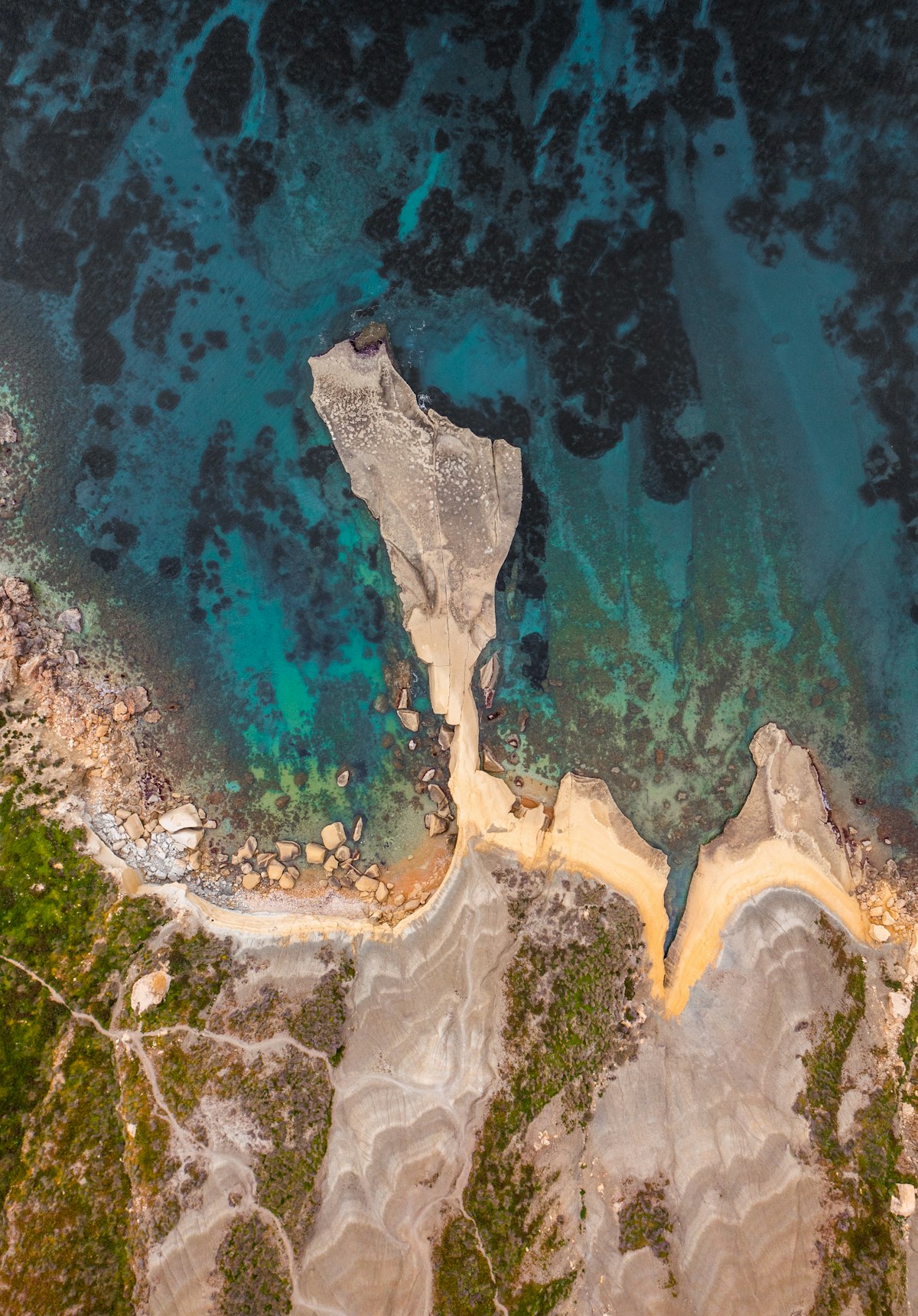
The Maltese diaspora is concentrated in the United Kingdom, Australia (especially Melbourne), Canada, and the United States. Maltese Australians number around 200,000 by ancestry, though far fewer speak the language fluently today.
History
The Arab Period (870–1091)
Malta had been part of the Byzantine Empire when Arab forces from North Africa conquered the islands around 870 AD. Over the next two centuries, the population adopted Islam and the Arabic language — specifically the Maghrebi dialect that also took root in neighboring Sicily.
The Norman Turning Point (1091)
In 1091, Norman forces under Roger I of Sicily conquered Malta. This was the event that would define the Maltese language. Over the following century, Malta was progressively re-Christianized, and by 1249, the Muslim population had been expelled entirely.
The Norman conquest created a linguistic island: Maltese Arabic was permanently severed from the Arabic-speaking world. Unlike Arabic dialects elsewhere — which existed alongside Classical Arabic as the language of religion, education, and writing — the Maltese vernacular had no standard Arabic to look up to. It was free to drift.
Think about the sheer improbability of what happened next. If Roger I had lost that campaign — or if later rulers had reintroduced Arabic as an administrative language — Maltese would likely be another Arabic dialect today. Instead, a medieval military campaign set in motion 800 years of independent evolution, producing the only Semitic language that writes its vowels, borrows most of its vocabulary from Italian, and serves as an official language of the European Union. Nobody planned this. It’s one of the great accidents of linguistic history.
The Knights and Italian Influence (1530–1798)
When the Knights Hospitaller (Knights of Malta) took control in 1530, Italian became the language of administration, law, and high culture. The Maltese people continued speaking their Semitic vernacular at home, but the language began absorbing Italian and Sicilian vocabulary at an enormous rate — especially for abstract, technical, and formal concepts.
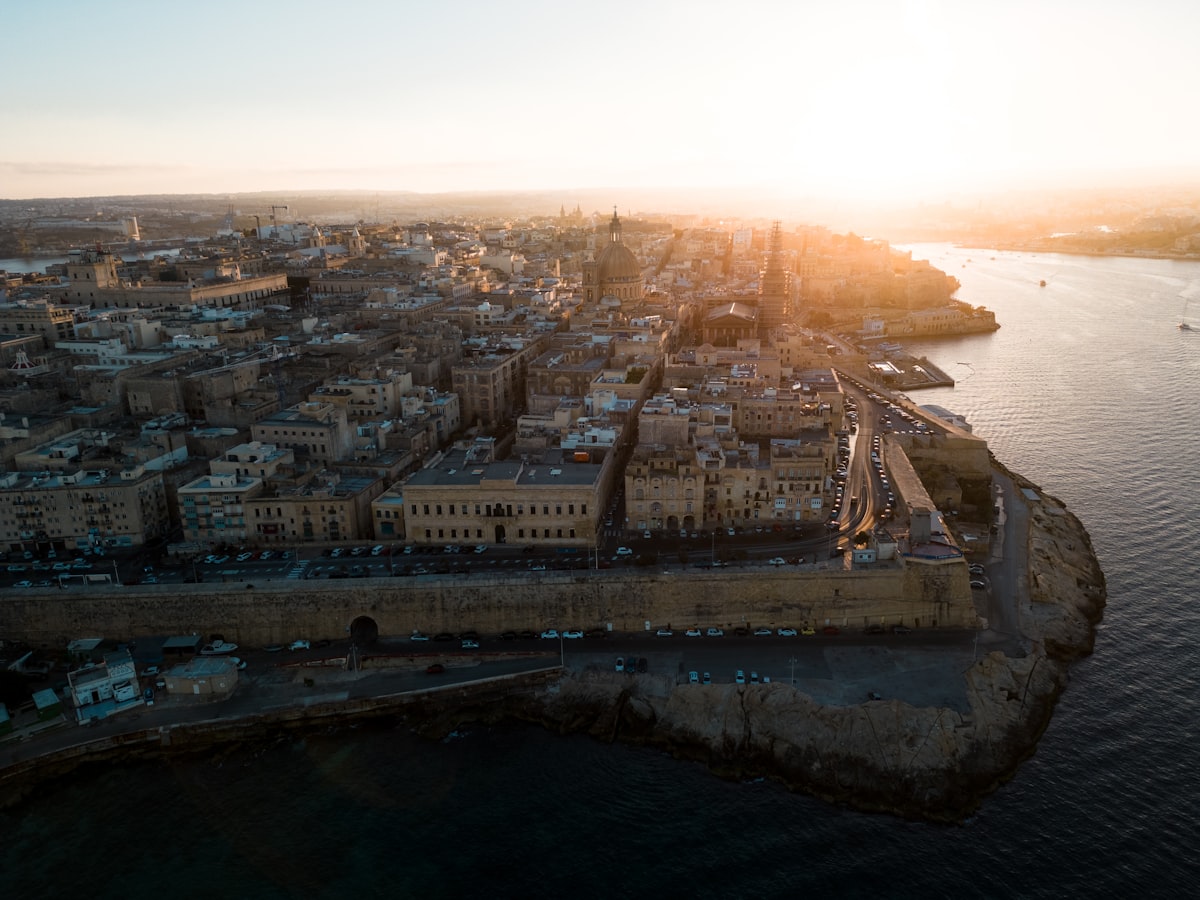
This created a split that persists today: everyday vocabulary is mostly Arabic, while intellectual vocabulary is mostly Italian.
Standardization and Official Status (19th–20th Century)
The earliest known text in Maltese is Il-Kantilena, a poem by Pietru Caxaro from around 1470 — making Maltese the earliest Arabic dialect ever recorded in Latin script. But serious standardization began in the 18th and 19th centuries, driven by figures like Mikiel Anton Vassalli, who published the first Maltese grammar and dictionary.
| Year | Milestone |
|---|---|
| 1796 | Vassalli publishes the first systematic description of Maltese dialects |
| 1924 | Akkademja tal-Malti publishes the standard orthography |
| 1934 | Maltese recognized as an official language of Malta alongside English |
| 1964 | Independence — Maltese becomes the national language |
| 2004 | Maltese becomes an official language of the European Union |
The 1934 decision to make Maltese official was politically charged: it was part of a broader assertion of Maltese identity against British colonial rule, and the choice to elevate a Semitic vernacular — rather than Italian or English — was a deliberate statement about who the Maltese people were.
Writing System & Alphabet
The Maltese alphabet has 30 letters — 24 consonants and 6 vowels. It uses the Latin script with diacritical marks to represent sounds inherited from Arabic that don’t exist in Romance or Germanic languages. Below is the full alphabet for reference; the real story is in the six characters that make Maltese unlike any other Latin-script language.
Six Characters You Won’t Find Anywhere Else
These letters exist because standard Latin couldn’t handle Arabic sounds. Each one is a small act of orthographic invention:
| Character | Sound | What It Solves |
|---|---|---|
| ċ (c with dot) | /t͡ʃ/ — ch in “church” | No single Latin letter for “ch” |
| ġ (g with dot) | /d͡ʒ/ — j in “jump” | Distinguish soft j from hard g |
| ħ (h with bar) | /ħ/ — deep-throat h | Arabic’s pharyngeal fricative; no Romance letter comes close |
| ż (z with dot) | /z/ — z in “zero” | Distinguish voiced z from z = /ts/ |
| għ (digraph) | silent — lengthens vowels | Preserves the Arabic ʿayn in spelling, even though the sound is lost |
| ie (digraph) | /iː/ — long ee | Represents the long ī that short i can’t carry |
The most historically revealing is għ. It’s silent in modern Maltese — but it’s still written, a fossil of the voiced pharyngeal fricative (/ʕ/) that Arabic speakers produce deep in the throat. Maltese speakers lost the sound centuries ago but kept the spelling, like English speakers still write the gh in night.
Full Alphabet Reference
| Letter | IPA | Sounds Like | Example | Letter | IPA | Sounds Like | Example | |
|---|---|---|---|---|---|---|---|---|
| A a | /a/, /aː/ | a in father | abjad (white) | M m | /m/ | m in make | Malti | |
| B b | /b/ | b in ball | ballun (ball) | N n | /n/ | n in nice | nadif (clean) | |
| Ċ ċ | /t͡ʃ/ | ch in church | ċavetta (key) | O o | /ɔ/ | o in got | ors (bear) | |
| D d | /d/ | d in door | dar (house) | P p | /p/ | p in pen | paċi (peace) | |
| E e | /ɛ/ | e in bed | elf (thousand) | Q q | /ʔ/ | glottal stop | qalb (heart) | |
| F f | /f/ | f in fork | fwieħa (perfume) | R r | /r/ | trilled r | riħ (wind) | |
| Ġ ġ | /d͡ʒ/ | j in jump | ġurnata (day) | S s | /s/ | s in sun | saqaf (ceiling) | |
| G g | /ɡ/ | g in go | gżira (island) | T t | /t/ | t in top | tuffieħ (apple) | |
| Għ għ | silent* | lengthens vowels | għajn (eye) | U u | /u/, /uː/ | oo in food | uman (human) | |
| H h | silent† | (mostly silent) | hu (he) | V v | /v/ | v in voice | vapur (ship) | |
| Ħ ħ | /ħ/ | deep-throat h | ħajja (life) | W w | /w/ | w in water | warda (rose) | |
| I i | /ɪ/, /iː/ | ee in see | iben (son) | X x | /ʃ/ | sh in sheep | xemx (sun) | |
| Ie ie | /iɛ/, /iː/ | ie in pier | bieb (door) | Ż ż | /z/ | z in zero | żaqq (stomach) | |
| J j | /j/ | y in yes | jum (day) | Z z | /t͡s/, /d͡z/ | ts in cats | zokk (trunk) | |
| K k | /k/ | k in kite | kelb (dog) | |||||
| L l | /l/ | l in love | lejl (night) |
* għ was historically a voiced pharyngeal fricative (/ʕ/), the sound of Arabic ʿayn. Today silent but lengthens surrounding vowels. † h is mostly silent except at word end, where it may be aspirated.
Sun and Moon Letters
Like Arabic, Maltese has sun letters (xemxin) and moon letters (qamrin) that affect how the definite article il- behaves:
- Sun letters (ċ, d, n, r, s, t, x, ż, z): The l of il- assimilates. il + dar → id-dar (the house).
- Moon letters (all others): The l stays. il + kelb → il-kelb (the dog).
This is one of the clearest Arab inheritances in Maltese — even new loanwords follow the rule.
Phonology
Maltese sounds like what it is: an Arabic dialect wearing an Italian suit. The consonants carry the Semitic DNA; the vowels and rhythm lean Mediterranean.
Distinctive Semitic Sounds
Three sounds have no equivalent in English or Italian:
| Sound | Description | How to Produce It |
|---|---|---|
| ħ /ħ/ | Voiceless pharyngeal fricative | Constrict your throat and breathe out. Like the h in Arabic Muḥammad — a breathy, raspy sound from deep in the pharynx. |
| q /ʔ/ | Glottal stop | The catch between “uh” and “oh” in “uh-oh.” Rural Gozitan dialects still pronounce it as a uvular [q] — the deep k of Classical Arabic. |
| għ /ˤː/ (historical) | Voiced pharyngeal fricative | Historically the Arabic ʿayn. Today silent, but it colors and lengthens adjacent vowels. Think of it as a letter whose job is to modify the sounds around it rather than make its own. |
For an English speaker hearing Maltese for the first time, these three sounds create an uncanny effect: the words feel vaguely familiar (Italian-sounding vowels, recognizable loanwords), but then a word like ħajja (life) or qalb (heart) lands with a guttural punch that belongs in a Cairo market, not a Valletta café.
Vowels
Maltese has five short vowels (/a, ɛ, ɪ, ɔ, ʊ/) and five long vowels (/aː, ɛː, iː, ɔː, uː/). Vowel length is phonemic — it can change meaning:
| Short Vowel | Long Vowel |
|---|---|
| hamsa (five) | ħamsa (a slap) — also distinguished by the consonant |
| sirt (I became) | sirt (I walked) — context-dependent |
| bagħad (he hated) | bagħad (distance) — distinguished by the għ coloring |
Long vowels shorten in unstressed syllables, so the distinction is clearest in stressed positions. This is simpler than Italian’s 7-vowel system and far simpler than Arabic’s, which has only 3 short and 3 long vowels but with heavy allophonic variation.
Rhythm and Melody
Maltese speech rhythm lands between the syllable-timed cadence of Italian and the stress-timed rhythm of Arabic. The result is a pace that feels more even than English but more varied than Italian. Word stress generally falls on the penultimate syllable (as in Italian), but Semitic-derived words can shift stress unpredictably — a trace of the Arabic system where stress is determined by syllable weight.
Consonant Clusters
Because Maltese lost many of the short vowels of Classical Arabic, it developed consonant clusters uncommon in Romance languages. Words like bżar (pepper), sptar (hospital), and tlett (three) combine consonants that Italian would never permit side by side. These clusters are one of the first things learners stumble over — and one of the clearest signals that Maltese is not Italian with Arabic words, but something with its own phonological rules.
Grammar
Maltese grammar is the language’s most fascinating feature: two fundamentally different morphological systems operate side by side.
System 1: Semitic Root-and-Pattern (Non-Concatenative)
This is the Arabic inheritance. Words are built around triconsonantal roots — abstract sequences of three (sometimes four) consonants that carry a core meaning. Vowel patterns are inserted between these consonants to create related words.
Take the root √k-t-b (related to writing):
| Form | Maltese | Meaning |
|---|---|---|
| Basic noun | ktieb | book |
| Verb (past, he) | kiteb | he wrote |
| Agent noun | kittieb | writer |
| Place noun | kittieba | desk / writing place |
| Passive participle | miktub | written |
Another example — √għ-l-m (related to knowing/teaching):
| Form | Maltese | Meaning |
|---|---|---|
| Verb (past) | għallem | he taught |
| Noun | tagħlim | teaching / education |
| Agent noun | għalliem | teacher (m.) |
| Agent noun (f.) | għalliema | teacher (f.) |
| Passive | tgħallem | he learned (lit. “was taught”) |
Broken Plurals
Semitic plurals are often formed by internal vowel changes rather than adding a suffix:
| Singular | Plural | Meaning |
|---|---|---|
| dar | djar | house → houses |
| ktieb | kotba | book → books |
| tifel | tfal | boy → boys |
| gżira | gżejjer | island → islands |
| sodda | sodod | bed → beds |
These are called broken plurals (pluralis fractus) because the singular form is literally “broken apart” and reconstructed with a new vowel pattern.
System 2: Romance Suffixation (Concatenative)
Words borrowed from Italian, Sicilian, and English use straightforward suffix-based morphology:
| Base | With Suffix | Meaning |
|---|---|---|
| eżamina (examine) | eżaminatur | examiner |
| eżaminatur | eżaminaturi | examiners |
| aċċetta (accept) | aċċettat | accepted |
The Two Systems Can Cross Over
The most linguistically remarkable thing about Maltese is that the two systems are not segregated by etymology. A Romance-origin word can take a Semitic broken plural, and an Arabic-origin word can take a Romance suffix:
| Direction | Example |
|---|---|
| Romance word, Semitic broken plural | skola → skejjel (school → schools) |
| Romance word, Semitic pattern | balzun → bziezen (ball → balls) |
| Semitic word, Romance suffix | omm → ommijiet (mother → mothers) |
Linguist Manwel Mifsud described a phenomenon he called “morphological windows” — when a compound word is so long, only the final portion undergoes Semitic broken-plural inflection, while the beginning stays frozen like a pseudo-prefix.
Definite Article
The definite article is il- (with sun-letter assimilation). There is no indefinite article — ktieb means both “book” and “a book.”
Grammatical Gender
Nouns are masculine or feminine. Adjectives agree in gender and number. Feminine nouns typically end in -a (Semitic origin) or -i (Italian origin: libertà “freedom” is feminine).
Word Order
Basic word order is SVO (Subject–Verb–Object), like English. But the verb-subject order (VSO) — typical of Classical Arabic — also occurs, especially in formal writing and older literary texts.
Vocabulary & Loanwords
Maltese vocabulary is best understood as a three-layer cake, each layer reflecting a different era of Maltese history.
The Three Layers
| Layer | Source | Approx. % of Dictionary | Domain |
|---|---|---|---|
| Bottom | Arabic (Semitic) | ~32% | Basic vocabulary: body parts, family, nature, everyday verbs, numbers, pronouns, function words |
| Middle | Sicilian / Italian | ~52% | Abstract, technical, and formal vocabulary: government, law, arts, science, religion |
| Top | English | ~6–20% | Modern concepts: technology, sports, business, pop culture |
Arabic Layer — The Core
The most frequently used words in everyday Maltese are Arabic-derived:
| Maltese | Meaning | Arabic Cognate |
|---|---|---|
| dar | house | دار (dār) |
| id | hand | يد (yad) |
| kelb | dog | كلب (kalb) |
| xemx | sun | شمس (shams) |
| qamar | moon | قمر (qamar) |
| ilma | water | ماء (māʼ) |
| ras | head | رأس (raʼs) |
| tajjeb | good | طيب (ṭayyib) |
| kbir | big | كبير (kabīr) |
| omm | mother | أم (umm) |
| iben | son | ابن (ibn) |
| bint | daughter | بنت (bint) |
| għajn | eye | عين (ʿayn) |
Italian Layer — The Intellect
Formal, intellectual, and abstract terms are overwhelmingly Romance:
| Maltese | Meaning | Italian Source |
|---|---|---|
| govern | government | governo |
| libertà | freedom | libertà |
| deċiżjoni | decision | decisione |
| edukazzjoni | education | educazione |
| demokrazija | democracy | democrazia |
| ġustizzja | justice | giustizia |
| risposta | answer | risposta |
English Layer — The Modern World
Contemporary borrowings come primarily from English:
| Maltese | English Source |
|---|---|
| kompjuter | computer |
| mowbajl | mobile (phone) |
| futbol | football |
| baskitbol | basketball |
| kejk | cake |
| kowt | coat |
A Parallel to English
The Arabic–Italian split in Maltese mirrors English’s own Germanic–Latinate split. Just as English has freedom (Germanic) and liberty (Latinate), Maltese has ilsien (Arabic, literally “tongue”) and lingwa (Italian) — both meaning “language.”
This duality gives Maltese remarkable expressive range. A speaker can choose an Arabic-rooted word for intimacy, an Italian-rooted word for formality, or mix them for effect — a kind of code-switching built into the vocabulary itself. The Romance half of Maltese is predominantly Italian, specifically the Sicilian variety that dominated Mediterranean trade for centuries.
Dialects & Varieties
Maltese is not uniform across the islands. Standard Maltese (the educated, written form) coexists with a range of village dialects, and the dialects of Gozo (Għawdex) are distinctly different.
Gozitan Dialects (Għawdxi)
The most noticeable feature of Gozitan speech is a vowel shift: historical ā (phonologically /aː/) moves toward /o/ or /u/ in Gozitan dialects. So where a speaker from Malta says something with a long a, a Gozitan speaker produces a more rounded vowel.
Gozitan vocabulary also includes many words not used in Standard Maltese:
| English | Standard Maltese | Gozitan |
|---|---|---|
| biscuit | biskuttel | fettul |
| mattress | saqqu | mitraħ |
| shy | staħa | regħex |
| dizzy | sturdament | mejt |
| yes | iva | ijwa |
A Reverse Diglossia
In most societies with a standard language and local dialects, people use the standard form in formal settings and the dialect at home. Research by linguist Antoinette Camilleri Grima found that in Gozo, the opposite happens: Gozitans continue using their dialect even in formal situations, treating it as a powerful marker of Gozitan identity.
Village-Level Variation
Dialects even differ between Gozitan villages. Fieldwork by Aquilina and Isserlin (published 1981) mapped Gozo village by village and found that archaic words survive in one village while having completely disappeared in the next. The dialects of Xewkija, Nadur, and Sannat, for example, each have measurable differences in their vowel spaces and vocabulary.
Urbanization and mass media are gradually leveling these differences, but rural dialects — especially on Gozo — remain distinctive.
Common Phrases
Greetings & Basics
| English | Maltese | Pronunciation |
|---|---|---|
| Hello / Good morning | Bonġu | BON-joo |
| Good evening | Bonswa | BON-swaa |
| Good night | Il-lejl it-tajjeb | ill-LEYL it-TIE-yep |
| Goodbye | Ċaw / Saħħa | chow / SAH-ha |
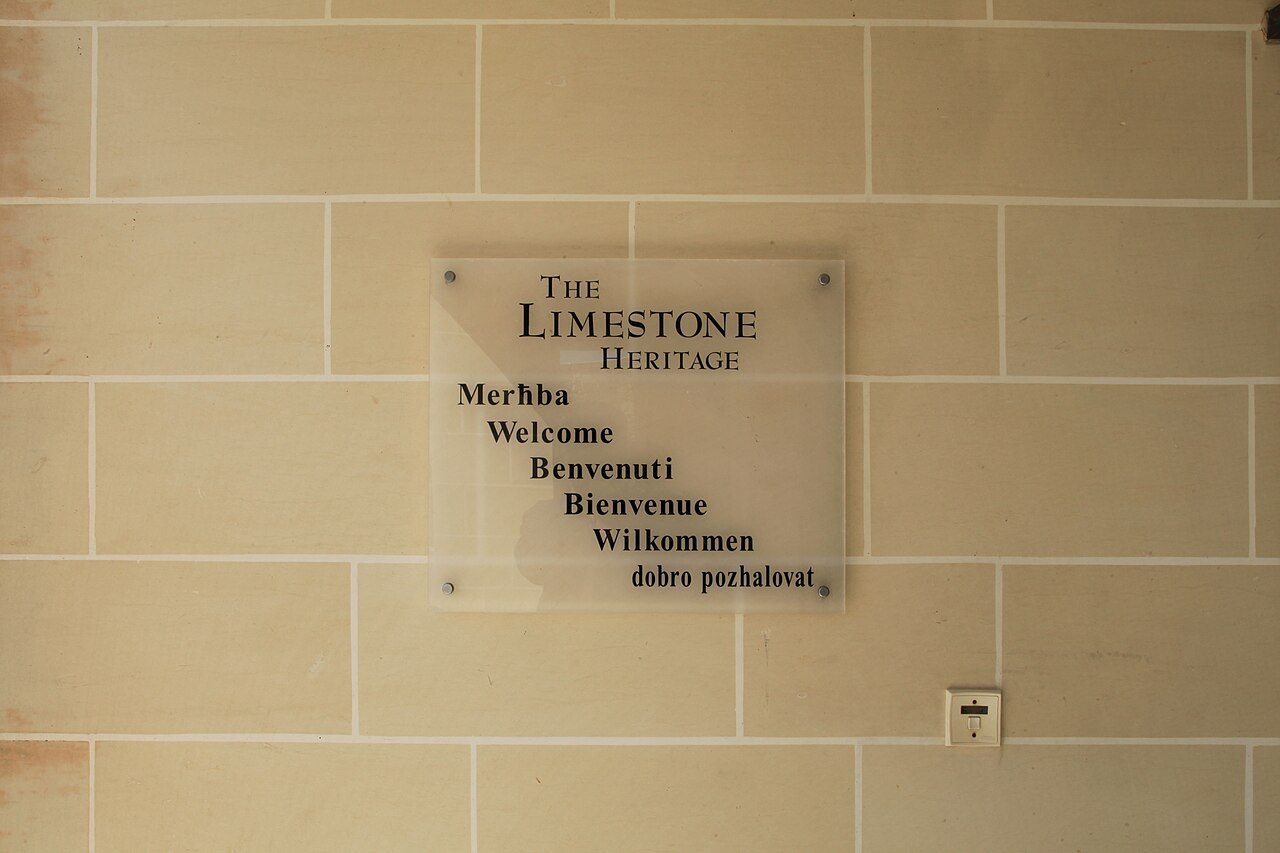
| Welcome | Merħba | MER-hba |
| How are you? | Kif int? | kiff int |
| Fine, thanks | Tajjeb, grazzi | TY-yeb GRAT-see |
| Nice to meet you | Għandi pjaċir | AAN-dee pya-CHEER |
Politeness
| English | Maltese | Pronunciation |
|---|---|---|
| Thank you | Grazzi | GRAT-see |
| Thank you very much | Grazzi ħafna | GRAT-see HAWF-na |
| Please | Jekk jogħġbok | yeck YODGE-bock |
| Excuse me / Sorry | Skużani | skoo-ZAH-nee |
| Yes / No | Iva / Le | EE-vah / leh |
Numbers 1–10
| 1 | Wieħed | 6 | Sitta | | 2 | Tnejn | 7 | Sebgħa | | 3 | Tlieta | 8 | Tmienja | | 4 | Erbgħa | 9 | Disgħa | | 5 | Ħamsa | 10 | Għaxra |
Everyday Expressions
| Word/Phrase | Meaning & Usage |
|---|---|
| Mela | The most versatile word in Maltese. Can mean “so,” “then,” “of course,” “okay,” “well,” or just fill a pause. You’ll hear it in every conversation. |
| Uwejja | “Oh come on!” / “Hurry up!” — tone determines the meaning. |
| Qalbi | Literally “my heart.” A term of endearment like “honey” or “sweetheart.” |
| Orrajt | “Alright” / “OK” — from English, used constantly. |
Is Maltese Hard to Learn?
The short answer: harder than Spanish or French, easier than Arabic.
What Makes It Hard
Semitic root-and-pattern morphology. The idea that words are built by inserting vowels into three-consonant skeletons is completely foreign to English speakers. Learning to recognize ktieb, kiteb, and kittieb as related forms takes practice.
Grammatical gender. Every noun is masculine or feminine, and adjectives must agree — something English doesn’t have.
Pharyngeal sounds. The letters ħ and q require using throat muscles most English speakers have never consciously engaged.
The “switch to English” problem. This is a recurring frustration for learners: when you try to speak Maltese to a local, they often switch to fluent English — out of politeness, impatience, or discomfort with a non-native accent. This makes immersion surprisingly difficult even while living in Malta.
What Makes It Easier
Latin script. Unlike Arabic, Hebrew, or Amharic, Maltese is written left-to-right in a familiar alphabet. You can start reading on day one.
Italian and English loanwords. If you know Italian or English, you’ll recognize thousands of Maltese words immediately: kompjuter, televixin, demokrazija, università.
No case system. Unlike Arabic or German, Maltese does not have grammatical case for nouns — one less thing to memorize.
Simple verb tenses. The verb system, while Semitic in structure, has fewer complex tenses than Italian or French.
Estimated Learning Time
| Goal | Approximate Hours |
|---|---|
| Basic conversation (A2) | 200–250 |
| Independent user (B1) | 400–450 |
| Professional proficiency (B2+) | ~900–1,100 |
For comparison, the FSI estimates ~600 hours for Spanish (Category I) and ~2,200 hours for Arabic (Category IV). Maltese sits somewhere between Categories II and III.
Tips for Learning Maltese
Start with high-frequency Semitic words — especially body parts and family terms. Words like id (hand), ras (head), omm (mother), iben (son), and dar (house) are Arabic-derived, used constantly, and each one is a doorway into a Semitic root family. Learn id and you’re already halfway to recognizing the root pattern before you even know what a root pattern is.
Learn the Italian-to-Maltese spelling bridge. If you know Italian or Spanish, you already know roughly half of Maltese vocabulary — once you crack the spelling code. Italian -zione becomes -zzjoni (decisione → deċiżjoni). The letter x always spells /ʃ/ (the “sh” sound). Italian gi- often becomes ġ- (giustizia → ġustizzja). You can guess hundreds of words after memorizing about ten conversion rules.
Ask locals to speak Maltese — and be persistent about it. This is genuinely the hardest part of learning Maltese. Because every Maltese person speaks fluent English, conversations with learners default to English in seconds. Be direct: “I’m trying to learn, please use Maltese even if I’m slow.” A better strategy: seek out older speakers in smaller villages, where English is less automatic and Maltese flows more naturally.
Use Maltese radio as passive immersion. TVM (Television Malta) and RTK (Radio Tal-Komunità) broadcast entirely in Maltese. Even 15 minutes a day of background listening trains your ear to the rhythm — and because Maltese word stress is unpredictable, hearing native speakers is the only way to internalize it.
Learn mela first — it will buy you time in every conversation. Mela is the most versatile word in Maltese: it means “so,” “then,” “of course,” “okay,” and “um.” When you’re searching for a word, dropping a mela sounds natural and keeps the conversation going. It’s the one word that immediately makes you sound less like a textbook and more like a person.
AI Translation and Maltese
Maltese is a low-resource language for machine translation — with fewer than 600,000 speakers and limited digital data, it doesn’t benefit from the vast training corpora available for languages like Spanish or Chinese.
Current State (2025–2026)
Recent years have seen significant progress, driven largely by the IWSLT low-resource shared tasks and a dedicated research community at the University of Malta:
| System | Technology | Result |
|---|---|---|
| IWSLT 2025 (BUINUS) | NLLB 3.3B + QLoRA fine-tuning | BLEU 45.4 (Mt→En) |
| IWSLT 2024 (UoM-DFKI) | Whisper + wav2vec 2.0 | BLEU 35.1 |
| Google Translate | Commercial NMT | Functional, improving |
| Meta NLLB-200 | Open-source multilingual model | Includes Maltese in 200 languages |
Key strategies that have proven effective for Maltese NLP:
- Cross-lingual transfer from Arabic — Maltese’s Semitic cousin provides useful training data when transliterated into Latin script
- Cross-lingual transfer from Italian — for Romance-origin vocabulary
- Parameter-efficient fine-tuning (QLoRA) — avoids overfitting on small Maltese datasets
- Better tokenization — Maltese orthography requires specialized tokenizers to handle diacritics and Semitic morphology
Remaining Challenges
Maltese machine translation still lags behind major European languages. The main challenges:
- Speech recognition (ASR) errors in end-to-end translation pipelines
- Limited training data — the largest Maltese corpora are orders of magnitude smaller than for French or German
- Code-switching — real-world Maltese contains heavy English mixing, which most MT systems handle poorly
For human-quality translations involving Maltese, professional translation tools like OpenL can help bridge the gap, especially for documents and formal content where accuracy matters.
A language usually doesn’t get to choose its fate. Maltese was dealt an improbable hand — cut off from the Arab world by a medieval conquest, soaked in Italian for three centuries, made official alongside English in a bid for national identity — and somehow, against every pressure to dissolve into a dialect or assimilate into a bigger language, it held its ground. Today it is a linguistic one-off: a Semitic language in a Romance neighborhood, written in letters you can read but carrying sounds you’ve probably never made. Not bad for a language spoken by fewer people than live in Memphis, Tennessee.
Sources
- Maltese language — Wikipedia — comprehensive overview of classification, history, phonology, and grammar
- Maltese — Omniglot — alphabet, pronunciation, and sample texts
- A connection forged by language — UCLA Newsroom — Maltese speaker statistics and diaspora
- The rich history of the Maltese language — Times of Malta — historical development
- Maltese phrasebook — Wikivoyage — common phrases and pronunciation
- Gozitan dialects — Wikipedia — regional variation on Gozo
- Maltese alphabet — Wikipedia — orthography and diacritics
- Appendix:Maltese pronunciation — Wiktionary — IPA transcriptions
- Maltese language — Britannica — encyclopedic overview
- How long does it take to learn Maltese — Preply — learning time estimates and strategies
- MELABenchv1: Benchmarking LLMs for Maltese NLP (Micallef & Borg, 2025) — evaluation of 55 LLMs on Maltese tasks
- Data Augmentation for Maltese NLP (Micallef, Habash & Borg, 2025) — Arabic-to-Maltese transfer learning strategies
- Malti: A Linguistic Journey Through Malta’s Rich History — ELIA — historical overview
- Visiting Malta? Ten Maltese Phrases — Oh My Malta — traveler’s phrases
- Gozitan dialects in the classroom — Camilleri Grima et al. (2013) — educational implications of Gozitan dialect variation
- 2021 Census — People in Australia born in Malta (ABS) — Maltese Australian ancestry statistics