
Qixi Festival: The Night of Sevens and the Love Story Across the Milky Way

TABLE OF CONTENTS
Qixi falls on the seventh night of the seventh lunar month, but its most memorable image is a bridge of magpies crossing the Milky Way so two separated lovers can meet for one night.
Qixi Festival at a Glance
| Property | Detail |
|---|---|
| Date in 2026 | August 19, 2026 |
| Calendar rule | Seventh day of the seventh month in the traditional Chinese lunisolar calendar |
| Where celebrated | China and Chinese communities worldwide; related festivals exist in Japan, Korea, and Vietnam |
| Type | Traditional festival, love festival, seasonal craft festival |
| Chinese name | 七夕,Qixi, “seventh evening” or “seventh night” |
| Other English names | Double Seventh Festival, Night of Sevens, Magpie Festival, Chinese Valentine’s Day |
| Origin in one line | The festival links the star-crossed love story of Niulang and Zhinü with older customs in which women prayed for skill in weaving and needlework. |
| Public holiday? | Not a statutory public holiday in mainland China |
Why Is It Called Qixi?
Qixi is written 七夕 in Chinese. 七 (qi) means “seven,” and 夕 (xi) means “evening” or “night.” The name points directly to the date: the seventh evening of the seventh lunar month.
That is why English sources often call it the Double Seventh Festival. “Night of Sevens” is less common but more vivid, because it keeps the two things that make the holiday easy to remember: the repeated number seven and the evening sky.
“Chinese Valentine’s Day” is a useful shortcut, but it can flatten the holiday. Valentine’s Day centers on modern romance, cards, and gifts. Qixi carries romance too, but it also carries a star myth, a craft tradition, and the older idea of asking for skill rather than only asking for love.
The Story Behind Qixi
The Qixi story is usually told through two figures: Niulang (牛郎), the Cowherd, and Zhinü (织女), the Weaver Girl. In the sky, they are linked with the stars Altair and Vega, which appear on opposite sides of the Milky Way.

In the best-known version, Zhinü is a heavenly weaver whose work forms clouds or celestial cloth. Niulang is a mortal cowherd. They fall in love and marry, but their relationship crosses the boundary between heaven and earth. Zhinü is taken back to the heavens, and the Milky Way becomes the river that separates them.
Once a year, on the seventh night of the seventh lunar month, magpies form a bridge across the sky so the two lovers can meet. That image is the holiday’s memory point: love does not erase distance, but for one night the universe makes a narrow path across it.
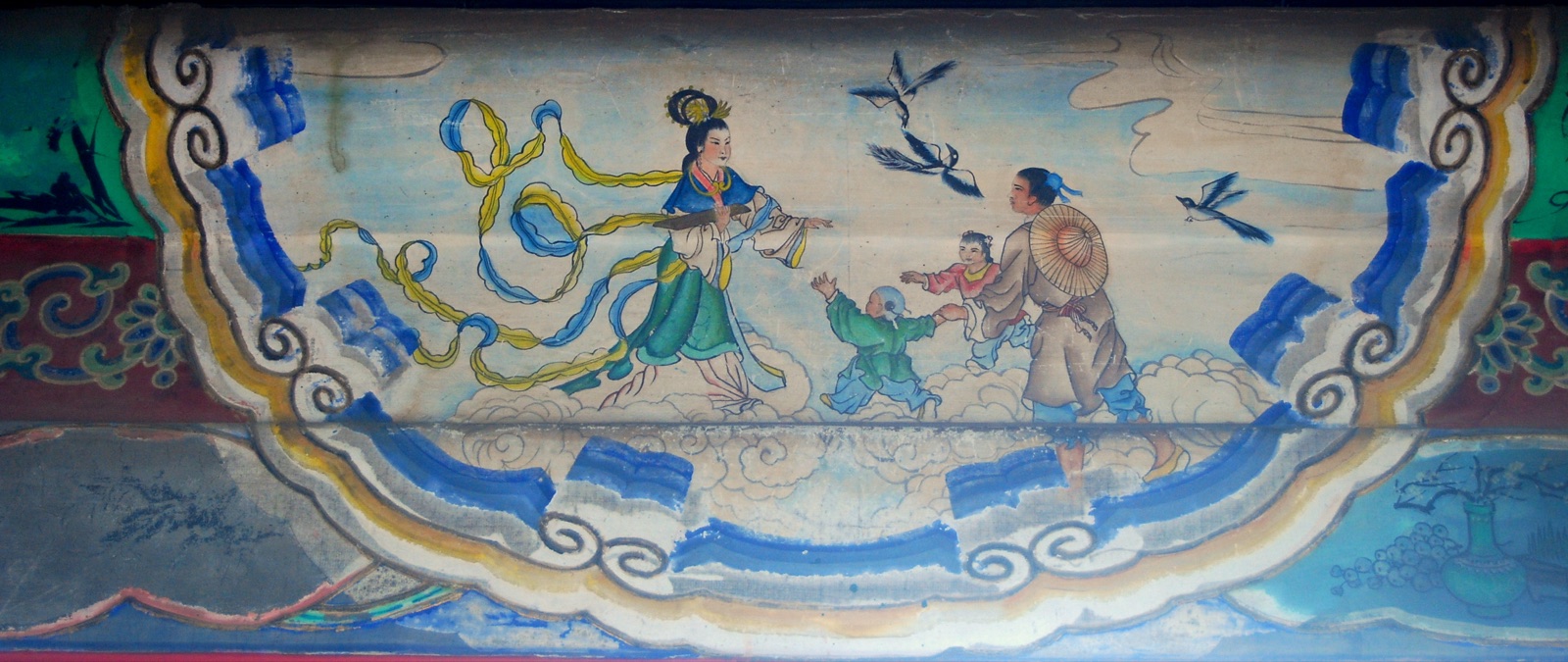
This is also why Qixi is sometimes called the Magpie Festival. The bird is not decoration; it is the bridge.
From Skill Festival to Love Festival
Qixi was not always framed mainly as a romance holiday. One older name is Qiqiao (乞巧), often translated as “begging for skill” or “praying for cleverness.” The skill in question was traditionally associated with weaving, needlework, and domestic arts, because Zhinü was imagined as a master weaver.
Historically, women and girls marked the night by making offerings, threading needles, displaying handmade work, and asking Zhinü for dexterity. The point was not simply to find a partner. It was to become capable, graceful, and skilled in the kinds of work that mattered in the social world around them.
Modern Qixi has shifted toward romance: couples go out for dinner, shops run gift campaigns, and social feeds fill with flowers, jewelry, and love messages. But the older craft layer still matters because it explains why the holiday is not just a borrowed Valentine. Its core word, qiao (巧), means skill, cleverness, or refined ability.
If you already know the Chinese language through characters, Qixi is a good example of how compact a festival name can be. Two characters, 七夕,hold a date, a time of day, and a story about the night sky.
How People Celebrate Today
For many people in China today, Qixi is a romantic date night. Couples may exchange flowers, plan dinners, give jewelry or small gifts, and post greetings online. Restaurants, shopping malls, and e-commerce platforms often treat Qixi as a seasonal occasion for couples, much like Valentine’s Day campaigns in other markets.
Traditional customs still appear in cultural events and family settings. Some places demonstrate needle-threading games, weaving-related rituals, or offerings to Zhinü. A traditional food associated with the festival is qiaoguo (巧果), small fried or baked pastries whose name echoes the word for skill. These customs keep the holiday connected to craft and cleverness, not only romance.
Qixi is also a calendar reminder. Because it follows the lunisolar calendar, its Gregorian date changes each year. If you are writing travel notices, event pages, or product campaigns for an international audience, spell out both dates clearly: “Qixi Festival, August 19, 2026” is safer than “7/7,” which could confuse readers who expect month/day formatting. Our guide to localizing dates and numbers explains why those small date choices matter in global content.
Qixi Across East Asia
Qixi traveled through East Asian literary, calendar, and court culture, but each place reshaped the story. The shared pattern is the meeting of star lovers around the seventh day of the seventh month. The local details differ.
| Place | Name | Usual timing | What to remember |
|---|---|---|---|
| China | Qixi, 七夕 | Seventh day of the seventh lunar month | Niulang and Zhinü meet over a magpie bridge; older customs include praying for skill. |
| Japan | Tanabata, 七夕 | Often July 7 in the Gregorian calendar, though some regions use later dates | People write wishes on strips of paper called tanzaku and hang them on bamboo. |
| Korea | Chilseok, 칠석 | Seventh day of the seventh lunar month | The same star-lover theme appears with Korean names and local seasonal customs. |
| Vietnam | Thất Tịch | Seventh day of the seventh lunar month | The story is known through Ngưu Lang and Chức Nữ, also associated with the names Ông Ngâu and Bà Ngâu. |
Japan’s Tanabata is the most visibly different today because wish-writing on bamboo has become central. If Qixi asks for skill and celebrates a reunion, Tanabata often feels like a public wish festival. Korea’s Chilseok and Vietnam’s Thất Tịch stay closer to the seventh-lunar-night frame, though local names and customs give the story a different texture.
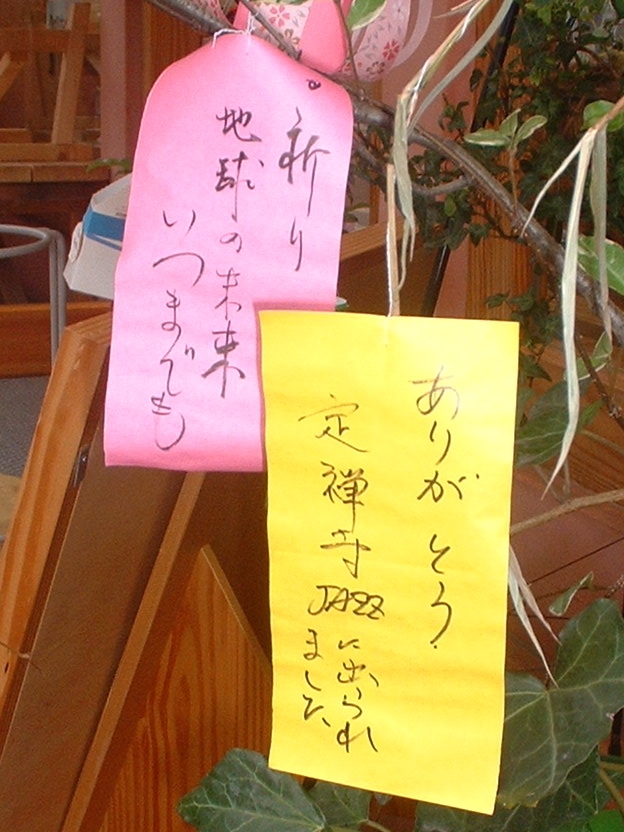
For language learners, the comparison is useful: Chinese 七夕,Japanese 七夕,Korean 칠석, and Vietnamese Thất Tịch all point back to the same “seventh evening” idea, but the scripts, pronunciations, and public rituals are not interchangeable. If this kind of cross-cultural borrowing interests you, the Japanese and Korean language guides are good next stops.
Useful Qixi Words and Greetings
Qixi has a few words worth learning because they carry more culture than a direct English translation can hold.
| Chinese | Pinyin | Literal meaning | Natural English meaning | When to use it |
|---|---|---|---|---|
| 七夕快乐 | Qixi kuaile | Happy Qixi | Happy Qixi Festival | Friendly greeting for couples, friends, or social posts |
| 乞巧 | qiqiao | begging for skill | praying for skill or cleverness | Historical or cultural explanation of the older festival |
| 牛郎织女 | Niulang Zhinü | Cowherd and Weaver Girl | the separated lovers in the Qixi legend | When explaining the story |
| 鹊桥 | queqiao | magpie bridge | the bridge that lets the lovers meet | Poetic or romantic contexts |
Be careful with “Happy Chinese Valentine’s Day.” It is understandable, but it sounds more like an explanation for outsiders than a natural greeting. In Chinese, 七夕快乐 is shorter and cleaner.
How to Translate Qixi Without Losing the Culture
The safest translation depends on the reader.
| Context | Best choice | Why |
|---|---|---|
| Event title for general readers | Qixi Festival | Keeps the Chinese name and sounds like a real holiday, not a generic romance day |
| First sentence in an article | Qixi Festival, also called the Double Seventh Festival | Gives the date logic immediately |
| Marketing copy for couples | Qixi, China’s traditional love festival | Signals romance without reducing it to Valentine’s Day |
| Cultural or educational writing | Qixi Festival, the seventh night of the seventh lunar month | Preserves the calendar and sky-story connection |
Avoid translating Qixi only as “Chinese Valentine’s Day” in titles, museum labels, or cultural explainers. It is fine as a comparison, but weak as a replacement. The reader misses the number seven, the night sky, the magpie bridge, and the older Qiqiao customs.
For multilingual event pages, OpenL can help keep festival names, lunar-calendar dates, and culturally loaded terms consistent across languages. Terms like Qixi, Tanabata, Chilseok, and Thất Tịch should often be transliterated or explained, not flattened into one English holiday name.
Why Qixi Still Works
Qixi lasts because it is easy to picture. Two stars, one river of light, one night, and a bridge made by birds: the story is simple enough for a child and symbolic enough for adults who know what distance does to love.
Its older craft layer makes it richer. Qixi is not only a holiday about being loved; it is also a holiday about becoming skillful. That gives the Night of Sevens a second meaning: love is the story people remember, but cleverness is the wish hidden inside the name.
Sources
- China Highlights: Qixi Festival - Used for the 2026 date, English names, public-holiday status, Niulang and Zhinü story, traditional threading customs, and qiaoguo.
- Travel China Guide: Qixi Festival - Used for the Double Seventh date rule, festival names, Niulang and Zhinü story, and traditional customs.
- Encyclopaedia Britannica: Qixi Festival - Used for the festival definition, Cowherd and Weaver Girl story, and the link between Qixi and star lore.
- JNTO: Tanabata, a wish upon a star - Used for the Tanabata comparison, including Vega and Altair, tanzaku wishes, bamboo decorations, and July/August timing.
- Wikipedia: Chilseok - Used to cross-check the Korean name, seventh-lunar-month timing, 2026 date alignment, and Gyeonu/Jiknyeo story.
- Saigoneer: Ghosts and Other Myths: How Vietnam Celebrates the 7th Lunar Month - Used for the Vietnamese Thất Tịch comparison and the Ngưu Lang and Chức Nữ story.
- Pexels: Starry Night Sky with Visible Milky Way in Slovakia - Free-to-use Milky Way photo by Roman Januch.
- Wikimedia Commons: Niulang and Zhinv, Long Corridor - Public-domain image of the Cowherd and Weaver Girl on the magpie bridge.
- Wikimedia Commons: Tanzaku - CC BY-SA 2.0 / GFDL image by Atsi Otani showing a Tanabata wish strip.



.JPG)
