How to Translate Audio Files
TABLE OF CONTENTS
You just recorded a 40-minute client call in Spanish, received a lecture recording in Japanese, or found a podcast episode in French that you desperately want to understand. Turning spoken words from one language into readable text in another used to demand either a bilingual colleague or a professional translator — and hours of turnaround. In 2026, AI handles most of it in minutes, often for free.
How AI Audio Translation Works
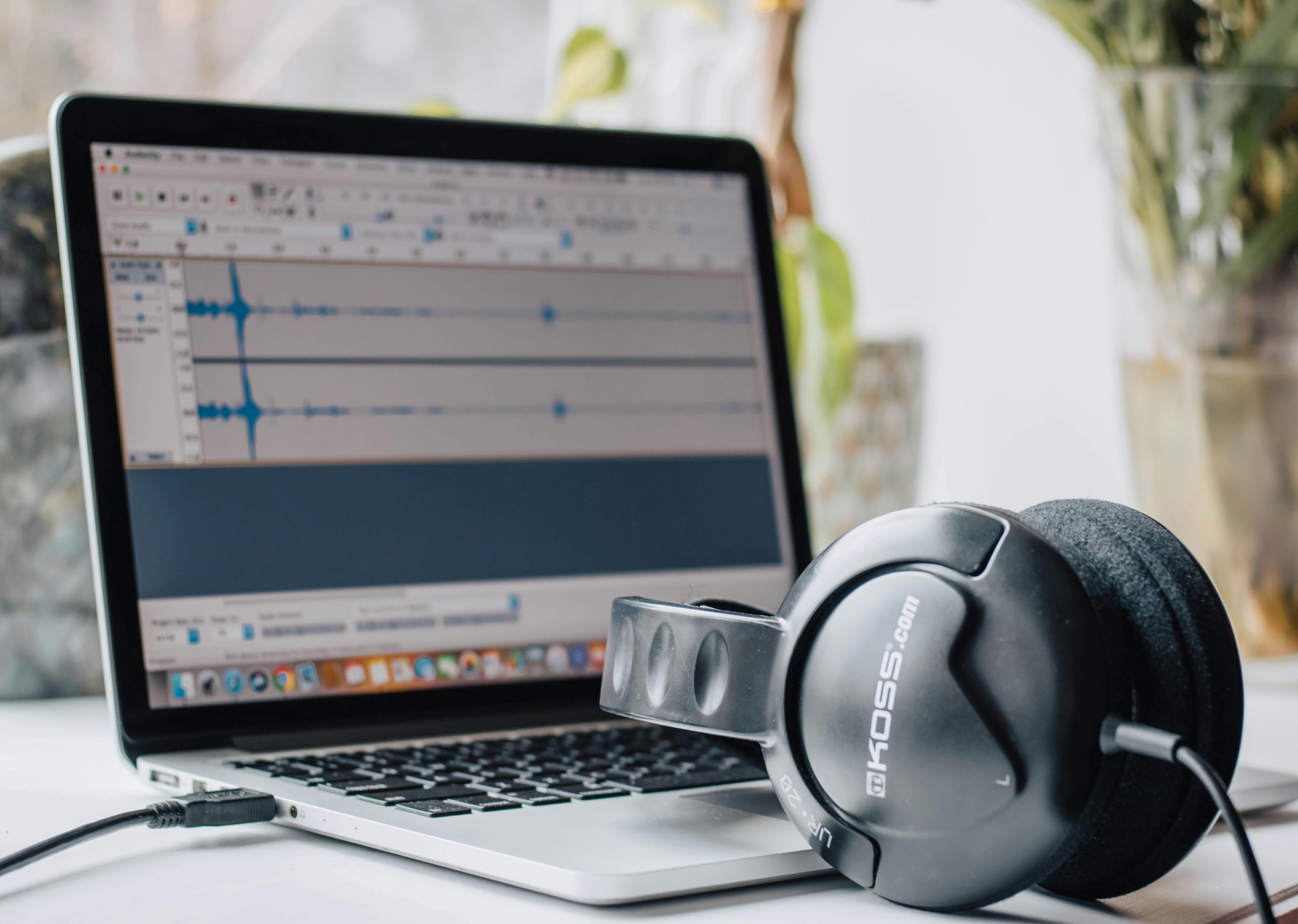
Every audio translation tool follows a three-stage pipeline: ASR (speech-to-text) → MT (machine translation) → optional TTS (text-to-speech).
Stage 1 — Transcription. An automatic speech recognition model converts spoken audio into written text in the source language. In 2026, the best ASR models achieve around 5.4–5.9% word error rate on English benchmarks, meaning roughly one word in twenty is misheard on mixed-quality audio. Clean studio recordings push this below 2%, while noisy real-world audio can push it above 12%. Models like OpenAI Whisper support 99+ languages, while newer entrants like Cohere Transcribe (2B parameters) and ElevenLabs Scribe v2 lead the accuracy leaderboard.
Stage 2 — Translation. The transcribed text feeds into a machine translation engine — typically a neural MT system like DeepL or Google NMT, or an LLM like ChatGPT or Claude. Each has strengths: DeepL produces the most natural output for European language pairs, Google offers the widest coverage at 249 languages, and LLMs handle context and tone better than traditional NMT engines. A 2026 study published in Nature compared AI and human translation across 106 linguistic metrics and found that ChatGPT-4o came closest to human-quality output, particularly on idiomatic and figurative language.
Stage 3 — Voice output (optional). If you need a dubbed audio file rather than just translated text, a TTS engine reads the translation aloud. Modern tools like ElevenLabs add emotional nuance, while services like Maestra and RecCloud bundle voice cloning so the output sounds like the original speaker.
All-in-one platforms combine these three stages behind a single upload button. The trade-off: convenience versus control over each step.
The 2026 Shift: End-to-End Speech Translation
The traditional cascaded pipeline (ASR → MT → TTS) stacks errors at each stage. A 5% transcription error can compound into a 15% meaning loss by the time it reaches translation, as misinterpreted words cascade into mistranslated sentences.
In 2026, end-to-end speech translation models are starting to close this gap. Instead of converting speech to text and then translating, these models map source-language audio directly to target-language text in one pass — preserving prosody, speaker emotion, and timing cues that text-only pipelines discard. OpenAI’s GPT-Realtime-Translate, released in May 2026, handles 70+ input languages and generates spoken output in 13 languages at roughly $0.034 per minute, trained on thousands of hours of professional interpreter audio to mimic simultaneous interpretation rather than turn-based translation.
For most users, all-in-one platforms still provide the best balance of quality and simplicity. But the technology is moving fast, and direct speech-to-translation is becoming viable for real-time use cases.

Method 1: All-in-One Audio Translators
These tools handle transcription, translation, and optional dubbing in one workflow. Upload an audio file, pick a target language, and download the result. Here are the strongest options in 2026.
Maestra
Maestra supports 125+ languages and offers a free trial with no account or credit card required. Its workflow is simple: upload your MP3, WAV, or M4A file, select the target language from a dropdown, and wait for processing. Beyond translated text, Maestra generates AI-dubbed audio with voice cloning in 29 languages and exports subtitles in SRT and VTT — useful if you plan to add captions to a video later.
Pricing is usage-based after the trial, making it cost-effective for occasional projects but potentially expensive at high volumes.
RecCloud
RecCloud accepts files up to 3 hours long and 500 MB for audio across 100+ languages. Its speaker identification feature labels who said what in multi-speaker recordings — a lifesaver for meeting transcripts and panel discussions. The free plan covers moderate usage, and paid tiers unlock 200+ natural-sounding voices with voice cloning and context-aware translation.
RecCloud’s context-aware mode is worth enabling for domain-specific content: it adapts translation based on the surrounding sentences rather than treating each line in isolation.
BlipCut
BlipCut covers 140+ languages and is built for speed. It processes files up to 10x faster than comparable tools according to its marketing page, and it uses ChatGPT alongside DeepSeek for translation. The result is contextually aware output that handles idioms and cultural references better than pure NMT-based tools. A free option is available for testing.
Notta
Notta prioritizes transcription accuracy above all else, claiming 98.86% accuracy before the text enters translation. It supports 58 transcription languages and 42 translation languages. Unlike most tools that compress both steps into a single black box, Notta shows you the transcript first so you can verify and correct it before translation — a workflow that prevents cascading errors. Pro plans start at $8.17 per user per month.
When to Pick Which
| Your Priority | Best Tool |
|---|---|
| Fastest from upload to result | BlipCut |
| Highest transcription accuracy | Notta |
| Best voice output quality | Maestra |
| Multi-speaker meetings | RecCloud |
| Widest language coverage | BlipCut (140+) |
| Free tier to try first | Maestra or RecCloud |
Method 2: Translate Audio with OpenL
OpenL offers a streamlined audio translation tool at openl.io/translate/speech. Unlike many competitors that bundle dubbing features you may not need, OpenL focuses on doing one thing well: turning spoken audio into translated text.
Here’s exactly how the workflow works.
Step 1 — Choose your target language. OpenL auto-detects the spoken language in your uploaded file, so you don’t need to specify the source. Just pick which language you want the translation in from a list of 100+ options, ranging from widely spoken languages like Chinese, Spanish, and Arabic to specialized ones like Ancient Greek and Navajo.
Step 2 — Upload your audio file. The upload area accepts five formats: MP3, MP4, WAV, M4A, and WEBM. Drag and drop your file or click to browse. The free tier handles files up to 10 MB — enough for roughly 10 minutes of compressed MP3 speech. Paid plans support files up to 100 MB for longer recordings.
Step 3 — Get your translated text. OpenL transcribes the audio, runs it through its AI translation engine, and displays the translated text in the results area. Two buttons appear next to the output: Copy (to paste the translation anywhere) and Download (to save a transcript file). There’s no audio dubbing, no subtitle export, and no configuration to fiddle with — just text in, text out.
For professional users, OpenL offers two Pro features you can toggle on:
- DeepThink Pro — spends additional processing time refining accuracy on complex or domain-heavy audio, analogous to chain-of-thought reasoning in LLMs.
- Smart Context Pro — analyzes surrounding speech segments for better contextual understanding, which helps with homonyms and ambiguous phrases.
Both are available on the Pro and Ultimate plans.
Free accounts get 1,500 characters per translation — enough for a short voicemail, a one-minute monologue, or a quick interview snippet. Paid plans scale up by tier: Starter supports up to 30,000 characters at once, Pro up to 100,000, and Ultimate up to 150,000.
One thing to note about OpenL’s speech mode: it outputs translated text only — not dubbed audio or subtitles. If you need voice output, pair it with a dedicated TTS tool, or use one of the dubbing-capable platforms from Method 1. For most people who just need to understand what was said, text output is exactly what you want.
OpenL fits especially well if you already use its other translation modes — text, image, and document — since everything lives under one account.

Method 3: DIY with Separate Tools
If you need offline privacy, support for edge-case language pairs, or full control over each pipeline stage, assembling your own toolchain is the way to go.
The Basic Stack: Whisper + Any Translator
OpenAI Whisper is the gold standard for open-source transcription. It runs entirely on your machine, supports 99+ languages, and requires nothing more than Python and a few minutes of setup.
Here’s the core workflow:
# Install ffmpeg (macOS) and Whisper
brew install ffmpeg
pip install openai-whisper

# Transcribe a Spanish audio file
whisper client_call.mp3 --model turbo --language Spanish

# Output files: client_call.txt, client_call.srt, client_call.vtt, client_call.json
The turbo model hits the sweet spot between speed and accuracy — it runs at roughly 6x the speed of the full large-v3 model while staying within a few percentage points in accuracy.
For the translation step, choose based on your needs:
- DeepL when fluency in European languages matters most
- ChatGPT or Claude when you need to preserve tone, adapt idioms, or translate domain-specific content (legal, medical, technical)
- Google Translate for maximum language coverage (249) at zero cost
Adding Diarization with WhisperX
If your recording contains multiple speakers, WhisperX adds word-level timestamps and labels each speaker:
pip install whisperx

whisperx panel_discussion.mp3 --model turbo --language German \
  --diarize --hf_token YOUR_HF_TOKEN
The output includes speaker labels (“SPEAKER_01: …”), making it far easier to follow who said what in a translated meeting transcript.
Adding Dubbing with ElevenLabs
If you need spoken output rather than just text, see our best speech translator roundup, or pipe the translation into ElevenLabs for natural-sounding voice synthesis. Its Dubbing Studio preserves emotional nuance and offers voice cloning so the translated audio resembles the original speaker’s voice. Pricing starts at $5 per month for the Starter plan.
When DIY Makes Sense
| Scenario | Recommended Stack |
|---|---|
| Sensitive client recordings | Local Whisper + offline translation |
| Multi-speaker meetings | WhisperX (diarization) + DeepL |
| Content creation with subtitles | Whisper → ChatGPT → export SRT |
| Academic research | Whisper turbo + MT with domain glossary |
| Full offline privacy | faster-whisper + local LLM via Ollama |
Tool Comparison
| Tool | Type | Languages | Free Tier | Output | Best For |
|---|---|---|---|---|---|
| OpenL | All-in-one | 100+ | 1,500 chars/use, 10 MB | Translated text | Quick, reliable translations on one platform |
| Maestra | All-in-one | 125+ | Free trial, no signup | Text + dubbed audio | Content creators who need dubbing |
| RecCloud | All-in-one | 100+ | Free plan | Text + dubbed audio | Meetings with speaker identification |
| Notta | All-in-one | 42 translation | Paid only | High-accuracy text | Users prioritizing transcription quality |
| BlipCut | All-in-one | 140+ | Free option | Text + dubbed audio | Batch processing at high speed |
| Whisper + DIY | Pipeline | 99+ | Free (self-hosted) | Full control at every stage | Privacy-focused and power users |
Tips for Better Results
Prioritize audio quality above everything else. ASR is the first domino — if it falls, everything downstream breaks. Record close to the speaker, minimize background noise and crosstalk, and export in WAV rather than MP3 when possible. If your source recording is noisy, run it through a tool like Adobe Podcast Enhance or Krisp before feeding it into translation. A 2026 benchmark by Humyn Labs on 22 non-English languages found that the same ASR model varied by over 15 percentage points in accuracy between clean conversational audio and noisy real-world recordings.
Always skim the transcript before translating. A single misrecognized word compounds into nonsense downstream. If the ASR heard “adverse event” as “a diverse event,” your translation will be confidently wrong in a way that only a human skimming the original transcript would catch. Proper nouns, numbers, and technical terms are the most frequent failure points.
Match the tool to the stakes. A casual podcast episode doesn’t need the same rigor as a legal deposition or a medical consultation. For low-stakes content, any all-in-one platform will do. For business or compliance-critical audio, use a hybrid workflow: AI transcription → human transcript check → AI translation. The extra ten minutes of review prevents embarrassing and potentially costly errors.
Build a glossary for recurring content. If you regularly translate audio in the same domain — medical lectures, product demos, legal proceedings — maintain a list of key terms, product names, acronyms, and “do-not-translate” items. Tools like OpenL’s Smart Context Pro and RecCloud’s context-aware mode leverage these to maintain consistency across translations.
Know your language pair’s difficulty. Translation quality varies dramatically by combination. English ↔ French, Spanish, or German produces excellent results on most platforms. Morphologically complex languages — Finnish (15 grammatical cases), Hungarian, Turkish — lose more meaning in translation. Low-resource languages like Amharic or Georgian benefit from using an LLM-based translator (ChatGPT, Claude) rather than a generic NMT engine, since LLMs handle sparse training data better. If you regularly work with challenging language pairs, check out our guide to choosing the right translation tool.
Test with a short clip before committing. Before you upload a 90-minute lecture or a two-hour team call, grab the first 30 seconds, run it through your chosen tool, and check the output. This five-minute sanity check catches mismatched language detection, poor audio quality, or tool-specific quirks before you burn processing time or paid credits on a full-length file.
Respect data privacy. Free online services process your audio on their servers, and their retention policies range from “delete immediately after processing” to “store indefinitely for model improvement.” Some services explicitly claim ownership of uploaded content in their terms of service — always check before uploading. For sensitive audio like client calls, legal discussions, or unreleased product demos, use a local alternative: OpenAI’s Whisper and faster-whisper run entirely offline and never send data anywhere. For a deeper look at this topic, see our speech-to-text translation guide.
Final Thoughts
Translating audio files went from a multi-hour manual chore to something you do in the time it takes to make coffee. In 2026, the choice isn’t whether AI can handle it — it’s which workflow fits your content.
For most day-to-day needs, an all-in-one platform like OpenL’s speech translator covers the job in three steps: pick a language, upload your file, and get translated text. No dubbing settings to configure, no API keys to manage — just readable translated text. For professional content requiring maximum accuracy or data privacy, the Whisper + DIY approach gives you surgical control over every stage of the pipeline, from which ASR model to use to which translation engine handles the output. Either way, the era of manually transcribing and translating audio is behind us.
Ready to try it yourself? Upload your first audio file to OpenL’s speech translator — it’s free to start.