Slovak: Czech’s Closest Cousin
TABLE OF CONTENTS
Slovak and Czech are so close that young adults who have never studied the other language can still translate more than nine in ten of each other’s words — yet Slovak is a language of its own, and it is not the same thing as Slovenian.
Slovak at a Glance
| Native name | slovenčina (slovenský jazyk) |
| Family | Indo-European → Slavic → West Slavic → Czech–Slovak |
| Speakers | About 5 million native worldwide; 4,456,102 people in Slovakia reported it as their mother tongue in the 2021 census |
| Official in | Slovakia; one of the 24 official languages of the EU; also official in Vojvodina (Serbia) |
| Script | Latin alphabet with diacritics (á, ä, č, ď, ô, ľ, ĺ, ŕ, and others) |
| Regulated by | Ministry of Culture of the Slovak Republic, drawing on the Ľudovít Štúr Institute of Linguistics at the Slovak Academy of Sciences |
| ISO code | sk / slk |
Classification: Where Slovak Sits Among the Slavic Languages
Slovak is a West Slavic language. Its closest relative is Czech. Linguists group the two as a single Czech–Slovak subgroup, with Polish, Kashubian, and the Sorbian languages of eastern Germany as more distant cousins in the same West Slavic branch.
That position is the whole story behind the title. Slovak and Czech grew out of the same dialect continuum. Speakers can usually talk to each other, each in their own language, without switching. In a 2015 study by Golubović and Gooskens, young adults aged 18–30 who had not learned the other language still scored at or above 93% on spoken and written word-translation tasks between Czech and Slovak, and above 92% on cloze tests. No other Slavic pair in the study came close.
Is Slovak similar to Czech?
Yes — more than any other major European pair most readers will meet. Spelling, word order, and everyday vocabulary line up closely. The differences that do exist are real, though, and they are why Slovak is a separate standard language, not “Czech with a different accent.” We walk through those differences below.
Is Slovak the same as Slovenian?
No. This mix-up is common, and the names do not help. Slovak calls itself slovenčina; Slovenian calls itself slovenščina. Both are Slavic, but Slovenian is a South Slavic language, official in Slovenia, and much further from Slovak than Czech is. In the same 2015 study, Slovak and Slovene speakers translated only a little more than half of each other’s words correctly. The ISO codes are easy to swap, too: Slovak is sk, Slovenian is sl.
Where Slovak Is Spoken
How many people speak Slovak?
About five million people speak Slovak as a native language, most of them in Slovakia. In the 2021 census, the Statistical Office of the Slovak Republic reported that 4,456,102 residents — almost 82% of the population — named Slovak as their mother tongue, defined as the language they used most often in childhood. Hungarian was next (8.5%, or 462,175 people), then Romani (1.8%), with Rusyn and Czech each under 1%.
Slovak is the official state language of Slovakia under Article 6 of the constitution, and one of the 24 official languages of the European Union. It is also an official language of the Autonomous Province of Vojvodina in Serbia. Neighboring countries, including the Czech Republic, Hungary, Poland, Austria, Croatia, Romania, and Ukraine, recognize it as a minority language. There are older Slovak communities in the United States, Canada, and elsewhere, built by earlier waves of emigration.
Dialects: West, Central, and East
Slovak dialects fall into three main groups inside the country, plus a fourth group spoken by communities who settled on the Pannonian Plain outside Slovakia:
- Western Slovak (around Trenčín, Trnava, Nitra, and Záhorie), which shades into the Moravian dialects of the Czech Republic
- Central Slovak (Liptov, Orava, Turiec, and the historic Zvolen area, among others), the basis of today’s standard language
- Eastern Slovak (Spiš, Šariš, Zemplín, and Abov), the most distinct of the three
- Lowland (dolnozemské) dialects, spoken in Serbian Vojvodina and in parts of Hungary, Romania, and Croatia
The groups already existed by the 10th century and are separated in part by mountain ranges. Encyclopaedia Britannica notes that, except for perhaps the most easterly Slovak dialects and Bohemian Czech, Slovak and Czech dialects are mutually comprehensible, with no sharp linguistic frontier. Within Slovakia, though, a speaker from the west can still have trouble with a strong eastern dialect, and the other way around. If you learn standard Slovak, you will be understood everywhere; the street in Košice or Prešov may still surprise your ear.
A Short History: Bernolák, Štúr, and Two Standards
Slovak shows up in Latin documents of the 11th–15th centuries and in Czech texts of the 14th–16th centuries. For a long time, though, educated Slovaks wrote mainly in Latin, Czech, or Hungarian. In the 17th and 18th centuries, Roman Catholics at the University of Trnava tried to put Slovak into hymnals and church books. The first systematic Slovak orthography was proposed by the Catholic priest Anton Bernolák, based on Western Slovak.
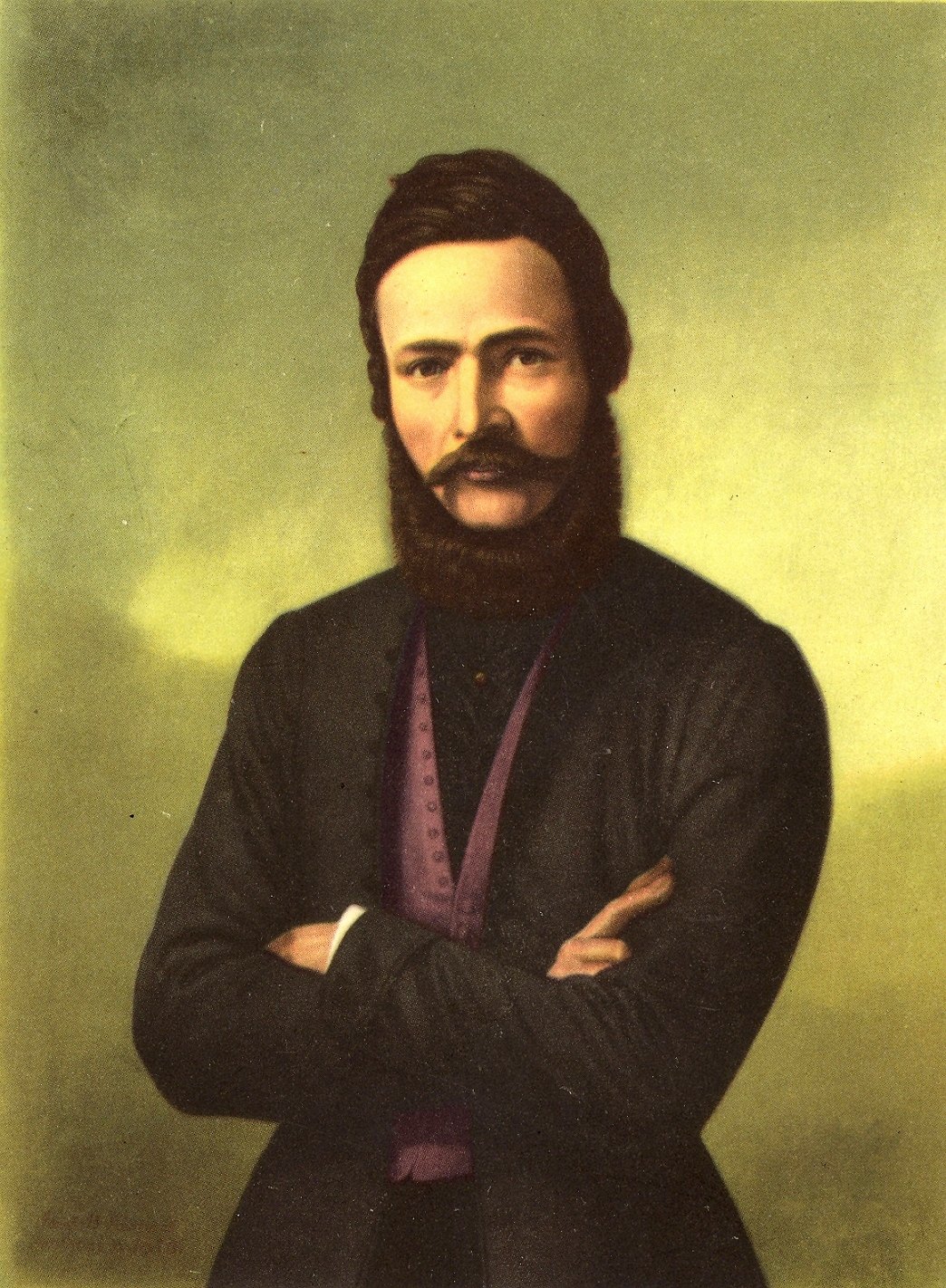
The written standard that lasted came later, and from the center of the country. A group led by the Protestant Ľudovít Štúr (1815–1856) began to write in the Central Slovak dialects. Martin Hattala modified and codified that language in his grammar of 1852, and it was quickly accepted as standard. In phonetic terms, Slovak has been the more conservative of the two cousins: it kept long syllabic l and r and a set of diphthongs, and it never developed the Czech sound ř.
When Czechoslovakia was founded in 1918, an official “Czechoslovak language” was proclaimed in the First Republic (1920–1938). In practice it functioned mainly as written Czech with some Slovak input, while both written standards continued in use. On radio and television, Czech and Slovak were later used in roughly equal measure. After the country split in 1993, each state made its own standard official, and younger speakers heard less of the other language day to day. The 2015 intelligibility study still found near-ceiling scores among 18-to-30-year-olds. The two languages did not suddenly become foreign to each other; they just stopped being a shared soundtrack.
Writing System and Pronunciation
Slovak is written in the Latin alphabet with four kinds of marks: the acute accent (dĺžeň) for length (á, é, í, ó, ú, ý, and also ĺ, ŕ), the háček (č, ď, ň, š, ť, ž, plus dž), the umlaut on ä, and the circumflex on ô. Once you learn the letters, you can read almost any word aloud. Stress is always on the first syllable, and it is not marked in spelling. The acute accent means “say this vowel long,” not “stress this syllable.”
Letters you will not see in Czech
These are the graphemes that most clearly mark a text as Slovak:
| Letter | Rough sound | Example |
|---|---|---|
| ä | usually like e in “bet” (sometimes a wider “a” in careful speech) | päť (“five”) |
| ô | like wo in “woke,” a diphthong [u̯ɔ] | stôl (“table”) |
| ľ | a palatal l, a bit like the lli in “million” | ľad (“ice”) |
| ĺ | a long syllabic l | stĺp (“column”) |
| ŕ | a long syllabic r | vŕba (“willow”) |
Czech, in return, has ř, ě, and ů, which Slovak does not use. Slovak also writes the affricates dz and dž as ordinary letters of the alphabet.
The rhythmic law
Slovak, unlike Czech, has a rhythmic law (rytmický zákon): two long syllables should not follow each other in the same word. A long syllable is one with a long vowel, a long syllabic ĺ or ŕ, or a diphthong (ia, ie, iu, ô). When the rule applies, the second syllable is shortened.
That is why “white” is biely in Slovak, not bielý (compare Czech bílý), and why the locative plural of víno is vínach, not vínách. Adjectives show it clearly: pekná ruža (“pretty rose”) keeps a long ending because the root is short, but krásna ruža (“beautiful rose”) shortens the ending because krásn- is already long. There are exceptions, so treat it as a strong tendency, not an iron law. Still, once you notice it, a lot of endings suddenly look regular instead of random.

Grammar: Six Cases (and a Fading Vocative)
Grammar is where Slovak, like Czech, asks English speakers to slow down. Nouns, adjectives, pronouns, and some numerals change their endings by case, gender, and number. There are no articles. Word order is relatively free, because the endings already tell you who did what; the usual order is subject–verb–object, and moving a phrase often changes emphasis rather than meaning.
The 6 Slovak cases
Slovak school grammar numbers six cases. The old vocative is no longer a regular case: people usually address someone in the nominative (Ako sa máte, pán Kováč?), and only a few vocative forms survive in set phrases, such as človeče, bože, otče, or familiar mami and tati.
| No. | Case | Main use |
|---|---|---|
| 1 | Nominative | Subject, and usually the form used to address someone |
| 2 | Genitive | Possession, “of”, many prepositions (z, do, od) |
| 3 | Dative | Indirect object, “to” |
| 4 | Accusative | Direct object |
| 5 | Locative | Always with a preposition, for place or topic (v, na, o) |
| 6 | Instrumental | “With”, “by means of” |
Here is mačka (“cat”) with the adjective malá (“small”):
| Case | Slovak | English |
|---|---|---|
| Nominative | malá mačka | a small cat |
| Genitive | bez malej mačky | without the small cat |
| Dative | dám to malej mačke | I give it to the small cat |
| Accusative | vidím malú mačku | I see the small cat |
| Locative | o malej mačke | about the small cat |
| Instrumental | s malou mačkou | with the small cat |
On this word, the dative and the locative share the same form, malej mačke. The case is still clear from the construction: dative often stands alone as the indirect object, while locative always follows a preposition such as o.
Other things to know
- Three genders, with masculine split into animate and inanimate, as in Czech.
- Verb aspect. Most verbs come in pairs: imperfective for ongoing or repeated action (písať, to be writing) and perfective for a completed one (napísať, to write something down).
- Past tense shows gender. Písal is “he was writing”; písala is “she was writing.”
- Numbers change the noun. As in other West Slavic languages, the form after “five” is not the same as the form after “two.”
Standard Slovak was not fully codified until the 19th century, and in several places it is a little more regular than literary Czech. A locative many learners meet early is a good example: Czech has v Praze, Slovak v Prahe.
Slovak vs Czech
| Slovak | Czech | |
|---|---|---|
| Group | West Slavic, Czech–Slovak | West Slavic, Czech–Slovak |
| Stress | First syllable | First syllable |
| Cases | 6 (vocative no longer a regular case) | 7, including a living vocative |
| Special letters | ä, ô, ľ, ĺ, ŕ | ř, ě, ů |
| Syllabic l and r | Short and long (ĺ, ŕ) | Short; no long ĺ / ŕ letters |
| Rhythmic law | Yes: two long syllables in a row are usually avoided | No |
| “Thank you” | Ďakujem | Děkuji |
| “Goodbye” | Do videnia | Na shledanou |
| “Do you speak…?” | Hovoríte po…? | Mluvíte…? |
| Informal “yes” | hej | jo |
Everyday words often look like cousins rather than twins. Ďakujem and Děkuji are an easy pair to hear; hovoriť (“to speak”) versus Czech mluvit is a larger jump. A 1989 Czech–Slovak dictionary of different terms ran to some 11,000 entries, not counting specialist vocabulary, so the overlap is wide but not complete. In professional language, Slovak often took over Czech terms in a Slovakized form, especially during the Czechoslovak period.
If you already know some Czech, Slovak will feel familiar from the first page. Do not assume every ending and every word will match. Learn the Slovak forms on purpose, especially ďakujem, do videnia, áno / nie, and the letters ä, ô, and ľ, so you do not drift back into Czech by habit.
Our guide to Czech: Central Europe’s Bridge Language covers the other side of this pair, including the famous ř that Slovak never developed.
Common Slovak Phrases
| English | Slovak | Rough pronunciation |
|---|---|---|
| Hello (formal) | Dobrý deň | DOH-bree dehny |
| Hi / Bye (informal) | Ahoj | AH-hoy |
| Please / You’re welcome | Prosím | PROH-seem |
| Thank you | Ďakujem | DYAH-koo-yem |
| Yes / No | Áno / Nie | AH-noh / NYEE-eh |
| Excuse me / Sorry | Prepáčte | PREH-paach-teh |
| Goodbye | Do videnia | doh VEE-deh-nyah |
| Do you speak English? | Hovoríte po anglicky? | HOH-voh-ree-teh poh AHN-glit-skih? |
| I don’t understand | Nerozumiem | NEH-roh-zoo-myem |
| Good morning | Dobré ráno | DOH-breh RAA-noh |
| Nice to meet you | Teší ma | TYEH-shee mah |
| Help! | Pomoc! | POH-mots |
Ahoj works as both “hi” and a casual “bye,” just as it does in Czech. In informal speech you may also hear servus, a greeting shared with parts of Austria and Hungary.
Is Slovak Hard to Learn?
For English speakers, Slovak is a challenge, but it is not among the hardest languages. The US Foreign Service Institute puts Slovak in Category III, the same group as Czech, Polish, and Russian: about 44 weeks (1,012 class hours) to reach professional working proficiency. German is a Category II language at about 36 weeks; Japanese, Mandarin, Arabic, and Korean are Category IV at 88 weeks.
| Easier than it looks | Harder than it looks |
|---|---|
| Spelling is a reliable guide to pronunciation | Six cases, with several noun patterns |
| Stress is always on the first syllable | Verb aspect pairs |
| Latin alphabet, no new script to learn | Palatal sounds (ď, ť, ň, ľ) and ô |
| Extremely close to Czech, if you know some already | Dialect differences, especially in the east |
| Many international and German loanwords (škola, farba, šport) | Vowel length changes meaning, and the rhythmic law has exceptions |
If you already speak Czech, you can ignore most of the FSI estimate. You are not starting from zero; you are learning a close standard, a new set of endings, and a few sounds. If you are starting from English, the cases and aspect will take the most time, just as they do in Czech or Polish. The writing system will not.
Tips for Learning Slovak
- Learn nouns with their gender. Mačka (feminine) and stôl (masculine) behave differently in every case. A word list that omits gender will slow you down later.
- Watch length from the first week. Write á, ô, and í even when you are only taking notes. Byt (“apartment”) and byť (“to be”) are not the same word.
- Treat the rhythmic law as a pattern, not a puzzle. When a root is already long, expect a short ending: krásny, not krásný.
- Use Czech as a bonus, not a substitute. Czech films, podcasts, and our Czech language guide will train your ear. When you speak or write Slovak, switch to the Slovak forms on purpose.
- Practice the handful of sounds English does not have. Start with päť, stôl, and ľad. You do not have to master ř, because Slovak does not use it.
If you are choosing among Slavic languages, Polish: A Clear Guide to a Major Slavic Language and Ukrainian: A Practical Guide to the Language and Its Roots show how the case systems and scripts compare once you step outside the Czech–Slovak pair.
Translating Slovak with AI
Slovak is a friendly language for machine translation in one sense: it is close to Czech, well documented, and written in a regular Latin orthography. It is still a fusional language. A noun can take many endings, word order carries emphasis, and a missing accent can change the word (byt vs. byť). Tools also sometimes drift toward Czech spellings, because the two languages share so much training data.
When you need to read a Slovak email, menu, or short document, OpenL can translate Slovak to and from English and many other languages. It is also a quick way to check a sentence you have just written. For contracts, medical texts, or anything official, have a fluent speaker review the result.
Sources
- Slovak language — Wikipedia — classification, official status, dialects, phonology (rhythmic law, distinctive vowels), grammar, and vocabulary notes
- Slovak language — Encyclopaedia Britannica — early records, Trnava and Štúr, Hattala’s 1852 grammar, dialect groups, conservative phonology, and the absence of ř
- Comparison of Czech and Slovak / Czech–Slovak languages — Wikipedia — special letters, rhythmic law, vocative, “Czechoslovak language,” and lexical differences
- Census: More than 80 percent of Slovakia’s population stated Slovak as their native language — Rádio RSI / STVR — 2021 census figure of 4,456,102 mother-tongue speakers (Statistical Office of the Slovak Republic / TASR)
- Takmer 82 percent obyvateľov SR má materinský jazyk slovenčinu — TERAZ / TASR — additional 2021 census detail: Hungarian 462,175 (8.5%), Romani 1.8%, Rusyn and Czech shares, and the census definition of mother tongue
- Golubović & Gooskens (2015), “Mutual intelligibility between West and South Slavic languages,” Russian Linguistics — Czech–Slovak and Slovak–Slovene intelligibility scores among young adults
- Foreign Language Training — U.S. Department of State (FSI) — Slovak in Category III, about 44 weeks / 1,012 class hours
- Pronunciation, rhythm, and cases — slovake.eu — alphabet, rhythmic law examples (krásna vs. pekná), and the six-case school numbering
- Slovak phrasebook — Wikivoyage — common phrases and pronunciation
- Constitution of Slovakia, Article 6 — official-language status as quoted in the Wikipedia article (primary text: štátny jazyk)
- Castle icon — SVG Repo — CC0 cover thumbnail from the Landscapes Color pack